Haryana Chief Minister Chairs Inaugural Industry-Labour Council Meeting in Chandigarh
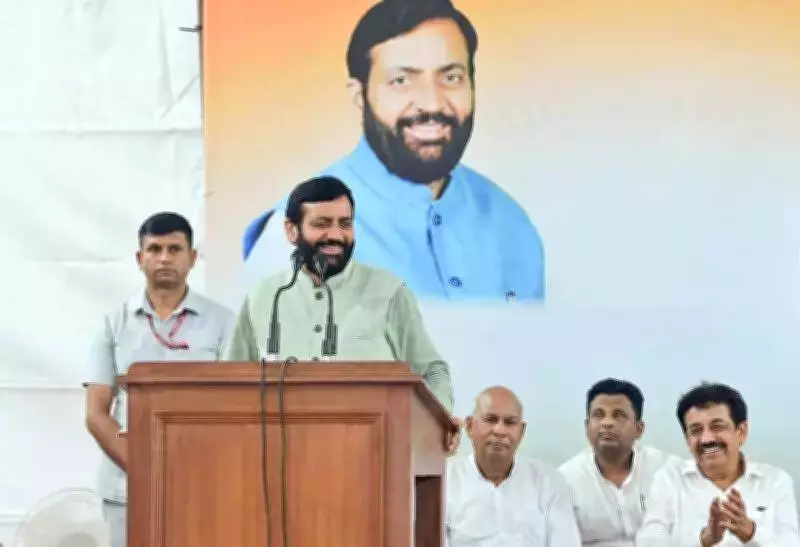
Haryana Chief Minister Nayab Singh Saini presided over the first meeting of the newly formed 'Industry-Labour Friendly Council' in Chandigarh on Thursday. The CM underscored that the state government's paramount objective is to foster a robust industrial sector and a thriving workforce to propel Haryana's comprehensive development forward.
Key Officials and Council Members in Attendance
The significant gathering saw the participation of several high-ranking officials, including:
- Chief Principal Secretary to the Chief Minister, Rajesh Khullar
- Additional Chief Secretary (Home), Sudhir Rajpal
- Commissioner and Secretary (Industries and Commerce), Amit Kumar Agrawal
- Principal Secretary (Labour), Rajiv Ranjan
- Deputy Principal Secretary to the Chief Minister, Yash Pal
Other senior officials and council members were also present, highlighting the meeting's importance for the state's economic policy.

CM Saini Stresses Harmony Between Industry and Labour
As the council's chairperson, Chief Minister Nayab Singh Saini articulated a clear vision for economic progress. "No state can achieve genuine economic advancement unless its industries operate smoothly and its workers remain prosperous and content," he asserted. He emphasized that harmony between these two critical sectors is absolutely essential for sustainable growth.
Portal Launched to Regularize Micro and Medium Enterprises
Addressing a specific challenge, CM Saini revealed that nearly two lakh micro and medium enterprises in Haryana currently operate outside designated industrial areas. This informal status has prevented them from accessing numerous government facilities and schemes.
To resolve this, the state government launched a dedicated portal on December 25, 2025. This digital platform enables these enterprises to register and become regularized. Once formalized, these businesses will be eligible to benefit from a wide array of government initiatives designed to support industrial growth and development.
This move is seen as a strategic step to integrate a significant portion of the state's industrial base into the formal economy, thereby unlocking new opportunities for investment, support, and overall economic contribution.