

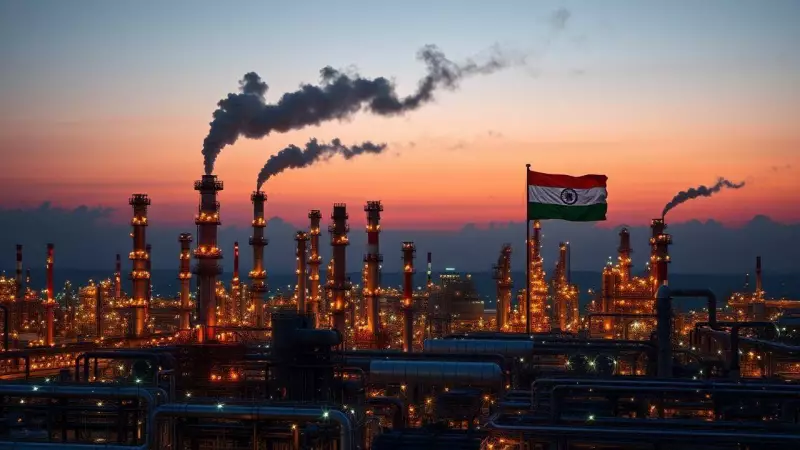
The year 2025 marked a significant turning point in the global energy narrative. After years of forecasts predicting an imminent peak in worldwide oil consumption driven by the renewable energy transition, the story reversed sharply. Fossil fuels, particularly oil and gas, regained strategic importance, with India solidifying its position as the central engine for global demand growth.
Forecasts Revised: Peak Oil Pushed to the 2030s
Major energy outlooks from influential organizations like BP, McKinsey, and the International Energy Agency (IEA) collectively revised their projections. They pushed the expected timeline for peak oil demand into the next decade, the 2030s. Furthermore, these agencies also adjusted their estimates for oil demand in 2050 upwards. A consistent thread across all these revised forecasts was the identification of India as the epicenter of future growth. India's projected increase in energy demand is now expected to surpass the combined growth of China and Southeast Asia.
Geopolitics and Policy Delays Fuel Fossil Fuel Revival
The resurgence of oil in 2025 was fueled by a complex mix of factors. Delays in implementing clean-energy policies, limitations in alternative energy infrastructure, and persistent geopolitical tensions created a favourable environment for hydrocarbons. Even European nations, considered leaders in the green transition, found themselves relying more on fossil fuels. This was due to ongoing supply shortages and elevated prices stemming from the Russia-Ukraine war. In the United States, the policy stance under President Donald Trump provided strong support for fossil fuels, helping to reposition oil at the heart of the global energy mix.

India's Strategic Pivot in Oil Imports
India's oil and gas sector evolved dynamically in response to these global trends, marked by shifting import patterns, new domestic policies, and robust underlying demand. The country continues to depend heavily on imported crude oil. A defining feature of 2025 was the sustained prominence of Russian oil, which maintained its key supplier status despite intense international pressure and diplomatic efforts by the US, which included imposing a 50 percent tariff on some Indian goods to discourage the trade.
For the majority of the year, Russian crude constituted more than one-third of India's total oil imports, feeding domestic refineries that produce petrol, diesel, and other vital fuels. A shift occurred in late November following sanctions on major Russian exporters Rosneft and Lukoil. According to PTI reports, average imports from Russia subsequently fell from approximately 1.7-1.8 million barrels per day to below 1 million barrels per day. However, as Russian oil itself was not under direct sanctions, a complete halt was unlikely. Indian refiners adeptly navigated the restrictions by switching to non-sanctioned Russian suppliers to continue securing discounted crude.
Diversifying Supply and Introducing New Regulations
To mitigate over-reliance on any single source, India proactively diversified its import basket. Purchases of crude oil from the United States increased, particularly after the announcement of new tariffs. Trade in liquefied natural gas (LNG) and liquefied petroleum gas (LPG) also saw substantial growth. On the policy front, the government introduced the Petroleum and Natural Gas Rules, 2025, establishing a new regulatory framework designed to streamline licensing and stimulate fresh investments in exploration and production.

Soaring Demand and Expanding Refining Might
Domestic demand for oil remained robust throughout 2025. India's oil consumption growth was projected to outpace China's, with forecasts indicating the country will account for a lion's share of global demand growth in the coming decade. The nation's refining capacity is also expanding, cementing its role as a major global refining hub. However, domestic production of crude oil and gas faced challenges from ageing fields. To address this, state-owned ONGC entered into a partnership with energy major BP to enhance output at its critical Mumbai High fields. Concurrently, the use of natural gas is rising, supported by pipeline network improvements and the expansion of city gas distribution networks, aligning with broader government goals to promote cleaner fuels.
Stable Prices Provide Fiscal Breathing Room
Despite ongoing wars, sanctions, and trade disputes, oil prices in 2025 displayed unexpected stability. Brent crude prices largely fluctuated between $60 and $70 per barrel, easing to around $59–60 by mid-December, as per PTI. This calm was attributed to increased oil production from non-OPEC nations like the US, Brazil, Guyana, and Canada, coupled with disciplined supply management by OPEC+, modest demand growth in China and Europe, and a rise in floating storage.
For a major importer like India, this price stability offered crucial fiscal relief. Mirroring a strategy used during the Covid period, the government raised taxes on petrol and diesel without passing the increase on to consumers at the retail pump. The softening of crude oil prices was leveraged to absorb the tax hike and bolster government revenues.
As 2025 concludes, the oil and gas sector navigates a complex landscape. Geopolitical risks and strong demand growth continue to influence supply dynamics, while climate pressures and strategic pivots by global energy giants indicate an industry still very much in transition as it moves into 2026.





