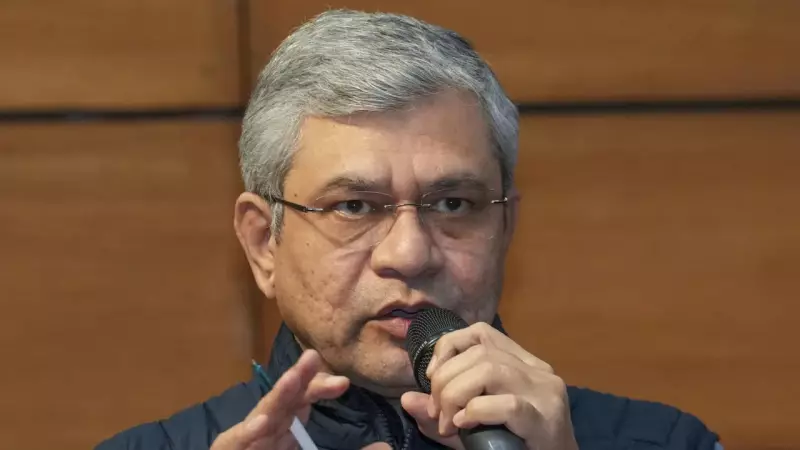
India has set an ambitious roadmap to become one of the world's top four nations in semiconductor manufacturing by 2032, with aspirations to be the best by 2035. Union Minister for Electronics and IT, Ashwini Vaishnaw, announced this bold vision, highlighting the country's growing talent pool and expanding ecosystem as key drivers.
Major Investments and Production Timeline
The announcement came alongside the approval of 22 projects worth Rs 41,863 crore under the Electronics Components Manufacturing Scheme (ECMS). Under the broader Semicon India Programme, the government has already approved 10 manufacturing units. This includes two fabrication plants and eight assembly, testing, and packaging (ATP) units, representing a total investment commitment of about Rs 1.6 lakh crore.
Detailing the production pipeline, Minister Vaishnaw stated that four chip companies are slated to begin commercial production in 2026. He provided specifics on key players: Kaynes and CG Semi, which began pilot production last year, will enter commercial production first. Micron has recently started pilot production and will follow suit. The Tata plant in Assam is expected to commence pilot production by mid-2025, transitioning to commercial output by the end of the same year.

Building a Foundation of Talent and Design
Parallel to manufacturing, India is significantly bolstering its chip design capabilities. Under the Design Linked Incentive (DLI) scheme, 24 chip design projects are being supported through startups, with a total project value of Rs 920 crore.
Vaishnaw emphasized that India's unique strength lies in its focus on talent development. He revealed a striking statistic: students across 298 Indian universities are now designing chips that are being validated. "We could not count more than 20 universities in the whole world, including the US, China, Japan, Taiwan and South Korea, where students can design a chip, manufacture it, and validate the product. India has, because of our focus on silicon, 298 universities," the minister stated.
Positioning in the Global Value Chain
This expanding pipeline of skilled professionals, combined with large-scale manufacturing investments, is strategically positioning India to play a decisive role in the global semiconductor value chain over the next decade. Major automobile and telecom companies are expected to source their semiconductors domestically as production scales up.
The minister expressed clear confidence in this trajectory, predicting that the direction for India to become a semiconductor powerhouse is now clearly visible. The integrated approach of fostering design innovation, building manufacturing muscle, and cultivating a vast talent base forms the cornerstone of India's strategy to achieve self-reliance and global leadership in this critical industry.