

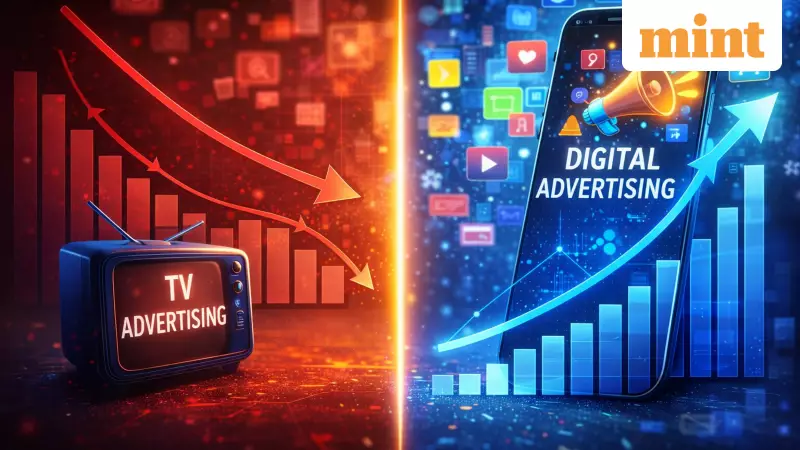
India's advertising industry has witnessed a seismic shift over the past year, decisively moving its growth engine from traditional television to dynamic digital platforms. The latest data from TAM AdEx reveals a staggering 149% surge in digital ad impressions from January to September 2025 compared to the same period last year. This explosive growth stands in stark contrast to the 10% decline in television advertising volumes recorded in the first half of 2025. This pivot marks a fundamental change in how brands allocate their marketing budgets and connect with consumers.
The Digital Juggernaut: E-Commerce and Performance-Driven Growth
The dramatic rise of digital advertising is not merely incremental; it represents its evolution from a supplementary channel to the primary driver of marketing growth. A significant portion of this momentum is fueled by e-commerce and service-based categories. According to TAM AdEx, e-commerce emerged as the single largest digital advertising category in 2025, recording 96% growth over the previous year. Sectors like services, education, software, and fashion e-commerce also climbed the ranks rapidly.
Naresh Gupta, managing partner at advertising agency The Bang in The Middle, highlights the trend: "A lot of these new-age startups... almost 100% live on social media." He notes that many businesses have decided their core growth will originate from these platforms, leading them to invest heavily where they see immediate returns. This focus on performance, measurable conversions, and scalable targeting is a key differentiator from the brand-building ethos of traditional media.

Television's Enduring Niche: Mass Reach for FMCG Giants
While digital soars, television advertising is experiencing a clear contraction, but it is far from obsolete. The medium remains the bastion of Fast-Moving Consumer Goods (FMCG) giants like Hindustan Unilever, Reckitt Benckiser, and Nestlé. Ad spending on TV is heavily concentrated in categories such as food & beverages, personal care, and household products—think toilet soaps, floor cleaners, and washing powders.
Gupta points to the cost and audience dynamics: "If you are wanting to be on television... your entry cost is much higher" compared to digital platforms like Instagram or Google. Television continues to deliver tremendous mass audience scale, particularly around big-ticket properties like cricket, general entertainment, and reality shows such as Bigg Boss and Indian Idol. For brands built on habit, trust, and nationwide visibility, TV retains its power for long-term awareness.
Changing Tactics and a Two-Speed Market Future
The shift is not just in spending volumes but also in execution. The method of buying ads has transformed, with programmatic buying now accounting for 96% of all digital ad impressions, up from 88% in 2024. This reflects a strong preference for automated, data-driven targeting. Social platforms are the biggest winners, with Instagram alone commanding 64% of digital ad impressions in 2025.
A telling sign of the divergence is the rise of digital-only advertisers. The number of brands bypassing TV entirely rose sharply to over 149,000 in January-September 2025, from about 100,000 in 2024. This cohort includes e-commerce firms, fintech players, and software brands that prioritize speed and clear attribution.
The past year has effectively carved India's advertising market into two distinct speeds. Digital is the arena for growth, experimentation, and performance-driven spending. Television is becoming a more selective, high-impact tool for mass-market FMCG categories. As Gupta concludes, "The audience has not walked away from either of the platforms." However, the rules of engagement and budget allocation have been irrevocably rewritten, setting the stage for an influencer and big-event-led market through 2026 and beyond.






