

India's energy landscape has undergone a monumental transformation over the last five years, achieving a significant milestone in its power generation capabilities. The nation's total installed energy capacity has witnessed a remarkable surge of nearly 36%, climbing from 375 Gigawatts (GW) in December 2020 to an impressive almost 510 GW by December 2025.
Renewables Drive Unprecedented Expansion
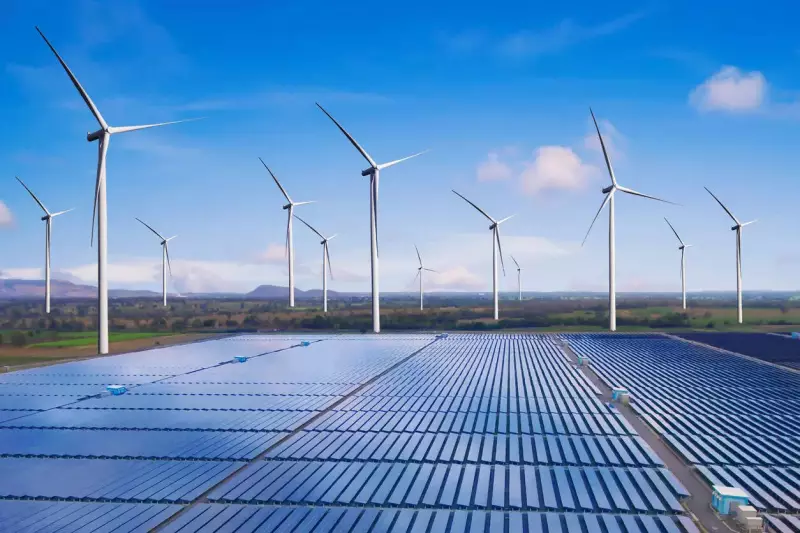
The cornerstone of this growth story is the explosive rise of new and renewable energy sources. Capacity from wind, solar, bioenergy, and small hydro projects skyrocketed by a staggering 122% over the five-year period. This segment expanded from 91.1 GW in 2020 to 203.6 GW in 2025, representing a massive addition of 112 GW. The year 2025 itself set a historic record, with India adding its highest-ever annual green capacity of 44.5 GW till November 30, primarily fueled by a boom in solar installations.
Solar power emerged as the undisputed champion within the renewables sector. Its capacity alone grew by 35 GW in 2025, reaching a total of 132.9 GW. Wind energy also contributed robustly, adding 5.8 GW during the year to achieve a cumulative capacity of 54 GW.

Non-Fossil Fuels Cross the Majority Threshold
When combined with large hydro and nuclear power, the collective capacity of non-fossil fuel sources has now decisively overtaken traditional fuels. These clean sources account for 263 GW, or 51.6%, of the country's total installed capacity. This marks a pivotal shift in India's energy mix towards sustainability.
In contrast, the growth in fossil fuel-based capacity—comprising coal, lignite, gas, and diesel—has been modest in comparison, increasing by only 5.6% since December 2020. The detailed breakdown shows large hydro capacity growing from 45.8 GW to 50.4 GW over the five years, while nuclear power saw a marginal rise from 6.8 GW to 8.8 GW.
Grid Readiness and Policy Boost for Future Growth
Government officials have emphasized that all this newly installed capacity is fully grid-connected and generation-ready. The planning and implementation of transmission systems have been synchronized with the phased capacity additions, ensuring the power can be effectively delivered.
Looking ahead, policy reforms are set to further accelerate the energy transition. The recent passage of the Sustainable Harnessing and Advancement of Nuclear Energy for Transforming India Bill, 2025 is a game-changer. This legislation opens the doors for private sector participation in the nuclear energy domain, a sector previously restricted, and is expected to provide a significant boost to future nuclear capacity expansion.
This data, highlighted by the Ministry of New and Renewable Energy, underscores India's steadfast commitment to scaling up clean energy. The dramatic growth not only enhances energy security but also positions the country strongly on its path to meet ambitious climate goals.






