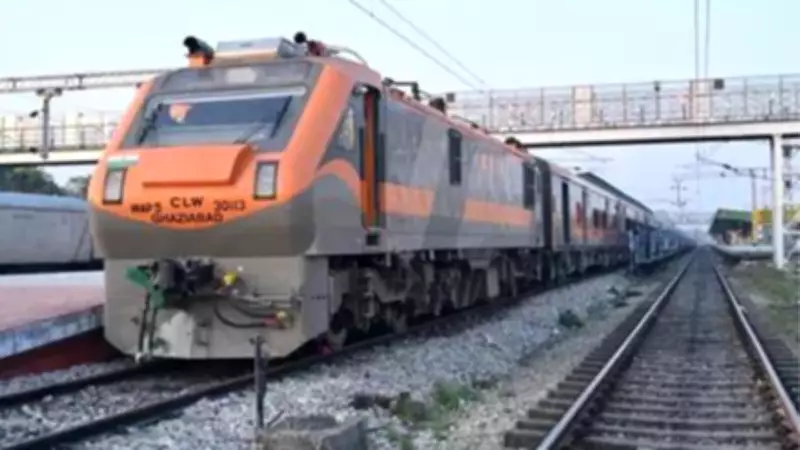
India Set to Unveil New Rail Tech Policy to Boost Domestic Manufacturing
India is preparing to launch a comprehensive "rail tech" policy in the coming weeks, aimed at significantly enhancing domestic manufacturing of next-generation railway technology and equipment. This strategic initiative forms a crucial part of the government's broader rail modernization drive, with the primary objective of reducing the nation's reliance on imported railway technology, particularly from countries like China.
Policy Framework and Government Support
Under the proposed framework, the Railway Board is expected to provide substantial support to manufacturers through multiple channels. This will include partial funding for projects, dedicated technical assistance, and enhanced access to state-of-the-art testing facilities. A senior official emphasized the policy's potential, stating, "A new Rail Tech policy will give much needed impetus to innovation for mass transport," while highlighting that it would actively encourage collaboration between domestic firms and research institutions.
Addressing Import Dependence and Current Trade Data
The policy comes at a critical time as India's imports of railway and tramway locomotives, rolling stock, and related equipment reached approximately Rs 6,098 crore in FY25. Locomotive components constitute the largest portion of this import basket, revealing a significant dependence on imported sub-systems. Detailed trade data and project reports for 2024–25 indicate that around 55% of railway component imports are destined for Indian Railways, with the remaining 45% serving metro and rapid rail systems across the country.

It is important to note that while these imports represent a substantial value, they account for a limited share of India's overall railway component requirements, suggesting significant room for domestic industry growth.
Budgetary Allocations and Modernization Efforts
The government has demonstrated its commitment to rail modernization through substantial financial allocations. The FY27 Union Budget has earmarked Rs 52,108.73 crore for rolling stock capital expenditure, marking an increase from Rs 50,007.77 crore in the current fiscal year. These funds are primarily designated for acquiring new locomotives, coaches—including advanced Vande Bharat train sets—and wagons as part of an extensive fleet modernization program.
Building on Previous Innovation Initiatives
The proposed rail technology policy builds directly upon the foundation laid by the Indian Railway Innovation Policy, which was launched in June 2022. That earlier policy offered grant support of up to Rs 1.5 crore on a 50:50 cost-sharing basis specifically for startups and smaller companies to develop functional prototypes. Its focus areas included improving safety, enhancing operational efficiency, and optimizing maintenance processes. Innovators benefited from retaining ownership of their solutions, gaining access to secure testing environments, and receiving assured procurement commitments for successful low-cost technologies.
Long-Term Vision and Global Import Landscape
Looking ahead, India has set an ambitious goal of achieving complete self-sufficiency in constructing seven new bullet train networks, as confirmed by the railway minister. Currently, the import landscape shows China dominating India's railway equipment imports, followed by Germany and Austria for engineering systems, and the United States and Japan for specialized propulsion and signaling components. The new policy aims to systematically alter this dynamic by fostering a robust domestic manufacturing ecosystem capable of meeting these advanced technological demands.