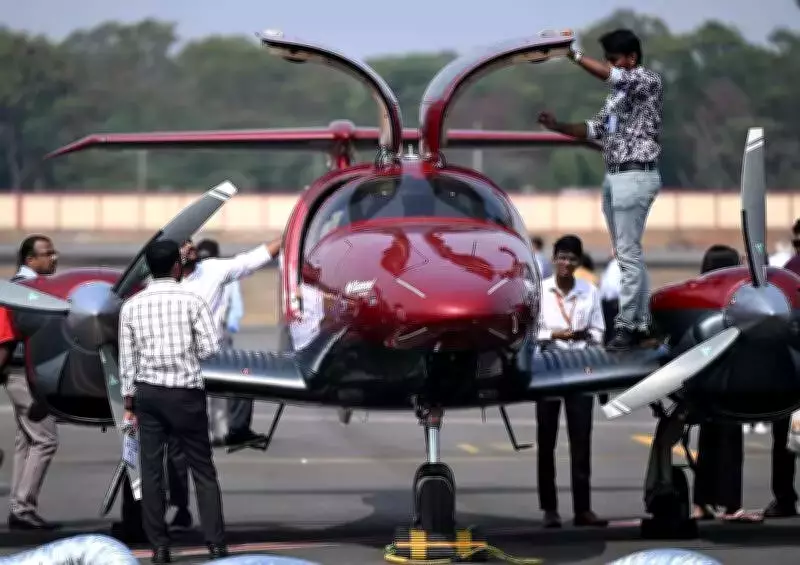
In the wake of the tragic Learjet 45 crash in Baramati that claimed the lives of Maharashtra deputy chief minister Ajit Pawar and four others, private jet operators in India have highlighted the remarkable growth trajectory of the country's business aviation sector. Despite this unfortunate incident, industry leaders emphasize that the market is experiencing unprecedented expansion, even outpacing China, with operations surging by 200% over the past five years.
Unprecedented Growth Amidst Tragedy
Speaking on the second day of Wings India 2026, aviation executives described the Baramati crash as a tragic anomaly that is unlikely to hinder the sector's momentum. They project that India's private jet fleet will exceed 500 aircraft by 2030, driven by an increasing number of high-net-worth individuals and entrepreneurs. This growth positions India to soon lead the charts in private aviation adoption globally.
Infrastructure Challenges Loom Large
However, operators have raised serious concerns about regional aviation infrastructure deficiencies. A majority of airports across India lack adequate landing slots and parking bays to accommodate the rapidly growing demand for private jets. Currently, India hosts around 150 private aircraft, with Mumbai serving as the primary hub, while cities like New Delhi, Bengaluru, and Hyderabad are quickly gaining prominence.

Prem Kumar Garg, CEO of IndiaOne Air, pointed out regulatory hurdles, stating, "Although India has several small airports, many lack operational readiness, including approvals for non-towered operations. Regulatory clearances for licensing and authorization of such airports remain under review, with safety and security considerations often slowing down the process."
Echoing these sentiments, M Manickam, chairman of Sakthi Aircraft Industry Pvt Ltd, highlighted the underutilization of regional airports. "More than 150 airports already exist, but connectivity remains limited. There is no point in building airports if no one is flying into them. Most regional airports remain idle simply because there are not enough flights operating," he explained. Manickam called for airlines and operators to invest in aircraft and operational capabilities to activate regional routes, justifying further infrastructure investments.
High Costs and Regulatory Hurdles
Kanika Tekriwal, CEO of JetSetGo Aviation Services, identified the high costs associated with importing, operating, and maintaining private jets as major deterrents to growth. "There is a need for regulatory reforms and cost-rationalization measures to sustain growth in the segment. Addressing these fiscal challenges is critical to unlocking the sector's full potential," she asserted.
Tekriwal also noted the mainstreaming of private aviation, which now supports business and critical travel needs while competing with commercial airlines. "A noticeable share of today's users of jets are first-time customers. Many of them were introduced to private aviation over the last few years and have since become repeat users," she added, underscoring the sector's evolving consumer base.
Future Prospects and Strategic Imperatives
As India's business aviation market continues its rapid ascent, stakeholders stress the importance of addressing infrastructure gaps and cost challenges to ensure sustainable growth. With projections pointing to a fleet of over 500 aircraft by 2030, the industry stands at a critical juncture, balancing expansion with the need for enhanced regulatory frameworks and operational efficiencies.