A new report has cast a spotlight on a significant paradox in India's mineral sector: the nation sits on the world's third-largest reserves of rare earth elements but contributes a minuscule fraction to global production. The analysis by Amicus Growth, cited by ANI, underscores the vast gap between India's resource potential and its actual output in this critical sector, which is overwhelmingly dominated by China.
The Stark Numbers: Reserves vs. Reality
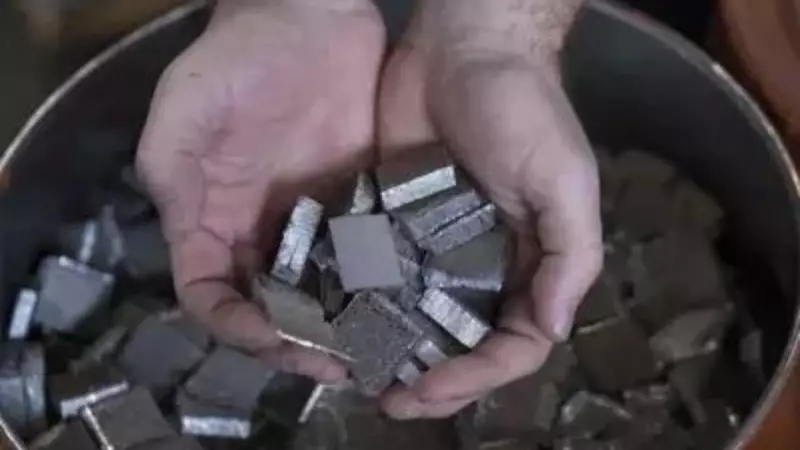
India's rare earth reserves are estimated at a substantial 6.9 million tonnes, constituting about 6-7% of global resources. These reserves are primarily located in coastal sand deposits rich in monazite. However, the presence of thorium, a radioactive element within these sands, complicates mining and processing due to stringent safety and regulatory protocols.
Despite this vast resource base, India's production in 2024 was a mere 2,900 tonnes. This output places India as only the seventh-largest producer globally, accounting for less than 1% of worldwide production. In stark contrast, China led the pack with a colossal 270,000 tonnes of combined domestic and export production. The United States followed as the second-largest producer with 45,000 tonnes, trailed by Myanmar (31,000 tonnes), and Australia, Thailand, and Nigeria, which each produced around 13,000 tonnes.

Processing Hurdles and Historical Constraints
The report identifies limited processing capacity as a major bottleneck for India. China controls an estimated 90% of global refining operations and nearly all processing of heavy rare earth elements. India's absence from the global rare earth trade is largely due to this deficit, despite initiating a small-scale joint venture with Japan in Visakhapatnam.
Historical policy and regulatory frameworks have also contributed to the low output. For decades, the government-owned Indian Rare Earths Limited (IREL) managed most production activities. During this period, these strategically vital elements were often treated as secondary by-products rather than primary, high-value resources requiring focused development.
The Global Landscape and India's Path Forward
Globally, total rare earth deposits are estimated between 90 and 110 million tonnes. China leads in reserves as well, with 44 million tonnes, followed by Brazil (21 million tonnes). Australia holds 5.7 million tonnes, Russia 3.8 million tonnes, Vietnam 3.5 million tonnes, and the United States 1.9 million tonnes.
The report clearly states that "Annual production has been only a few thousand tonnes, and India has played virtually no role in global REE trade." It concludes that India's primary challenge is not resource availability but rather overcoming execution problems, building robust processing capabilities, and achieving better integration across the entire value chain—from mining to refining to manufacturing.
Addressing these gaps is crucial for India's strategic and economic interests, as rare earth elements are essential components in high-tech industries, renewable energy technologies, and defence applications.