

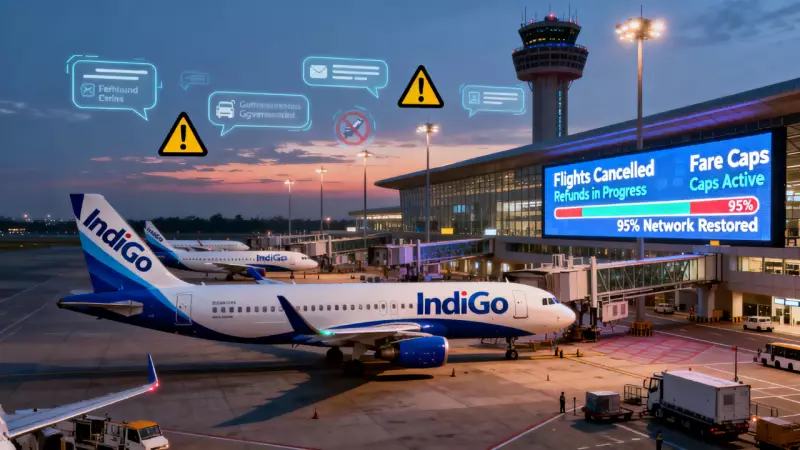
The nationwide operational crisis at IndiGo, India's largest airline, stretched into its fifth consecutive day on Saturday, with the carrier cancelling more than 800 flights. This prolonged disruption has triggered a massive government intervention, including fare caps, strict refund orders, and warnings of regulatory action against non-compliance.
Government Crackdown: Refunds, Baggage, and Fare Controls
In response to escalating passenger distress, the Ministry of Civil Aviation issued a series of stringent directives to IndiGo. The airline has been ordered to complete all pending refunds for cancelled or disrupted flights by 8 pm on Sunday, December 7. Furthermore, airlines are prohibited from charging any rescheduling fees from affected passengers.
The ministry also mandated that all baggage separated from travellers must be traced and delivered to their chosen address within the next 48 hours, with clear communication on delivery timelines. To tackle exorbitant ticket prices, the government imposed temporary fare caps on all domestic routes:

- Routes up to 500 km: Rs 7,500
- 500–1,000 km: Rs 12,000
- 1,000–1,500 km: Rs 15,000
- Above 1,500 km: Rs 18,000
These caps, which exclude taxes and fees, come after reports of fares skyrocketing to as high as Rs 90,000 on some routes. The government warned that any violation of these orders would invite regulatory action.
IndiGo's Staggering Disruption and Path to Recovery
The scale of the disruption is immense. After cancelling over 1,000 flights on Friday, IndiGo grounded more than 800 flights on Saturday. The airline's on-time performance at six major metro airports plummeted to a mere 3.7% on Friday, highlighting the severe operational breakdown. IndiGo, which typically operates over 2,200 daily flights, has been forced to drastically cut services.
In a statement, the airline claimed it was seeing "early signs of recovery." It stated that over 95% of its network connectivity had been restored, allowing operations to 135 out of 138 destinations. IndiGo expects to operate over 1,500 flights by the end of Sunday and said cancellations have dropped below 850, with a further decrease anticipated.
The airline apologized for the disruption and thanked government agencies, airport partners, staff, and customers for their patience.
Root Cause and Industry Fallout
The current aviation crisis was triggered by the implementation of revised Flight Duty Time Limitation (FDTL) norms. These new rules, which mandate longer rest periods and restrict night landings, require airlines to deploy significantly more crew. IndiGo had previously opposed the norms, citing insufficient time to build adequate crew strength.
To aid recovery, the DGCA granted IndiGo temporary relief by adjusting the night-duty definition and allowing more night landings. However, the Airlines’ Pilots Association (ALPA) India has objected to this "selective and unsafe" relief, warning it could compromise safety.
The fallout has extended beyond aviation. Indian Railways has deployed 89 special trains, covering over 100 trips in the next three days, to accommodate stranded passengers. Industry bodies like the Indian Association of Tour Operators have welcomed the government's fare cap, stating that unpredictable price surges damage consumer confidence and disrupt travel planning.
The government has activated a 24x7 control room to monitor the situation and ensure swift coordination. The ministry expects schedules to begin normalizing within 24 hours and fully stabilize in the next three days.






