

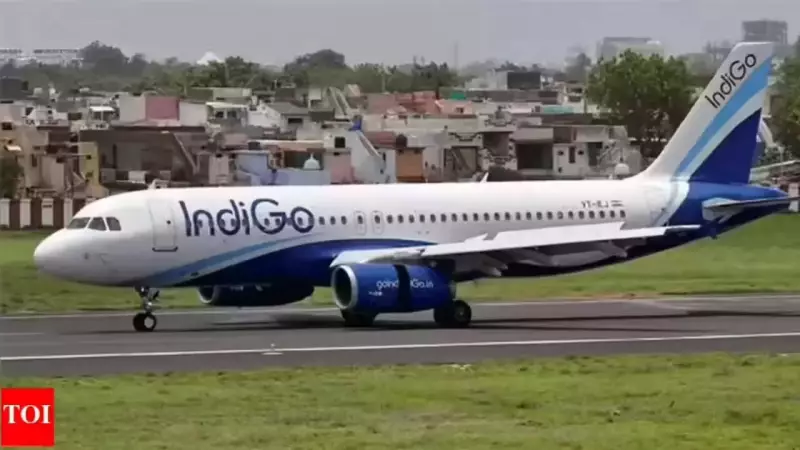
Widespread flight cancellations by India's largest carrier, IndiGo, have plunged the domestic aviation sector into chaos, sending airfares on rival airlines soaring as stranded passengers desperately search for alternatives.
Skyrocketing Fares on Major Routes
The sudden reduction in capacity has created a severe supply crunch. On the busy Delhi-Mumbai sector for Sunday travel, one-way economy tickets on airlines other than IndiGo are ranging from a staggering Rs 21,577 to Rs 39,000. Similarly, a Bengaluru-Kolkata ticket is costing between Rs 20,000 and Rs 23,000, and Chennai-Delhi seats are priced around Rs 21,000.
This price explosion is a direct result of IndiGo's dominant market position. The airline commands a 64% share of the domestic market. The remaining carriers—Air India, Air India Express, SpiceJet, and Akasa Air—collectively control just 36% of capacity. When a significant portion of IndiGo's operations are disrupted, passenger demand concentrates on this smaller pool of available seats, leading to inevitable fare hikes.

Regional Routes Hit Even Harder
The impact is even more pronounced on regional routes. For Sunday travel, a Udaipur-Delhi one-way economy ticket on non-IndiGo carriers costs between Rs 15,367 and Rs 26,406. The Udaipur-Mumbai route is seeing fares from Rs 24,000 to an eye-watering Rs 35,000.
This crisis has left travelers in a difficult bind. Mahima Shukla, a Chartered Accountant based in Delhi, flew to Udaipur on Friday via Air India Express and was scheduled to return Sunday on an IndiGo flight. "I am trying to cancel that ticket as I have to be in office Monday. Udaipur-Delhi on other airlines costs upwards of Rs 21,000. This is a double whammy," she said, highlighting the financial and logistical strain on passengers.
Uncertainty and a Glimmer of Normalcy
In contrast, seats on the few available IndiGo flights scheduled over the next several days are priced at roughly half the cost of competitors, reflecting the uncertainty caused by the operational disruptions. The airline has communicated to passengers that it expects to resume normal operations between December 10 and 15.
The situation has severely shaken passenger confidence. A Delhi-based businessman described the crisis as "possibly the worst phase in Indian aviation in many years." He added, "While fares are skyrocketing, our confidence levels have nosedived." The incident underscores the vulnerabilities in a market heavily reliant on a single player and the immediate ripple effects of such large-scale disruptions on pricing and traveler trust.






