

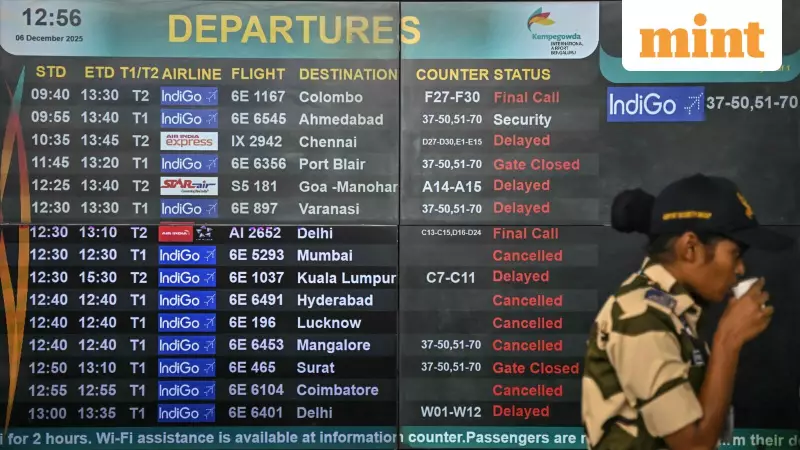
The recent mass cancellation of flights by IndiGo has not just stranded thousands of passengers but has laid bare the deep-seated structural issues plaguing India's aviation sector. The airline, commanding over 60% of the domestic market, effectively held the industry to ransom, forcing temporary regulatory relief and exposing a regulator struggling to enforce its own rules. This fiasco demands a serious structural overhaul, including antitrust scrutiny of the dominant carrier and long-term measures to reduce market concentration.
The Crisis and Its Immediate Fallout
At the heart of the chaos are the revised Flight Duty Time Limitations (FDTL) issued by the Directorate General of Civil Aviation (DGCA) in January 2024. These rules, designed to prevent pilot fatigue and enhance passenger safety, were implemented in two phases by July and November 2025 after airline pleas for more time. Despite having ample opportunity to hire and train additional crew, IndiGo chose a path of confrontation.
The airline opposed specific provisions, like limiting a pilot to two night landings per duty period, arguing that modern aircraft systems make such curbs redundant. It advocated for a modern fatigue-risk management system instead. While this demand has technical merit, IndiGo's subsequent action—cancelling a bulk of its flights—was widely seen as strong-arm tactics to pressure the regulator. With its overwhelming market share, this move left passengers stranded and allowed rival operators to charge exorbitant fares until the government intervened with fare caps.

A Call for Antitrust Action and Regulatory Muscle
The episode has starkly revealed the powerlessness of the regulator against a determined dominant player. The DGCA's failure to monitor the preparedness of airlines, especially the market leader, for the new rules was a significant lapse. This situation cannot be allowed to stand. The editorial board argues for immediate and stern consequences.
Antitrust action against IndiGo is now imperative. The Competition Commission of India must investigate whether the airline abused its dominant position. Stiff financial penalties should be levied, potentially stripping IndiGo of profits gained from non-compliance until the extended deadline of February 2026. Furthermore, if the airline shows continued obstinacy, the threat of a split-up should be on the table to reduce dangerous market concentration and foster healthy competition.
The Long-Term Solution: Breaking the Duopoly
However, penalising one airline is not a cure for the sector's systemic illness. The core problem is structural. The global duopoly of Airbus and Boeing means long wait times for new aircraft, stifling the growth of competitors and keeping the market tightly held. Rivals cannot expand operations quickly enough to challenge IndiGo's dominance in the short to medium term.
The solution lies in ambitious, long-term policy. India must double down on efforts to develop and build its own medium-haul passenger aircraft, possibly in collaboration with Brazil's Embraer. China has already seized this opportunity with its Comac C919 jet. Given India's forecast for rapid air traffic growth, achieving self-reliance in this critical area is no longer a luxury but a strategic necessity to ensure competitive pricing and stability for millions of fliers.
In the interim, the DGCA must wield its authority without fear or favour. The aviation sector is vital for economic growth, and its future health depends on robust regulation that protects consumer interest and ensures a level playing field. The IndiGo crisis is a wake-up call that must not be ignored.






