

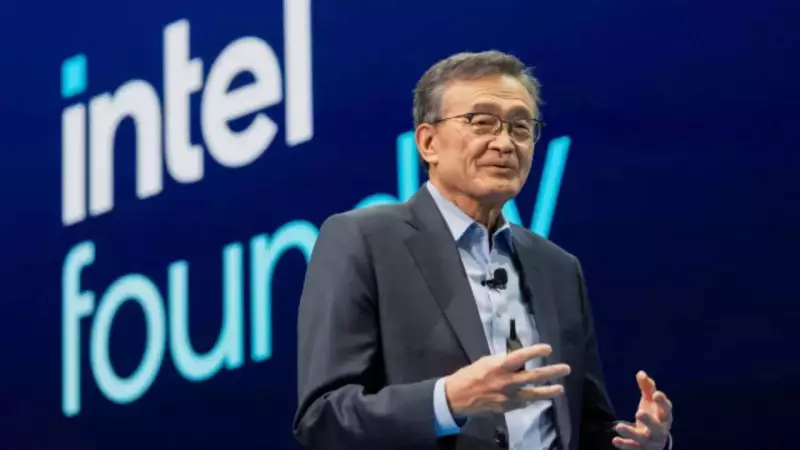
In a stunning reversal of fortune, Intel Corporation's Chief Executive Officer, Lip-Bu Tan, transformed a public call for his resignation from former President Donald Trump into a multi-billion dollar lifeline for the chipmaking giant. The dramatic events, which unfolded in August 2025, culminated in an $8.9 billion government investment that has redefined Intel as a cornerstone of American national security.
From Public Attack to Oval Office Deal
The crisis began in August 2025 when Donald Trump took to his Truth Social platform to demand the immediate resignation of Intel's CEO. Trump cited Tan's extensive investment history in China, alleging a conflict of interest. "He is highly CONFLICTED and must resign, immediately. There is no other solution to this problem," Trump wrote. The public attack sent shockwaves through the technology and financial sectors, casting a dark shadow over Intel's future.
However, Lip-Bu Tan moved swiftly to orchestrate a counter-strategy. He enlisted powerful allies in the tech industry, including Microsoft CEO Satya Nadella and Nvidia CEO Jensen Huang, to vouch for his character and leadership. Tan and his advisors meticulously prepared for a direct confrontation, focusing on how to address Trump's primary concern: the approximately 600 investments in Chinese companies Tan had made during his career as a venture capitalist.

The pivotal moment came less than two weeks after the public attack, in a 40-minute meeting in the Oval Office. Tan was joined only by Commerce Secretary Howard Lutnick and Treasury Secretary Scott Bessent. In that meeting, Tan successfully repositioned himself, presenting as an American patriot committed to restoring the nation's semiconductor supremacy.
The Art of the Deal: Equity for Funding
The breakthrough in the high-stakes negotiation came from an unconventional proposal. President Trump suggested that the United States government should receive equity in Intel in exchange for funding from the CHIPS Act. This idea, which Commerce Secretary Lutnick had reportedly been discussing with government staff for weeks, became the foundation of the agreement.
The final deal was transformative. Intel received $5.7 billion in direct funding, while the U.S. government acquired a 9.9% stake in the company, instantly becoming its largest shareholder. This move effectively designated Intel as a "too-strategic-to-fail" enterprise. Celebrating the agreement, Lutnick posted a video with the caption "The Art of the Deal: Intel," in which Tan pledged to "make Intel great again."
The government's vote of confidence had an immediate ripple effect. Within weeks, it catalyzed an additional $5 billion investment from Nvidia, whose CEO Jensen Huang referred to Tan as his "long-time friend." Trump celebrated the successful partnership on social media, even sharing an AI-generated image that showed the value of the U.S. government's stake rising by 50% following the Nvidia announcement.
Questions on Technical Leadership Amid Financial Triumph
Despite this extraordinary financial and political rescue, questions persist about Tan's ability to lead Intel's technical revival. Interviews with approximately 20 current and former Intel employees, government advisers, and industry contacts revealed underlying concerns. While Tan's dealmaking prowess is undisputed, doubts remain about whether he possesses the deep technical expertise required to restore Intel's chip manufacturing dominance, which has eroded in recent years.
Financially, Tan's tenure has been marked by success. Since his appointment in March 2025, Intel's share price has surged by approximately 80%, outperforming both the S&P 500 and even Nvidia over the same period. However, core manufacturing challenges continue. Reports indicate that Nvidia recently tested Intel's advanced 18A production process but decided not to move forward with it, highlighting the persistent technical hurdles.

The unprecedented government investment has done more than just stabilize Intel's balance sheet. It has fundamentally reshaped U.S. industrial policy, granting Intel unparalleled access to potential customers who are eager to align themselves with a company now seen as enjoying direct presidential favor. The saga of Lip-Bu Tan underscores how geopolitical maneuvering and high-stakes diplomacy are becoming as crucial as engineering brilliance in the global battle for technological supremacy.





