

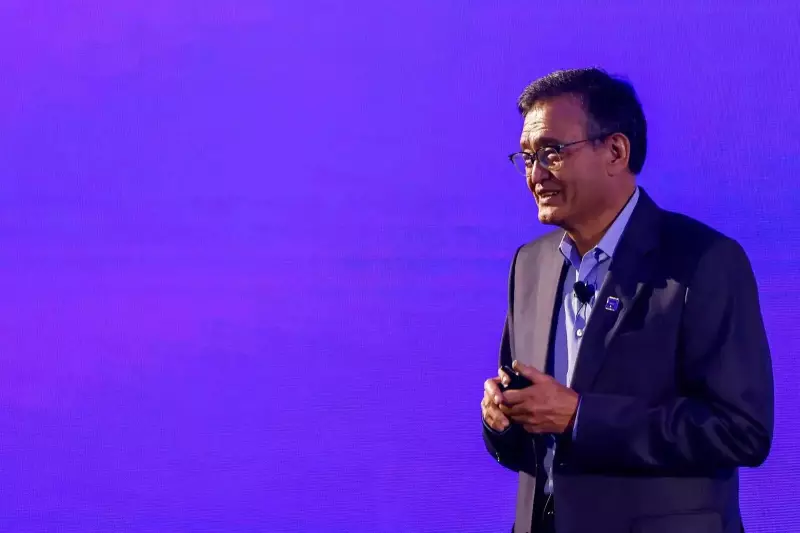
In his first New Year's address as the head of the struggling semiconductor giant, Intel CEO Lip-Bu Tan has painted a picture of a company emerging from its most turbulent year in decades. The message, released on Thursday, comes after nine months defined by aggressive restructuring, massive financial losses, and a dramatic intervention from the White House that secured Intel's future.
A Year of Brutal Restructuring and Strategic Lifelines
Tan, a 65-year-old industry veteran, took charge of Intel at a pivotal moment. His tenure so far has been a story of two extremes: severe cost-cutting paired with high-stakes deal-making. On one hand, Intel executed one of the most aggressive restructurings in its history. The company slashed approximately 24,000 jobs, representing a quarter of its global workforce. It also eliminated half of its management layers and halted planned factory expansions in Germany and Poland.
The financial results reflected the deep crisis. Intel posted a staggering $18.8 billion loss for 2024, its first annual loss since 1986, while continuing to lose significant market share to rivals like Nvidia and AMD.

Yet, in parallel, Tan orchestrated critical financial lifelines that may have saved the company. The most significant was securing $7.865 billion in funding from the US CHIPS Act. As part of this deal, the US government became Intel's largest single shareholder with a 9.9% stake. Furthermore, Tan secured a $2 billion investment from SoftBank in August, followed by a surprising $5 billion infusion from Nvidia—a company Intel had the chance to buy for $20 billion in 2005 and is now valued at over $4 trillion.
The Oval Office Showdown: From 'Resign Immediately' to 'Amazing Story'
The most dramatic chapter of Tan's young tenure unfolded in August 2025, involving former US President Donald Trump. Trump publicly demanded Tan's resignation on Truth Social, citing the CEO's past investments in Chinese companies and calling him "highly CONFLICTED."
Tan's response was a masterclass in crisis management. Within two weeks, he arranged a crucial meeting in the Oval Office. He enlisted heavyweights like Microsoft CEO Satya Nadella and Nvidia CEO Jensen Huang to vouch for his character beforehand. The 40-minute meeting with Trump, Commerce Secretary Howard Lutnick, and Treasury Secretary Scott Bessent became a turning point.
Tan successfully addressed concerns about his China ties, repositioning himself as a patriot committed to reviving American semiconductor manufacturing. The deal to give the US government equity in exchange for CHIPS Act funding was the clincher. Trump's public reversal was complete. He later posted on Truth Social praising Tan, calling his rise "an amazing story." This intervention made Intel a "too-strategic-to-fail" entity for the US. Since Tan's appointment in March, Intel's stock has surged by an impressive 80%.
Looking Ahead: A New Year's Focus on Innovation and Execution
In his holiday letter, Tan deliberately shifted the narrative from survival to future growth. He expressed gratitude to customers, partners, and employees for their support during the challenging transition. "I am encouraged by the changes I am seeing within Intel as we embrace our roots as an innovative, data-driven, engineering-centric and execution-focused company," Tan wrote.
He struck an optimistic tone about the road ahead, stating he is "excited and inspired by the tremendous opportunities" and looks forward to "building and shipping great products." The message closed with wishes for a joyful holiday and a prosperous 2026 as Intel continues its difficult but necessary transformation journey.
For the global tech industry and India's growing semiconductor ambitions, Intel's comeback attempt under Tan's leadership serves as a crucial case study in navigating geopolitical tensions, securing state support, and executing a painful but potentially vital corporate turnaround.






