

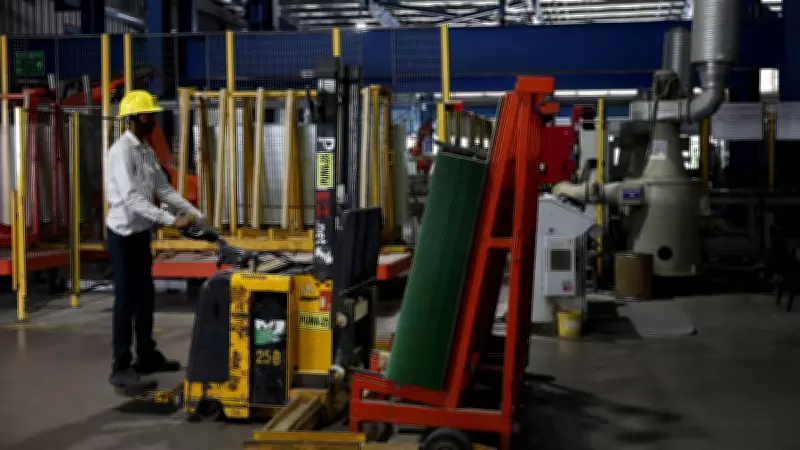
India's policymakers continue to speak the language of manufacturing, even as the global economy increasingly shifts toward ecosystems. This divergence raises a critical question: Is India ready to move beyond manufacturing?
The Manufacturing Mindset
For decades, manufacturing has been the cornerstone of India's industrial policy. Initiatives like 'Make in India' and production-linked incentive schemes have aimed to boost the sector's contribution to GDP and create jobs. However, experts argue that the world is moving toward integrated ecosystems where value creation depends on interconnected services, digital platforms, and innovation networks rather than standalone production units.
The Global Shift
Globally, leading economies are embracing ecosystem-driven growth models. These ecosystems combine manufacturing with services, data, and technology to deliver comprehensive solutions. For instance, a smartphone is no longer just a product; it is part of an ecosystem involving software, apps, content, and after-sales services. This shift demands new skills, infrastructure, and policy frameworks that India has yet to fully develop.

Voices from the Industry
Sunil Bharti Mittal, chairman of Bharti Enterprises, has highlighted the need for India to adapt. In recent remarks, he emphasized that while manufacturing remains important, the country must also invest in digital infrastructure, research and development, and human capital to thrive in the ecosystem economy. He warned that sticking solely to manufacturing could leave India behind as other nations innovate.
Challenges Ahead
Transitioning to an ecosystem-based model poses several challenges for India. These include:
- Skill Gaps: The workforce needs training in digital literacy, data analytics, and system integration.
- Policy Inertia: Existing regulations are often tailored for traditional manufacturing, not for cross-sector ecosystems.
- Infrastructure Deficits: High-speed internet, reliable power, and logistics networks are essential but still inadequate in many regions.
- Investment Climate: Attracting venture capital and fostering startups require a more supportive environment.
Opportunities in the Ecosystem Era
Despite these hurdles, India has significant advantages. Its large pool of engineers, a thriving startup scene, and a vast domestic market provide a strong foundation. By leveraging its IT services strength and embracing digital public goods, India can create unique ecosystems in sectors like fintech, healthtech, and agritech. Policymakers are beginning to acknowledge this shift, with initiatives like the National Digital Health Mission and the Open Network for Digital Commerce.
The Road Ahead
To remain competitive, India must balance its manufacturing ambitions with ecosystem thinking. This means updating industrial policies, fostering collaboration between industry and academia, and encouraging cross-sector innovation. As G Venkat Raman notes in his analysis, the language of ecosystems is becoming the global norm, and India cannot afford to be a monolingual speaker in a multilingual world.
The debate is not about abandoning manufacturing but about complementing it with ecosystem capabilities. The question remains: will India's policymakers broaden their vocabulary in time?

