Bengaluru IT Companies Phase Out Pandemic-Era Work-From-Home Policies
The era of widespread work-from-home arrangements, once considered the defining perk of the pandemic period, is quietly coming to an end across India's information technology sector. Companies are increasingly tightening hybrid work norms and making in-office presence the new default standard, moving away from the one-size-fits-all approach that characterized earlier remote work policies.
Major IT Firms Implement Strict Attendance Requirements
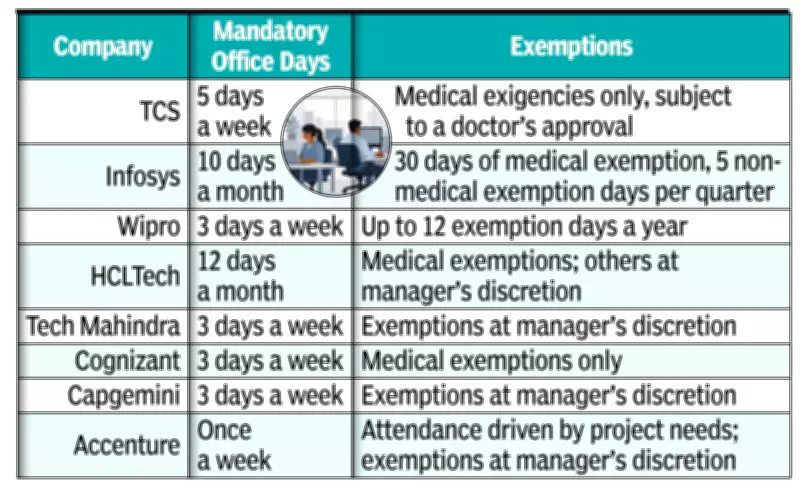
Tata Consultancy Services has taken the most stringent approach by mandating five days of office attendance each week and directly linking compliance to variable pay and career progression opportunities. In 2024, TCS rolled out a comprehensive work-from-office policy that establishes clear attendance benchmarks for performance bonuses.
The TCS attendance policy includes:

- Employees maintaining 85% or higher office attendance are eligible for 100% of their variable pay for the period
- Those with 75–85% compliance receive 75% of the payout
- Staff achieving 60–75% attendance qualify for 50% of their performance bonus
- Employees with less than 60% compliance are not eligible for any variable compensation
Other IT Majors Introduce Their Own Hybrid Frameworks
While stopping short of requiring a full return to office, other leading IT companies have implemented their own checks and balances to enforce hybrid work arrangements:
Infosys mandates a minimum of 10 in-office days each month, with the policy including 30 days of medical exemption. Employees can also avail five non-medical exemption days per quarter for personal needs.
Wipro now requires employees to work from the office at least three days each week, allowing up to 12 exemption days annually for those unable to meet this requirement consistently.
Accenture asks employees to come into the office once weekly, though in practice, attendance patterns are often shaped by team-level expectations and managerial discretion rather than policy alone.
Industry Shift Toward Monitored Hybrid Models
The broader industry movement signals a significant transition away from flexible work-from-home models toward more tightly monitored hybrid frameworks. Work-from-home arrangements, once used as a key talent attraction and retention tool during the pandemic, are losing relevance in a market characterized by slowing revenue growth, margin pressures, and cautious client spending patterns.
Phil Fersht, CEO and chief analyst at US-based IT advisory firm HFS Research, explained the evolving approach: "Human resources norms are moving toward role-based and outcome-based hybrid models. Early-career staff, client-facing roles, and teams handling sensitive data will see tighter in-office requirements, while senior or highly specialized roles will retain greater flexibility."
Fersht added that technological developments are influencing this shift: "Artificial intelligence and automation are making work more collaborative and iterative, increasing the value of in-person interaction at certain stages of project development and problem-solving."
Changing Market Conditions Drive Policy Adjustments
Pareekh Jain, CEO and lead analyst at Pareekh Consulting, noted that companies are tightening office attendance norms because concerns around employee attrition and talent attraction have eased compared to the pandemic period. "There will still be flexibility for mental and physical health needs, but that will vary significantly by company," Jain observed.
He further explained the diversity of approaches emerging across the sector: "Some organizations will mandate two or three days of office attendance each week, while others will require 10–15 days per month. The common thread is that work-from-home as a universal benefit is being replaced with more structured, monitored hybrid arrangements that balance organizational needs with employee flexibility."
The Bengaluru-based IT sector's policy shift reflects broader global trends in workplace management, as companies seek to optimize productivity, collaboration, and organizational culture while maintaining some degree of flexibility that employees have come to expect in the post-pandemic work environment.