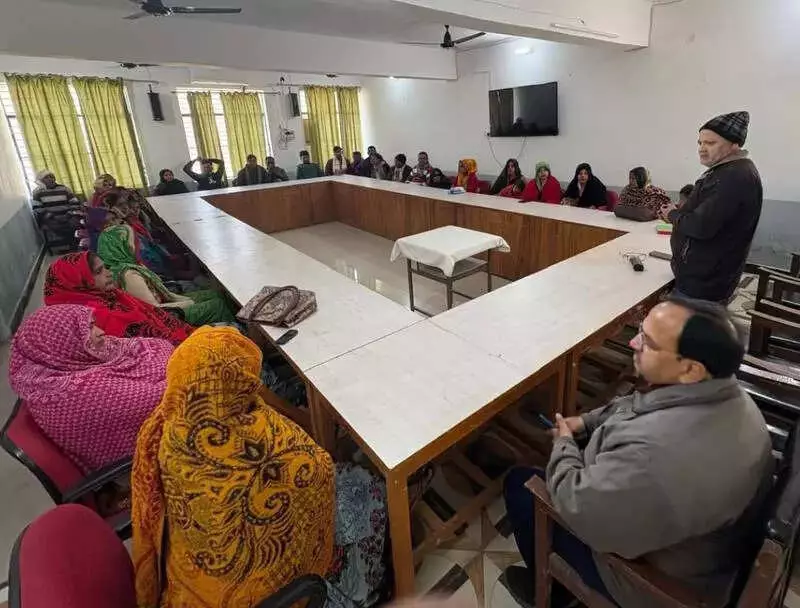
Krishi Vigyan Kendra Dalip Nagar in Kanpur kicked off a five-day training program on crop residue management this Tuesday. The center operates under Chandra Shekhar Azad University of Agriculture and Technology. This initiative aims to educate local farmers about sustainable agricultural practices.
Focus on Preventing Crop Burning
Ajay Kumar Singh, the in-charge of the center, served as the chief guest. He directly addressed the farmers during the program. Singh strongly advised against setting fire to crop residues. Instead, he recommended letting the residues decompose naturally in the fields.
This natural decomposition process creates valuable manure. It helps maintain and even improve soil fertility over time. Singh emphasized that this method is far better for the land than burning.

Health and Environmental Warnings
Home scientist Nimisha Awasthi highlighted the severe consequences of burning crop waste. She explained that this practice causes significant air pollution. The smoke and particulate matter degrade the environment substantially.
Human health suffers greatly from this pollution. Awasthi pointed out that vulnerable groups are especially at risk. Children, elderly individuals, and pregnant women experience the worst effects from the polluted air.
The Local Farming Context
Awasthi noted the dominant crop cycle in the Kanpur district. Farmers primarily grow paddy and wheat here. This cycle generates large quantities of crop residue after each harvest.
Burning this residue does more than pollute the air. It also damages the soil itself. The fire destroys essential microorganisms living in the earth. These tiny organisms are crucial for healthy crop growth.
Scientists at the event stressed a key point. Farmers must become fully aware of proper residue management techniques. This knowledge is essential for sustainable farming.
Successful Training Session
Scientist Rajesh Rai successfully conducted the inaugural program. A group of twenty-five farmers participated actively in this first session.
The attending farmers included several recognized progressive cultivators:
- Shubham Yadav
- Sunil Kumar
- Jagdish Kumar
- Dinesh Kumar
- Ram Sajeevan
- Pappi Devi
- Pushpa Devi
This training program represents a practical step toward better agricultural methods in the region. It combines education with immediate, actionable advice for the farming community.