

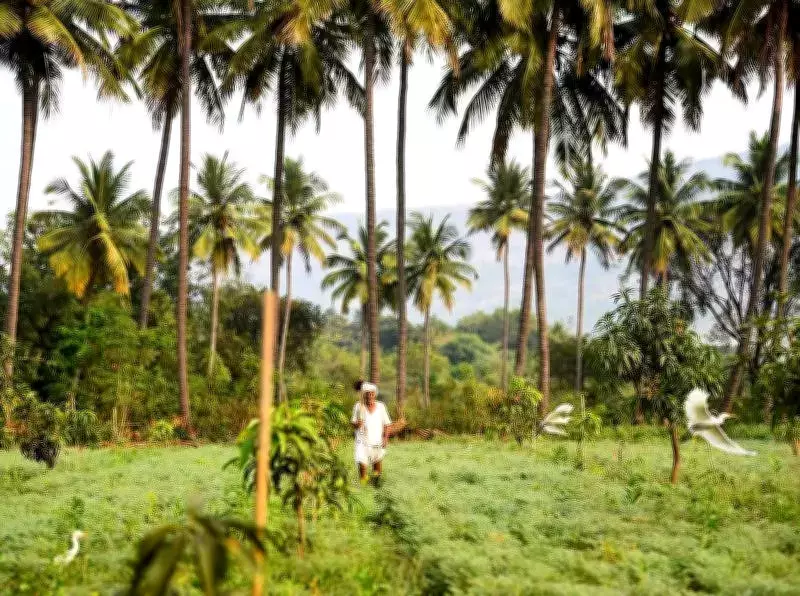
Coconut Industry at Crossroads: Rising Demand Meets Aging Plantations in Karnataka
The post-pandemic era has ushered in a significant surge in demand for coconut products across India. Virgin coconut oil has seen remarkable popularity in wellness circles, while the tender coconut variety has experienced heavy commercialization through retail and beverage channels. This dual demand driver has placed coconuts at the forefront of agricultural commodities. However, this promising market scenario is confronting a harsh reality on the supply side, particularly in Karnataka, where aging coconut palms threaten to undermine production capacity.
The Senile Palm Problem: A Production Bottleneck
Scientists and agricultural experts monitoring India's coconut sector reveal a troubling statistic: a substantial portion of coconut fields contain what they term "old and senile palms." These are typically trees aged sixty years or older that produce minimal fruit or have ceased yielding altogether. B Hanumanthe Gowda, chief coconut development officer at the Coconut Development Board, states, "More than 30% of Karnataka's coconut palm cultivation is old and senile, which is a major factor for production decline. Besides, there are pests and diseases exacerbating the situation."
This aging infrastructure represents a direct threat to meeting consumer and industrial demand. The solution, while technically straightforward, presents significant financial hurdles for farmers.

The Costly Reality of Rejuvenation
Replacing unproductive, aged palms with young, vibrant saplings that can yield fruit within three years is an expensive endeavor. Dr. K Balachandra Hebbar, director of ICAR–Central Plantation Crops Research Institute (CPCRI) in Kasaragod, provides a clear cost estimate: "On average, the cost of uprooting a tree and replacing it with a vibrant sapling would be around Rs 2,000 per tree. So, incentives must match that financial outlay."
This figure is echoed by growers on the ground. Satyanarayan Udupa, a coconut grower and district secretary of the Bharatiya Kisan Sangh, breaks down the expenses: chopping the tree, uprooting it, and replanting—including approximately Rs 400 for a new plant, manure, and compost—totals at least Rs 1,500 per tree. Udupa emphasizes, "Government stepping in to make it easier for us financially would help turn senile farms, which form 90% of plantations in coastal districts, into vibrant ones."
Financial Disparities and Implementation Challenges
Current government support, while existing, appears insufficient to catalyze widespread change. Gowda notes that the state government provides Rs 1,000 per tree for up to 32 trees per hectare under replanting programs, with neighboring states offering slightly more. However, this leaves a considerable cost burden on farmers.
Udupa highlights additional practical challenges: "Even when a fraction of roughly 150 trees per hectare is replaced with new saplings, they tend to get overshadowed by already tall palms, stunting their growth." Furthermore, the financial viability of such investments is skewed. "If farmers plan on taking loans to meet additional expenses, only those with large farms will have the money to invest. A larger portion of small landholders find it financially unviable, prompting them to maintain status quo," he explains.
Contrasting Government Ambitions with Ground Realities
This lack of urgency at the farm level contrasts sharply with the Union government's budgetary push for higher agricultural productivity. Karnataka, holding the position of India's number one coconut producer with the second-largest cultivation area, stands at a critical juncture. The potential for growth is significant.
Dr. Hebbar points to the opportunities: "We have 24 varieties and hybrids that can drive yields up. Value addition from coconuts is currently at 8%. We need to target 22% by 2035. Farmers' incomes will go up significantly, and they are aware of it. Some have been seeking guidance over the past two years, considering rising demand. Replacing old and senile farms is a very important step."

Beyond Replanting: The Pest and Disease Factor
Rejuvenation is not the only challenge. Effective pest and disease control remains paramount for sustaining healthy plantations. Kesavan Subaharan, principal scientist at ICAR–NBAIR, identifies specific threats, including diseases like root wilt and destructive insects such as the red palm weevil. Addressing these biological threats is essential to protect both existing productive trees and new investments in saplings.
The path forward for Karnataka's coconut sector requires a coordinated strategy. It must balance the immediate financial constraints of farmers with the long-term national goals of increased productivity and value addition. Bridging this gap will determine whether the state can capitalize on the immense market opportunities presented by rising domestic and global demand for coconut products.





