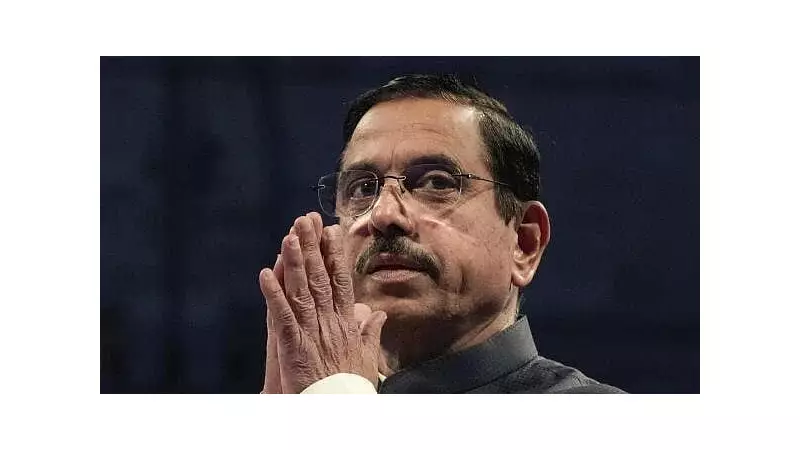
Karnataka has made significant strides in its renewable energy journey, achieving a major installed capacity milestone. Union Minister Pralhad Joshi recently announced that the state's green energy infrastructure now stands at an impressive 25,675.39 megawatts (MW).
Massive Capacity and Rooftop Solar Success
The announcement highlights Karnataka's leading role in India's clean energy transition. Alongside the large-scale capacity, the Minister provided details on a crucial decentralized initiative. He stated that a total of 14,151 Rooftop Solar (RTS) systems have been successfully installed across the state.
This widespread adoption of rooftop solar technology has directly benefited 22,313 households, enabling them to generate their own clean electricity and reduce dependence on the conventional grid. The data underscores a dual approach, combining utility-scale projects with citizen-centric programs.

Driving Sustainable Development
The progress reported by Minister Joshi on December 2, 2025, positions Karnataka as a key contributor to India's national renewable energy targets. The substantial capacity addition aids in meeting growing power demand through sustainable sources, reducing the carbon footprint of the state's energy sector.
The success of the rooftop solar scheme also promotes energy security at the individual household level and supports the government's broader vision of promoting self-reliance in energy. This move is expected to inspire further public participation in solar adoption.
Future Implications and Growth Trajectory
Reaching a capacity of over 25,600 MW establishes a strong foundation for future expansion. The figures indicate robust investment and policy support for the renewable sector within the state. The positive outcome of the household-level solar program is likely to lead to more ambitious targets and increased funding for similar schemes.
As one of India's most industrially active states, Karnataka's shift towards renewables is crucial for sustainable economic growth. This achievement not only addresses environmental concerns but also enhances the state's energy resilience and creates green jobs in the manufacturing, installation, and maintenance sectors.