

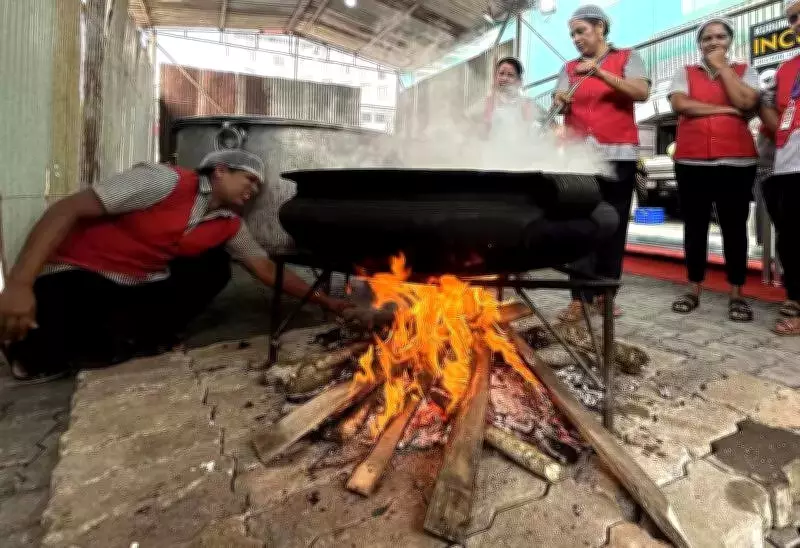
Kerala's Hospitality Industry Reels Under Severe LPG Cylinder Shortage
The ongoing crisis caused by a severe shortage of commercial LPG cylinders in Kerala has reached critical proportions, with approximately 40% of restaurants across the state forced to close their doors permanently. Those establishments managing to remain operational are implementing drastic menu overhauls and operational changes merely to survive this unprecedented challenge.
Urban Centers Bear the Brunt of the Crisis
The worst affected areas are urban hubs including Kochi and Thiruvananthapuram, where strict fire-safety regulations and congested building structures make traditional alternatives like firewood stoves completely impractical. According to N Abdul Razak, General Secretary of the Kerala Hotel & Restaurant Association (KHRA), "Of the nearly one lakh hotels, both small and large, close to 40% have been compelled to down their shutters permanently."
Industry Association Issues Emergency Guidelines
In response to this escalating emergency, KHRA has released comprehensive guidelines aimed at helping remaining establishments navigate the crisis:

- Promoting alternative cooking methods including combi-ovens, induction stoves, and electric steamers
- Encouraging regional cooperation through bulk cooking at centralized locations
- Implementing significant menu reductions and operational hour adjustments
- Pooling resources for more efficient distribution among individual units
These measures have fundamentally transformed dining experiences across Kerala, with popular fresh-made items like dosa and appam being suspended in favor of bulk-cooked alternatives such as chapatis and parottas that can be prepared in advance and maintained in warming equipment.
Operational Adjustments and Workforce Challenges
Shibu G, Secretary of the India Coffee Board Workers Cooperative Society which operates 45 branches statewide, explained their survival strategy: "We've dramatically reduced production of labor-intensive dishes like dosa and poori, limiting them to peak breakfast hours only. For the remainder of the day, customers receive chapatis and parottas that can be prepared in bulk quantities. Traditional meals requiring multiple dishes have been suspended entirely, replaced by biryani items that are more practical under current constraints."
The organization has urgently requested distributors to supply at least one gas cylinder daily to each operational unit, a critical measure for preserving over 1,600 jobs across their network.
Secondary Cost Inflation Compounds the Crisis
As numerous establishments attempted to transition to traditional wood-fired cooking methods, the sudden surge in demand caused firewood prices to skyrocket unexpectedly. Razak noted, "Firewood prices have increased dramatically due to this heightened demand. Currently, one must pay approximately 90 rupees per thookam (a stacked pile equivalent to one cubic meter), representing an increase of 15 to 20 rupees within just a few days."
Additional hidden costs have emerged throughout modern kitchen operations:
- Aluminum containers essential for bulk storage and delivery have seen steady price increases
- Polycarbonate bottles crucial for beverage and packaging applications have become more expensive
- Hoteliers face the difficult decision of either passing costs to customers or operating at significant losses
Shibu emphasized their commitment to customer relationships: "We have decided against increasing menu prices despite these challenges, maintaining the same approach we adopted during the previous COVID-19 crisis period."
Labor Force Exodus Creates Additional Uncertainty
The crisis extends beyond material shortages to human resource challenges. The industry is currently experiencing a mass departure of migrant workers from northern India who traditionally form the backbone of fast-food and parotta-making operations.
Razak highlighted this concerning development: "Most migrant workers are returning to their home states due to the lack of employment opportunities here, compounded by approaching elections. This labor exodus will present enormous challenges for eateries attempting to recover once this crisis eventually subsides."

The combination of material shortages, escalating secondary costs, and workforce depletion has created a perfect storm for Kerala's hospitality sector, with industry experts warning of long-term structural impacts even after the immediate LPG shortage is resolved.





