Khandala Ghat: How a 19 km bottleneck cripples India's busiest 94 km Mumbai-Pune Expressway
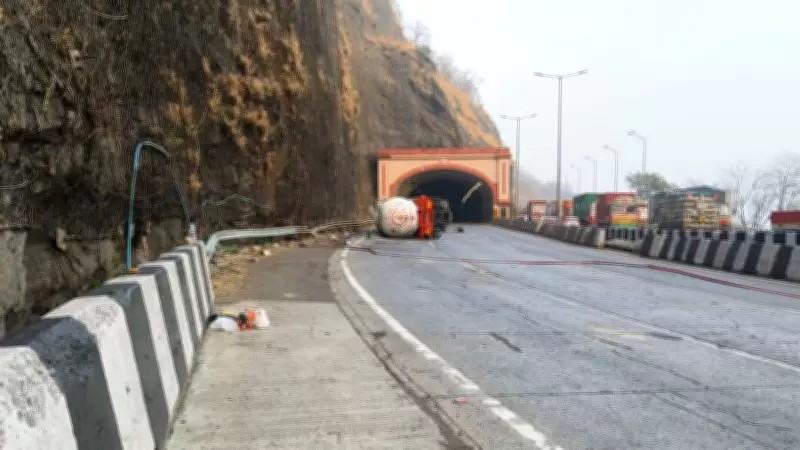
A recent 32-hour traffic disruption on the Mumbai-Pune Expressway has once again highlighted a critical vulnerability in one of India's most vital transportation corridors. The incident, triggered by a tanker carrying highly flammable propylene gas overturning near the Adoshi tunnel in Raigad district, brought traffic to a complete standstill, stranding thousands of commuters overnight and exposing how a narrow 19 km ghat section continues to dictate traffic flow on the entire 94 km expressway.
The geographical constraint that shaped history
The Western Ghats have always presented a formidable natural barrier between Mumbai and the Deccan Plateau. For centuries, the Bhor ghat route passing through Khopoli, Lonavala and Khandala remained the most practical crossing option. During British colonial rule, this route saw the construction of both railway lines in the mid-nineteenth century and a hill road that eventually evolved into the old Mumbai-Pune highway.
For decades, all road traffic between India's financial capital and its important western neighbor navigated this winding, treacherous path with its sharp curves, steep gradients, and frequent monsoon disruptions. When Maharashtra planned its ambitious expressway project in the 1990s, geographical realities forced planners to follow essentially the same corridor rather than creating an entirely new route through the mountains.

Why the expressway remains vulnerable
The Mumbai-Pune Expressway, constructed by the Maharashtra State Road Development Corporation and opened between 2000 and 2002, dramatically reduced travel time between the two cities. However, while the plains sections were relatively straightforward to develop, the ghat stretch between Khopoli and Kusgaon presented enduring challenges that continue to haunt the corridor today.
This critical 19.8 km section now carries an intense mix of traffic including tourist vehicles heading to popular hill stations like Lonavala and Khandala, container trucks, fuel tankers, and vehicles transporting hazardous chemicals. The road features steep slopes, sharp curves, tunnels, and minimal shoulder space, creating a perfect storm for congestion whenever incidents occur.
The domino effect of accidents
When accidents involve fuel or chemical tankers, authorities must stop traffic completely for safety reasons. With no viable alternative route available, congestion builds rapidly and spreads across the entire corridor. This explains why even a single incident like the recent tanker overturning can paralyze traffic for hours or even days, affecting both Mumbai-bound and Pune-bound lanes simultaneously.
The expressway has seen various safety upgrades over the years, including improved tunnel signage, better barricading, and enhanced surveillance systems. Authorities have also addressed specific choke points, most notably demolishing the nearly 190-year-old Amrutanjan Bridge in April 2020 during COVID-19 lockdowns. This British-era structure had become a significant bottleneck due to its narrower width compared to the rest of the expressway.
Future solutions and current limitations
Despite these improvements, the main carriageway remains essentially unchanged since its opening as a six-lane road in 2002. The Maharashtra State Road Development Corporation has proposed widening sections to eight and eventually ten lanes, but these plans face implementation challenges, particularly in the ghat section where terrain and environmental constraints make expansion difficult.
Instead, the state has prioritized the Mumbai Pune Expressway Missing Link project, which aims to bypass the problematic Khandala ghat section entirely through a network of tunnels and viaducts. Once completed, this alternative route is expected to significantly reduce travel time and prevent large-scale disruptions like the recent 32-hour jam.

Following this week's massive traffic disruption, the Maharashtra government has directed MSRDC to prepare a dedicated emergency traffic management plan specifically for the expressway. Until comprehensive solutions like the Missing Link project materialize, however, the Khandala ghat will continue to function as the weakest link in India's busiest expressway corridor, where a single accident can bring the entire system to its knees.