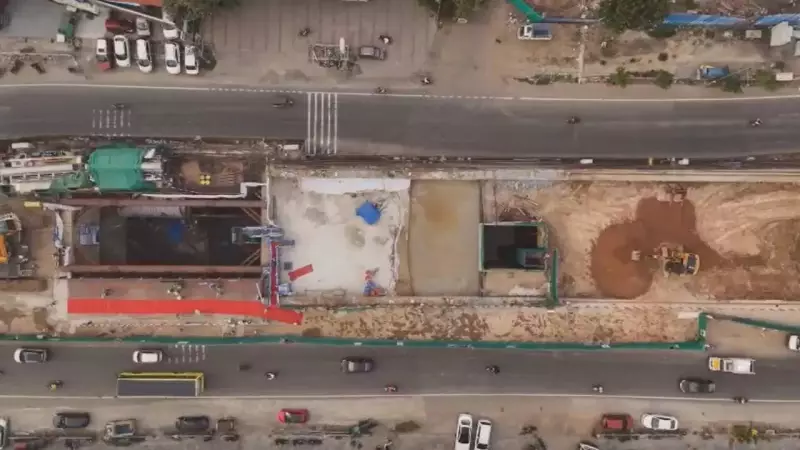
In a significant development for Kolathur's infrastructure project, tunnelling operations have gained substantial momentum with the seamless transition between two massive tunnel boring machines. The carefully coordinated handover has enabled uninterrupted progress on this critical underground corridor.
Precision Handover Between TBMs
TBM Kurinji has officially resumed its drive from the exact location where TBM Mullai completed its excavation work. This strategic positioning allowed for immediate continuation of tunnelling activities without any operational gaps. The previous machine, TBM Mullai, had successfully surfaced after months of steady underground movement, marking the completion of its assigned segment.
Project officials emphasized that the shift between the two tunnel boring systems occurred without any delays, maintaining what they described as a continuous flow of work. The precise timing of this equipment transition is expected to significantly boost overall operational efficiency for the entire underground project.

Mullai's Challenging Underground Achievement
TBM Mullai accomplished a demanding 246-meter push before breaking through at the North Shaft, concluding a critical phase that required consistent precision throughout its operation. The machine's emergence represented a key milestone for the corridor's development, coming after an extended period of delicate manoeuvring through complex underground conditions.
The progress occurred under particularly sensitive surface conditions, necessitating constant coordination between engineering teams and monitoring personnel. This careful management ensured that the tunnelling could proceed safely while minimizing impact on surface activities and structures.
Resource Optimization and Future Prospects
With TBM Mullai's task successfully completed, project teams were able to immediately redeploy resources to other critical areas of the project. This efficient resource management has helped maintain overall project momentum while optimizing the use of equipment and personnel.
Engineers working on the project believe that the renewed pace following this coordinated equipment transition will substantially strengthen the overall underground progress. The seamless handover demonstrates the project team's advanced planning capabilities and their commitment to maintaining strict timelines.
The successful execution of this phase sets a positive precedent for future stages of the Kolathur tunnelling project, highlighting the effectiveness of coordinated machinery deployment in large-scale infrastructure development.