

Kolhapur Industries Issue Ultimatum Over Maharashtra's Solar Grid Charges
Commerce and industrial associations in Kolhapur have issued a stern warning, threatening widespread protests and even shifting operations to neighboring Karnataka if the Maharashtra Electricity Regulatory Commission (MERC) fails to withdraw its controversial order imposing grid support charges on industrial units with rooftop solar power plants exceeding 10 kW capacity.
MERC's Grid Support Charge Structure
The Maharashtra Electricity Regulatory Commission has implemented these charges on large rooftop solar installations to recover costs associated with maintaining grid infrastructure. This infrastructure enables the export of surplus solar power and helps balance system load. For the fiscal year 2026-27, the charges have been set at Rs 1.96 per kW, with projections indicating an increase to Rs 2.32 per kW in subsequent years.
Industry Leaders Voice Strong Opposition
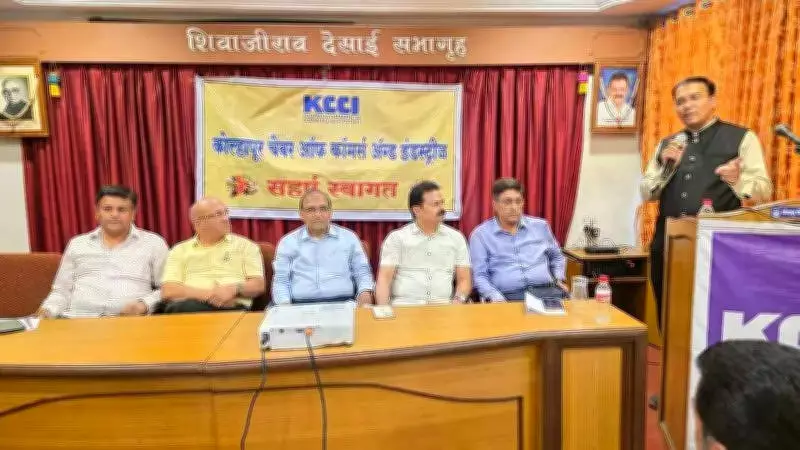
A crucial meeting was convened at the Kolhapur Chamber of Commerce and Industries (KCCI) on Monday, bringing together representatives from various industrial and commercial bodies alongside members of the Solar Power Plant Manufacturers' Association. Association president Amit Kulkarni delivered a forceful critique, describing the MERC order as directly contradictory to national policies designed to promote renewable energy adoption.

Kulkarni elaborated that the combination of grid support charges on solar generation, restrictions on energy banking, higher peak-hour tariffs, and reduced incentives would collectively render solar projects financially unviable. He emphasized that this policy shift would severely undermine investor confidence in Maharashtra's renewable energy sector.
Specific Grievances and Economic Threats
KCCI president Sanjay Shete articulated the practical challenges facing businesses. "If the government only allows concessions between 9 am and 5 pm, we might as well operate our hotels and businesses exclusively during those hours," he stated. Shete highlighted that the Maharashtra State Electricity Distribution Company Limited (MSEDCL) has imposed these grid support charges specifically on consumers generating more than 10 kW of solar power.
This policy creates a paradoxical situation where solar users are forced to purchase expensive electricity at night because they cannot effectively utilize the surplus power they generated during daylight hours. Shete issued a clear warning: "If this issue is not resolved promptly, we will take to the streets in protest."
Broader Economic Consequences
The industry representatives further argued that these charges effectively function as a penalty on clean energy production. They warned that the financial burden would not remain isolated to solar consumers but would ultimately affect even non-solar consumers through higher overall electricity costs. The associations projected significant negative outcomes including:
- Substantial job losses across multiple sectors
- Hampered economic growth throughout Maharashtra
- Potential relocation of industries to more business-friendly states like Karnataka
- Setbacks to India's renewable energy transition goals
The situation remains tense as Kolhapur's business community awaits MERC's response to their demands, with the threat of industrial action and interstate migration looming large if satisfactory resolution is not achieved.






