Kolkata's Office Lunch Crisis Deepens as LPG Shortage Hits Eateries
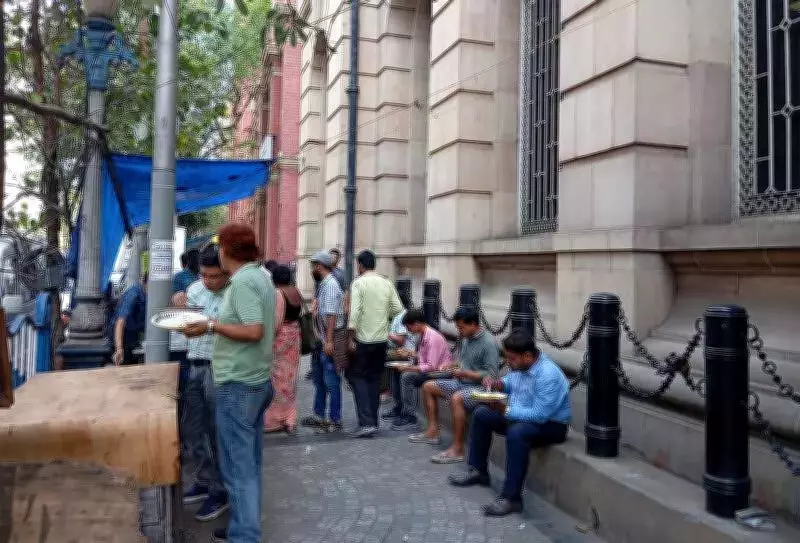
The bustling lunch rush in Kolkata's prime office districts, including Dalhousie, Camac Street, Park Street, and Salt Lake, is undergoing a dramatic transformation. A worsening shortage of LPG is compelling eateries and food stalls to implement significant changes, from raising prices and eliminating popular dishes to suspending operations entirely. Commercial gas cylinders have become scarce and exorbitantly priced, creating a ripple effect across the city's food service industry.
Menu Simplification and Price Hikes Become the Norm
At a busy eatery in Dalhousie, owner Biswanath Maity described how the shortage has forced him to overhaul his kitchen operations. "Earlier, our lunch menu featured biryani, mutton curry, and several fried items. Now, we are focusing mainly on rice, dal, egg curry, and a couple of quick vegetable dishes," said Maity, who runs the hotel near the Tea Board office. He emphasized that prolonged gas usage is no longer affordable, leading to a 5–10% price increase as LPG procurement grows increasingly difficult. "Commercial cylinders are selling at nearly Rs 4,000 in the black market, and even that is not easy to get," he added, highlighting the severity of the crisis.
Vendors Turn to Alternative Cooking Methods
Some vendors faced temporary closures before finding makeshift solutions. Rekha Das, who operates a small eatery serving rice and roti meals, closed for two days before arranging kerosene stoves to resume business. In Salt Lake, the impact is particularly stark outside the CGO Complex, where more than half of the 22 food stalls that once catered to office-goers have temporarily shut down.

Siddhartha Shankar Pal, a Kestopur resident with 26 years of experience running a food stall near the complex, reverted to older cooking methods due to the crisis. "Commercial cylinders now cost around Rs 3,500. I shifted to LPG eight years ago, but now I went back to wooden and coal ovens," Pal explained. He noted a slight price increase to offset these challenges.
Several vendors have adopted coal-based cooking as a last resort. Sambhunath Poyra, who runs a stall outside City Centre I in Salt Lake, invested Rs 5,500 in two coal ovens to keep his business afloat. "I did not increase the price per thali," Poyra said. "But earlier I used to offer free refills. Now I have started charging for that," reflecting the subtle yet impactful adjustments vendors are making to survive.
Widespread Impact Across Key Areas
The effects of the LPG shortage are visible across Park Street, Russell Street, and Camac Street, where lunch counters are operating with curtailed menus and higher prices. Shahnawaz Hussain, a vendor selling luchi, alurdam, khichdi, and fritters on Park Street, reported price hikes ranging from Rs 5 to Rs 25 per item.
Office workers are feeling the pinch directly. Ipsita Chowdhury, an employee at a private bank on Camac Street, shared her experience: "Chicken stew with two pieces of bread that used to cost Rs 100 now costs Rs 125." This increase has prompted some colleagues to start bringing food from home, altering daily routines and reducing reliance on local eateries.
The LPG shortage is not just a logistical issue but a significant economic disruption, forcing Kolkata's vibrant food scene to adapt under pressure. As vendors struggle with soaring costs and limited resources, the city's office-goers face higher expenses and fewer dining options, highlighting the broader implications of this crisis on urban life and commerce.