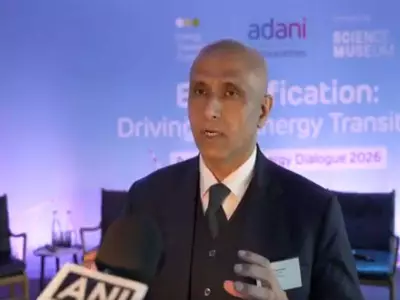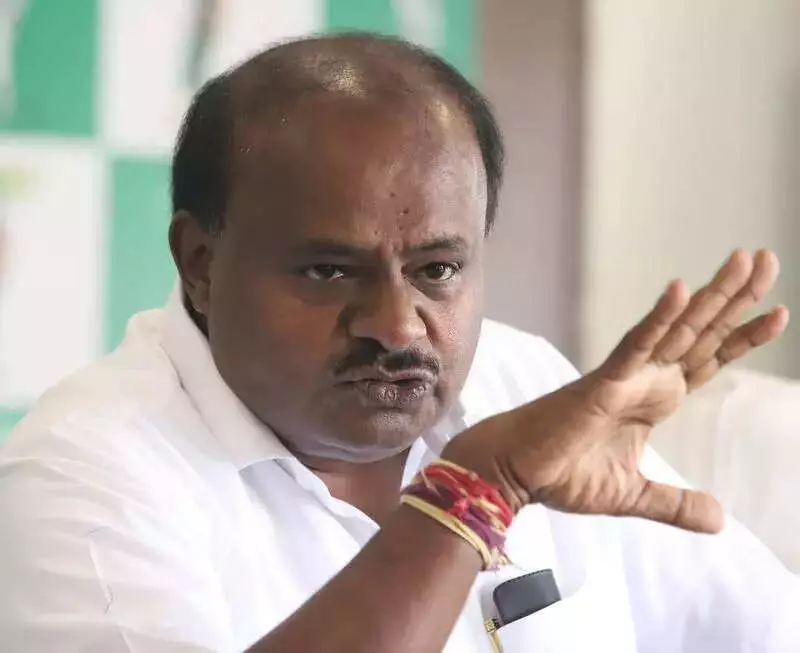
Union Minister for Steel and Heavy Industries, HD Kumaraswamy, has pledged immediate efforts to safeguard coffee planters in Karnataka from the stringent provisions of the SARFAESI Act. This commitment came during a public address on Monday, where he acknowledged the severe distress faced by the plantation community.
Minister's Promise Amidst Growing Fear
The minister made these assurances while speaking at the valedictory ceremony of the Central Coffee Research Institute's (CCRI) centenary celebration in Balehonnur, Chikkamagaluru. Kumaraswamy admitted that he was previously unaware of the Securitisation and Reconstruction of Financial Assets and Enforcement of Security Interest (SARFAESI) Act and its impact on coffee growers.
"I will make all the efforts to exempt coffee plantations from the Act," Kumaraswamy declared. He urged local leaders to bring a delegation to Delhi to formally address the issue, promising prompt intervention.

The Root of the Crisis: Bank Auctions and Government Stance
The planters' fears are rooted in the banks' recovery actions under the SARFAESI Act, which allows financial institutions to auction properties of loan defaulters. The situation has reached a critical point, with nearly 800 coffee estates already attached under the act, threatening the livelihoods of thousands of families.
This crisis is exacerbated by the Union government's stated position. In the Lok Sabha, Minister of State for Finance Pankaj Chaudhary termed the banks' recovery proceedings a "commercial decision" where the government would not interfere. This has left planters feeling vulnerable and without recourse.
Industry Leaders Echo the Plea for Protection
Earlier at the event, Sringeri MLA and Chairman of the Coffee Board of India, MJ Dinesh, implored Kumaraswamy to take immediate measures to stop the auctioning of estates. He highlighted a case where a person from Dubai purchased a coffee estate auctioned by a bank, underscoring the vulnerability of local planters.
"We are not looters or land grabbers. The planters will definitely repay loans if they get good returns," Dinesh argued, pointing to market volatility and low returns as primary reasons for default.
Broader Issues: Forest Act and Human-Animal Conflict
The discussion also veered into other critical challenges. Dinesh cited the stringent Forest Act as a major survival hurdle for planters, calling for its amendment. Kumaraswamy acknowledged the problem, stating that the forest department has been harassing farmers, but noted that changing the law requires coordinated action from the cabinet, courts, and the government.
The Union Minister also assured the gathering that he was working on solutions to prevent human-animal conflicts and other persistent issues. He appealed to planters for patience, asking them to wait for two years for a comprehensive resolution to their problems.
Kumaraswamy's Critique of State Guarantees
In a separate but related comment, Kumaraswamy criticized the state government's guarantee schemes. He ridiculed the direct benefit transfers, saying, "Rs 2,000 will not help people, and we need development." He contrasted this with his tenure as Chief Minister, where he claimed to have introduced pro-people programs and waived farm loans twice.
The event was attended by several dignitaries, including MLA HK Suresh, former MLA HM Vishwanath, Coffee Board of India secretary M Kurma Rao, and CCRI director Senthil Kumar.