Lamborghini Prioritizes Plug-In Hybrids Over Full Electrification in Near Future
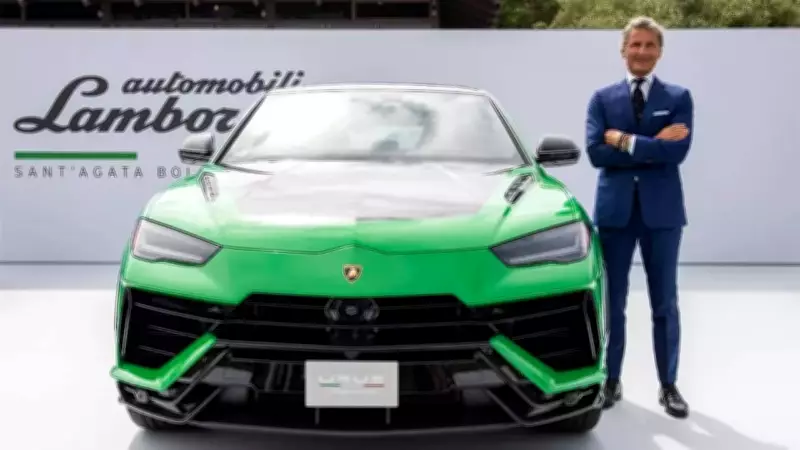
Lamborghini will maintain its focus on plug-in hybrid technology rather than transitioning to fully electric vehicles in the immediate future, according to CEO Stephan Winkelmann. In a recent media interaction, Winkelmann detailed the brand's strategic direction, emphasizing performance-oriented electrification as the core of its product roadmap. This approach, he noted, aligns with global customer expectations and market realities, while also presenting growth opportunities in emerging markets like India.
Strategic Decision Based on Global Consistency
Winkelmann explained that Lamborghini's avoidance of fully electric cars is a deliberate choice, rooted in the need for a uniform global strategy. "Our strategy always has to be the same all over the globe," he stated, highlighting that customers expect consistent technology and brand identity regardless of region. This principle guides the company's decision to steer clear of region-specific technologies, ensuring a cohesive brand experience worldwide.
Confirming the electrification timeline, Winkelmann announced that Lamborghini will continue to develop plug-in hybrids across its lineup, with plans to launch four new models by 2030. "The four cars will be plug-in hybrid cars," he said, revealing that a previously considered electric GT model has been shelved. Fully electric vehicles will only be reconsidered after this decade, with Winkelmann adding, "Then we will see after 2030 when the market is ready or when there is a need to make the first electric car."

India's Advantage from Hybrid-First Approach
Winkelmann indicated that Lamborghini's hybrid-centric strategy could particularly benefit the Indian market. "The fact that we are not going fully electric is an advantage for the Indian market, for sure," he remarked. However, he cautioned that future growth in India hinges on policy developments, such as potential import duty reductions under a proposed Free Trade Agreement (FTA) between India and the European Union.
"If there is a reduction in the import taxation or import tax, this is going to help the growth of the market also for our type of cars," Winkelmann explained. Until tax clarity emerges, Lamborghini anticipates stable volumes in India, with sales around 100 units annually—mirroring last year's figure of 111 cars. "At the time being, we are around 100 cars. And for the moment, this is what we see as the volumes for a market like India for the foreseeable future," he said.
Expanding Lineup with New GT Model
Lamborghini is set to introduce a new two-door 2+2 Gran Turismo model, marking its entry into a fresh segment. Winkelmann described the upcoming vehicle as a traditional GT rather than an SUV-style offering. "The GT 2 plus 2 is going to be a classic GT, it's a low car," he said, noting that the company evaluated multiple body styles before settling on the GT format.
He emphasized the model's significance, stating, "If there is one car which was missing in the line-up of Lamborghini, it's exactly the GranTurismo." While the model is expected to carry the Lanzador name, the final decision remains pending, adding an element of anticipation for enthusiasts.
Commitment to V12 Engines Amidst Emission Norms
Despite tightening global emission regulations, Lamborghini plans to continue offering V12 engines for the foreseeable future. Winkelmann affirmed, "We will keep the V12 running as long as possible," suggesting the engine could remain in production for at least another decade. A definitive decision on its long-term future will be made within the next four years, heavily influenced by evolving regulations and political developments worldwide.
Record Sales and Model Hierarchy Outlook
Winkelmann highlighted Lamborghini's robust performance, announcing that the company achieved another record year in 2025 with 10,747 cars delivered globally. This marks the third consecutive year surpassing the 10,000-unit milestone, achieved despite geopolitical challenges and uncertainties.

Looking ahead, he outlined the expected model hierarchy:
- The Urus will remain the primary volume driver.
- The GT and Temerario models will occupy a similar level.
- In terms of pricing, the order is Urus, GT, Temerario, and Aventador.