

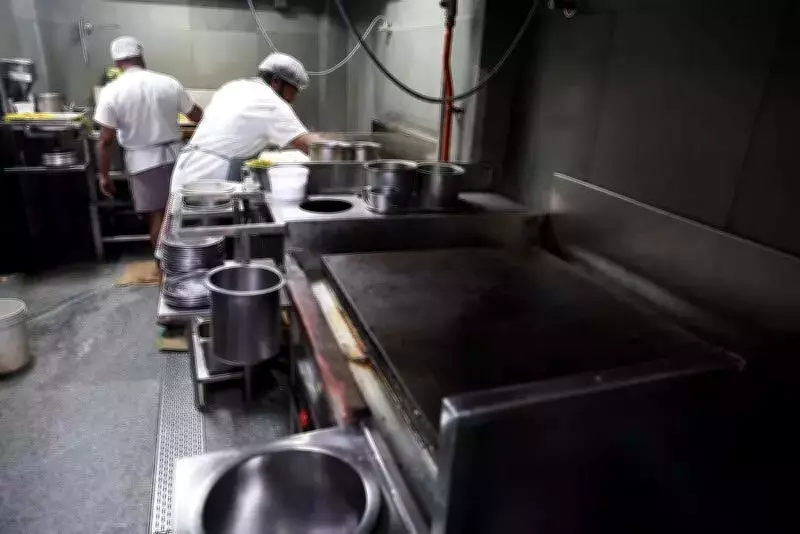
Bengaluru's LPG Shortage Forces Restaurants to Axe Deep-Fried Favorites
The ongoing commercial LPG shortage in Bengaluru, reportedly exacerbated by geopolitical tensions in West Asia, is now directly impacting the city's culinary landscape. For the second consecutive day, numerous darshinis and restaurants across the tech capital have reported either no deliveries or severely reduced supplies of commercial LPG cylinders.
Menu Cuts as Kitchens Run Low on Fuel
With kitchens operating on dwindling fuel reserves, many eateries have begun trimming their menus to conserve gas. Deep-fried items that require prolonged high-temperature cooking are the first casualties. The humble poori, along with vada, has been temporarily dropped from menus at multiple establishments.
"We haven't received any gas since yesterday and are managing only with the stock we have," said Arun Adiga of the iconic Vidyarthi Bhavan in Basavanagudi. "Out of our four dosa burners, we've switched off two. Poori has also been reduced because it needs more gas. If the supply doesn't resume, we can manage only until Wednesday evening."

Restaurants are pivoting to items that require less fuel, focusing on idli, dosa, and meals instead. A darshini owner in East Bengaluru reported complete supply disruption: "We are being asked to pay almost double the usual price for cylinders. I don't have gas for the evening service. For now, I've cut several items and am serving only meals, idli and dosa."
Soaring Prices and Operational Challenges
The crisis has been compounded by dramatic price increases. After multiple revisions in March following Middle East tensions, the price for a 19kg commercial LPG cylinder reached approximately Rs 1,900 by March 9. However, restaurants now report dealers charging significantly more amid the shortage.
"The price shot up to nearly Rs 3,400–Rs 3,500 per cylinder this morning," revealed Sandeep Jain, MD of Desi Masala food chain. "For a restaurant chain like ours that uses around 50 cylinders a day, this means an additional cost of nearly Rs 80,000 to Rs 90,000 per day. It is almost impossible to sustain such a sudden jump."
Another hotel in Marathahalli reported paying Rs 3,000 per cylinder after their supply was cut. "I was forced to pay close to Rs 3,000 for one cylinder. I wish the government intervenes at the earliest," the owner stated.
Industry-Wide Impact and Uncertainty
Shakir Haq, MD of Empire Hotel, noted supply fulfilment had dropped below 50% across their Bengaluru and Mysuru outlets. "The uncertainty is the biggest challenge because restaurants cannot plan ahead without assured gas supply," he said. "If this continues, it could become an alarming situation similar to Covid times."
Ananth Narayan, President of the National Restaurants Association of India's Bengaluru chapter, confirmed the severity: "Stocks at many restaurants are nearly exhausted, and distributors report supplies are running dry. Several establishments have already started shutting down or trimming menus."
PC Rao, Honorary President of the Bangalore Hotels Association, revealed that distributors could not confirm when commercial supplies would resume. "A few hotels have shut down, while the majority have significantly reduced their menu offerings to keep operations running," he said.
GAIL Connections Provide Some Relief
Amid the crisis, hotels with GAIL pipeline connections are faring better. A GAIL official confirmed no disruption in pipeline gas supply to Bengaluru's approximately 4,000 commercial connections. "There is currently no disruption in gas supply from GAIL, and we will continue supplying all connections," the official stated.
Broader Implications for Bengaluru's Food Scene
The LPG shortage is affecting various segments of Bengaluru's food industry. Arun Kumar DT, President of the PG Owners Welfare Association, noted that around 2,800 paying guest accommodations under the association have stock for only 3-4 days. "We're exploring alternative options, as we cannot risk running out of food for residents," he said.

As restaurants grapple with limited supplies and soaring costs, many are contemplating passing on increased expenses to customers. The situation remains fluid, with industry representatives calling for government intervention to stabilize commercial LPG supply and pricing before the crisis deepens further.





