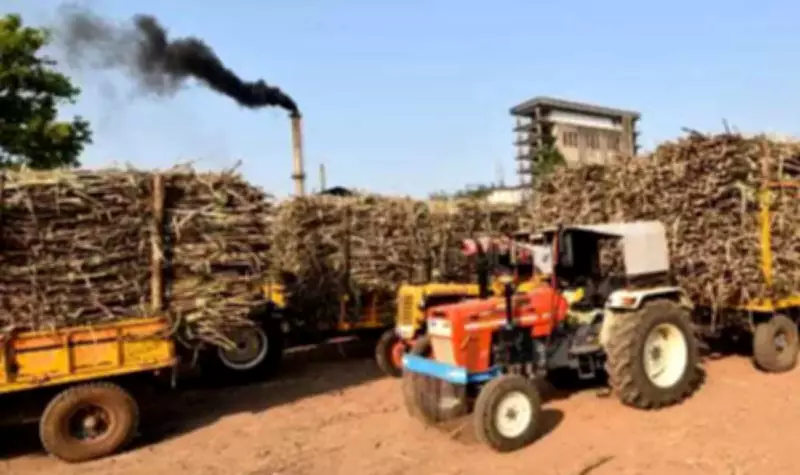
Maharashtra Sugar Mills Confront Rs 1,860 Crore FRP Dues as Crushing Season Concludes
As the sugar cane crushing season in Maharashtra draws to a close, a significant financial challenge has emerged for the state's sugar industry. A total of 45 sugar mills are currently grappling with fair and remunerative price (FRP) dues amounting to Rs 1,860 crore, which must be settled with farmers within a strict 15-day window following harvesting. This deadline is now looming large as the seasonal operations near their end.
Strict Enforcement by Sugar Commissioner's Office
The state sugar commissioner's office has adopted a firm stance against mills that have failed to meet their FRP payment obligations. The FRP, which is centrally determined for sugar cane supplied by farmers, is a legal mandate requiring mills to disburse the full amount within 15 days. In response to non-compliance, the office has decided to implement stringent measures to ensure adherence to this regulation.
Detailed Breakdown of Payment Compliance
According to a recent report released by the sugar commissioner's office, the payment landscape across mills reveals a mixed picture. Two sugar factories, one from the cooperative sector and another from the private sector, have not paid a single rupee to farmers. In contrast, 41 mills have successfully paid 100% of their FRP dues. Additionally, 75 mills have made payments ranging from 80% to 99% of the required amount.

The overall FRP dues across all mills in Maharashtra are estimated at approximately Rs 4,252 crore. This figure includes both the defaulted amounts from the 45 non-compliant mills and pending payments where the mandatory 15-day period has not yet expired, highlighting the broader financial strain within the industry.
Revenue Recovery Certificates Issued as Warning
The 45 mills that have paid between 0% and 60% of their FRP dues have been served with Revenue Recovery Certificates (RRCs). Sugar commissioner Sanjay Kolte issued these RRCs, which serve as a stern warning. If mills continue to delay FRP payments, the sugar produced by these mills could be seized and sold through the district collectors to reimburse the farmers.
"The mills eventually pay the FRP to avoid such action," noted a senior official. "The respective millers have been summoned to attend hearings before the district collectors to address these defaults."
Geographic Distribution of Non-Compliant Mills
The majority of mills failing to pay FRP are concentrated in specific districts, with Solapur leading at 11 mills, followed by Ahilyanagar with 9, Beed with 5, Parbhani with 3, Nashik with 2, Pune with 2, Kolhapur with 2, and Chhatrapati Sambhajinagar with 2. One mill each from six other districts also faces similar issues, indicating a widespread challenge across the state.
Industry Voices Liquidity Concerns
A miller, speaking on condition of anonymity, highlighted the liquidity issues plaguing the sugar industry. "The prices in both domestic and international markets have declined, making it difficult for millers to sell sugar," the miller explained. "Given such adverse market conditions, authorities should consider leniency and avoid stringent actions that could exacerbate the situation."
This scenario underscores the delicate balance between enforcing legal mandates to protect farmers and addressing the economic realities faced by sugar mills. As the deadline approaches, all eyes are on how these mills will navigate their financial obligations amidst ongoing market pressures.