

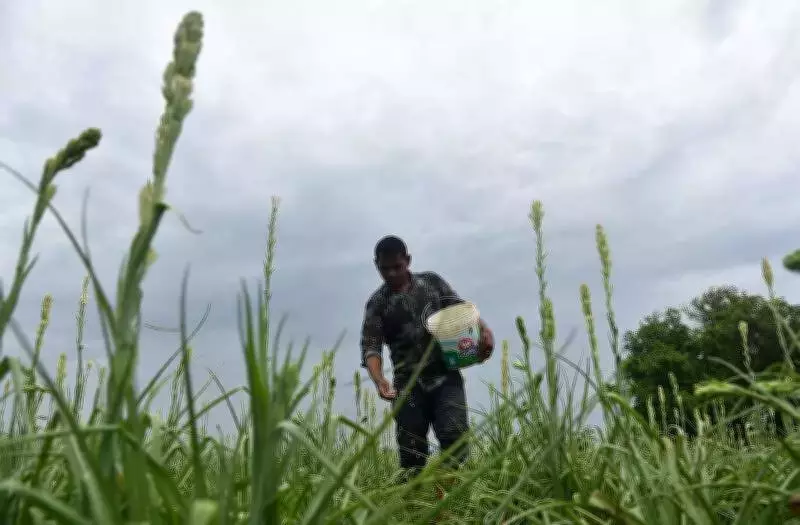
Maharashtra's Natural Farming Mission Aims to Transform 5 Lakh Hectares
The Maharashtra government's recent budget announcement to bring five lakh hectares of farmland under natural farming has been met with widespread approval from farmers and agricultural experts across the state. This ambitious initiative, known as the Natural Farming Mission (NFM), seeks to promote chemical-free agriculture to cultivate nutritious and sustainable crops, marking one of the most significant state-level efforts toward eco-friendly farming in recent years.
Experts and Farmers Welcome the Move but Highlight Challenges
Agricultural observers have lauded the decision as a crucial step toward strengthening sustainable agriculture and restoring soil health, which has been degraded due to excessive chemical use. However, they caution that the success of this mission hinges on consistent policy support, long-term implementation, and substantial investment in soil and water conservation measures.
Subhash Sharma, an experimental farmer and Padma Shri awardee from Yavatmal district, expressed optimism but emphasized the need for careful planning. "The decision is welcome, but natural farming cannot be implemented overnight. It requires meticulous long-term planning and investment in the foundational elements of agriculture—soil, water, and the environment," he said. Sharma stressed that farmers require tangible support to restore soil fertility and ensure water availability before transitioning from chemical-heavy methods.

Financial and Ecological Benefits Amid Transition Hurdles
Experts point out that natural farming can significantly reduce the financial burden on farmers by eliminating expensive chemical fertilizers and pesticides. Rajendra Bhat, an agricultural expert from Thane, noted that the budget aligns natural farming with broader agricultural modernization goals. "The budget highlights the importance of strengthening value chains and integrating information technology. Natural farming is a piece of that larger vision," Bhat said, adding that sustainable practices are essential for building climate resilience in the face of increasing volatility.
On the ground, progressive farmers like Vasudev Gaikwad from Chale village in Solapur see natural farming as a viable long-term alternative. "Awareness is increasing, and many are experimenting, but to scale this to five lakh hectares, we need continuous training and robust policy support. A one-time push won't be enough," Gaikwad remarked, highlighting the need for institutional backing to overcome challenges.
Integration with Water Conservation Programs Key to Success
Researchers and officials emphasize that the NFM must be integrated with existing water conservation programs, such as watershed development, especially in drought-prone regions of Maharashtra. The success of chemical-free farming is closely tied to the land's ability to retain moisture, making effective execution of soil and water management schemes critical.
A senior official from the state agriculture department underscored this point: "Schemes related to water conservation and soil management must be effectively executed at the farm level. Only then will the long-term benefits of natural farming truly reach the farmer." This holistic approach is seen as vital for ensuring the mission's sustainability and impact on agricultural practices across the state.






