

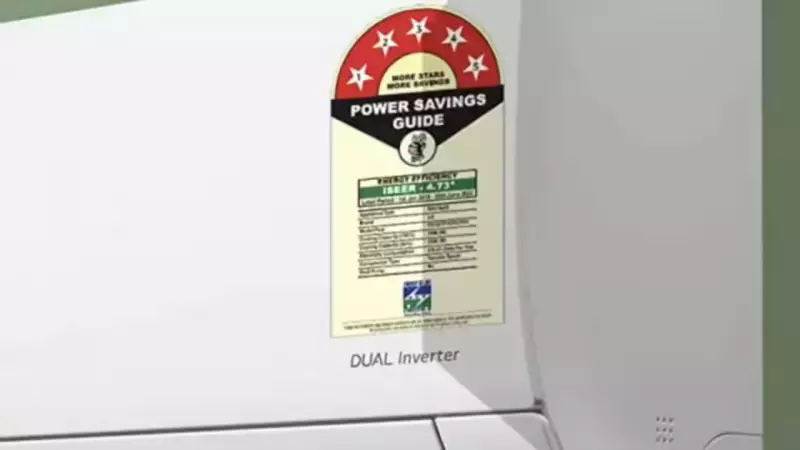
In a significant push to reduce national electricity consumption, the government has announced that energy-efficiency star labelling will become mandatory for a wider array of household and commercial appliances starting January 1. This expansion is a key part of India's strategy to promote sustainable energy use and lower carbon emissions.
Which Appliances Are Now Covered?
According to a recent gazette notification issued by the Bureau of Energy Efficiency (BEE), the new mandatory regime will encompass several new product categories. Refrigerators, televisions, LPG gas stoves, cooling towers, and chillers are among the major appliances now falling under compulsory star labelling. The list also extends to deep freezers, distribution transformers, and grid-connected solar inverters.
Previously, the star labelling system for many of these products—such as frost-free and direct-cool refrigerators, deep freezers, specific room air-conditioners, and colour and ultra-high-definition televisions—was voluntary. The shift to a mandatory framework is expected to drive widespread adoption of more efficient models across the market.

Aligning with Evolving Efficiency Goals
An official, speaking on condition of anonymity, explained that the list of appliances under mandatory labelling is reviewed and updated periodically to stay in line with the country's evolving energy-conservation targets. The draft regulations for these newly added appliances were first released for public consultation in July 2025. The final notification incorporates valuable feedback received from various stakeholders, ensuring a balanced and implementable policy.
It is important to note that star labelling was already compulsory for several other categories. These include:
- Room air conditioners (both fixed and variable speed)
- Electric ceiling-type fans
- Stationary storage electric water heaters
- Washing machines
- Tubular fluorescent lamps and self-ballasted LED lamps
Tightening Existing Standards
The official further clarified that for these existing mandatory categories, the energy-performance standards have been recently upgraded and tightened. This means that even appliances already under the scheme must now meet stricter efficiency norms to achieve the same star rating, pushing manufacturers toward continuous innovation.
This two-pronged approach—expanding the range of covered products while raising the bar for existing ones—demonstrates the government's committed push toward a more energy-efficient economy. The move empowers consumers to make informed choices that save electricity and reduce their bills, while collectively contributing to national energy security and environmental goals.






