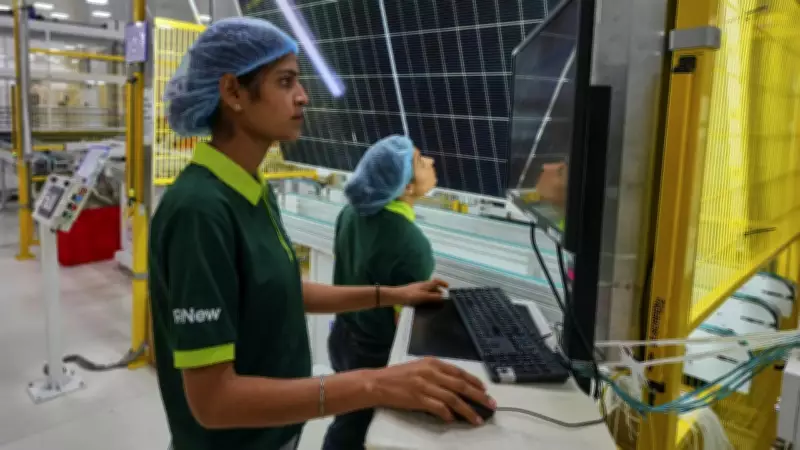
Manufacturing Sector Emerges as India's Economic Pillar Ahead of Budget Announcement
As the Union Budget 2026 approaches, India's manufacturing sector stands out as a primary factor behind the nation's remarkable economic resilience. While numerous countries grapple with sluggish growth patterns, India continues to demonstrate robust economic performance, largely attributed to strategic industrial development and export-oriented policies.
Economic Survey Sets Optimistic Tone with Strong Growth Projections
The Economic Survey 2025–26 has established an exceptionally positive outlook, forecasting India's GDP growth at 7.4 per cent for the current financial year. This projection reflects substantial confidence in the continued expansion of factories, construction activities, and business enterprises across the country. Such industrial growth directly translates to job creation and sustained income generation for millions of Indian workers.
Government's Export Hub Vision Drives Manufacturing Optimism
A significant factor contributing to this economic optimism is the government's determined push to transform India into a global export hub. This strategic vision aims to position India not merely as a producer for domestic consumption but as a major supplier of goods to international markets. Exports play a crucial role in economic development by:

- Bringing valuable foreign currency into the country
- Supporting industrial expansion and modernization
- Creating stable employment opportunities in manufacturing and related services like logistics and transportation
Recent government data for FY 2024–25 reveals India's total exports reached an impressive $825.3 billion. While services exports—including IT services, consulting, financial services, and back-office operations—contributed significantly to this achievement, manufacturing exports also demonstrated substantial growth.
Production Linked Incentive Schemes Fuel Manufacturing Expansion
Manufacturing exports encompassing physical goods such as electronics, pharmaceuticals, machinery, and textiles received a significant boost from the government's Production Linked Incentive (PLI) schemes. These initiatives function as strategic government programs that reward companies for increasing domestic production. When firms achieve specific production targets, they receive financial incentives, making large-scale manufacturing in India more economically viable than importing finished products.
According to official government press releases, the PLI schemes spanning 14+ sectors have achieved remarkable results as of late 2025:
- Attracted over Rs 2.0 lakh crore in actual investments directed toward factories, equipment, and operational infrastructure
- Generated incremental production and sales exceeding Rs 18.7 lakh crore compared to previous levels
- Directly contributed to exports worth over Rs 8.20 lakh crore, with electronics, pharmaceuticals, and telecom products leading this export surge
Essentially, the government maintains that PLI initiatives have successfully encouraged companies to invest more substantially, produce greater quantities, and export more aggressively—particularly in sectors where India seeks to establish global competitiveness.
Budget Expectations: National Manufacturing Mission and Sector-Specific Support
This year's Budget is anticipated to provide enhanced clarity and funding for the National Manufacturing Mission announced previously. The mission aims to develop practical blueprints tailored to different industry scales—small, medium, and large enterprises—ensuring policy support addresses specific needs rather than adopting a one-size-fits-all approach.
Key sectors likely to receive focused attention in Budget 2026 include:
Electronics and Semiconductor Manufacturing
Continued funding for the India Semiconductor Mission remains crucial since semiconductors serve as essential components in smartphones, automobiles, appliances, and industrial machinery. Reducing chip imports can enhance India's supply chain security and potentially lower production costs over time.

Green Energy Manufacturing Initiatives
Higher priority for electric vehicle batteries, solar photovoltaic modules, and green hydrogen production aligns with India's dual objectives of building domestic clean-energy equipment capacity while progressing toward net-zero emissions targets.
Enhanced MSME Support Mechanisms
Expanded credit guarantees (potentially up to Rs 10 crore) and interest support programs could help smaller manufacturers access affordable loans. This support proves particularly vital since small and medium enterprises often face challenges related to working capital, expensive credit, and meeting international quality standards for exports.
For everyday citizens, the MSME component holds special significance. When smaller manufacturers can borrow at reasonable rates and invest in improved machinery or quality management systems, they become capable suppliers to larger corporations, competitive participants in export markets, and generators of local employment opportunities.
Infrastructure Development as Manufacturing Enabler
The 2025–26 Budget maintained a strong emphasis on infrastructure-led growth by announcing a record capital expenditure (capex) allocation of Rs 11.21 lakh crore. Capex represents long-term investments in roads, railways, ports, industrial corridors, power systems, and logistics upgrades—all critical elements for manufacturing competitiveness.
Infrastructure development directly impacts manufacturing by reducing the cost of doing business. Improved highways and modernized ports can decrease delivery times, lower fuel and storage expenses, and enhance reliability—key advantages for exporters competing against nations with highly efficient logistics networks.
Future Focus: Outcome-Based Expenditure and Measurable Results
For Budget 2026, expectations center on maintaining capital expenditure momentum while shifting toward outcome-based spending. This approach emphasizes not merely announcing substantial financial allocations but demonstrating tangible results such as increased factory output, stronger export performance, and improved global market share for Indian manufactured products.
As India prepares for another crucial budget announcement, the manufacturing sector's role as an economic stabilizer and growth engine appears more significant than ever. Strategic policies, targeted incentives, and infrastructure development collectively position India's industrial landscape for sustained expansion and global competitiveness in the coming years.