

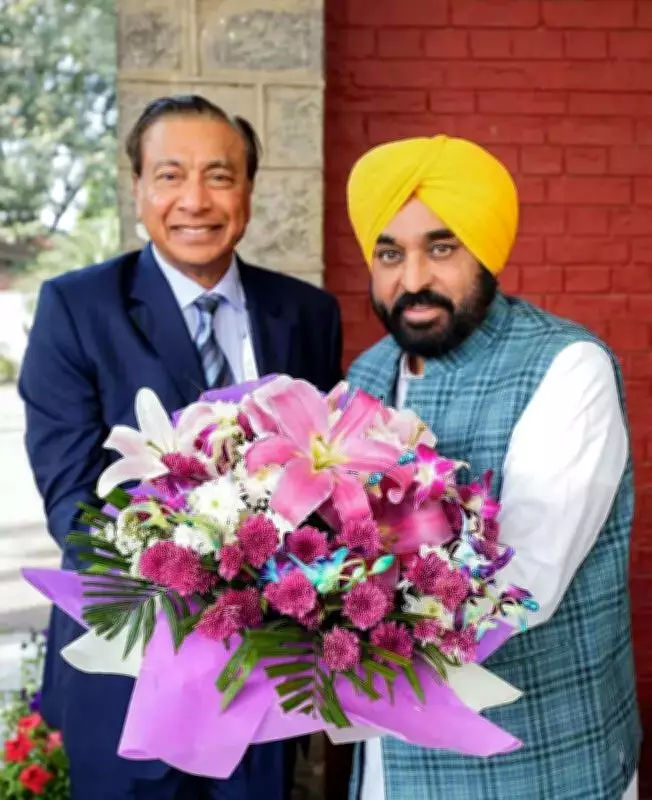
ArcelorMittal's Mittal Unveils Major Investment Plans for Punjab's Industrial Growth
In a significant announcement at the Progressive Punjab Investors' Summit in Chandigarh, leading industrialist Lakshmi Niwas Mittal, executive chairman of ArcelorMittal, revealed ambitious plans for HPCL-Mittal Energy Limited (HMEL). The company is set to invest Rs 2,600 crore in the specialty and fine chemicals sector in the coming years, marking a strategic expansion into high-value chemical production.
Expanding Footprint in Fuel Retail and Green Energy
Mittal also declared HMEL's entry into the fuel retail sector, with plans to open 500 new retail outlets across India. The initiative has already commenced, with Punjab's first outlet scheduled for Bathinda. These outlets will feature advanced technology and AI-enabled systems to enhance customer experience and operational efficiency.
Furthermore, HMEL is advancing its commitment to sustainability by investing in green energy projects in Bathinda. The company aims to increase its participation in renewable and sustainable energy sources, aligning with global environmental goals and India's energy transition objectives.

Historic Investments and Economic Impact
Mittal highlighted that HMEL has invested over Rs 60,000 crore in Punjab since the project's inception in 2008, making it the state's largest single-site investment. The Guru Gobind Singh Refinery, initially with a capacity of 9 million metric tonnes, has evolved into Punjab's sole oil refinery, crucial for meeting the nation's escalating energy demands.
To address the rising gas demand, production under this project has surged from 1,000 tonnes per day to 3,000 tonnes per day. Additionally, a world-class petrochemical complex has been established with Punjab government support, producing approximately 1.2 million metric tonnes of polyethylene and 0.5 million metric tonnes of polypropylene annually, significantly boosting the region's socio-economic development.
Innovations in Bio-Energy and Industrial Development
The company has also operationalized a bio-ethanol plant with a daily capacity of 300 kilolitres, generating around 100 million litres annually. This facility supports India's fuel blending programme, promoting cleaner energy alternatives.
Mittal proposed several measures to the government to foster industrial growth, including:
- Development of dedicated industrial clusters and plug-and-play infrastructure for downstream industries.
- A special focus on skill development programmes for youth to enhance employability.
- Strengthening logistics and supply chains to position Punjab as a major manufacturing and export hub for north India.
Future Prospects: Downstream Industrial Ecosystem
Mittal emphasized the potential for developing a large downstream industrial ecosystem around Punjab's refining and petrochemical industry. This ecosystem is expected to create extensive opportunities in sectors such as plastic processing, specialty chemicals, packaging, auto components, and textiles.
The AAP government has assured the development of a downstream industrial complex over 1,500 acres in Bathinda in the coming years, further catalyzing industrial expansion and job creation in the region.






