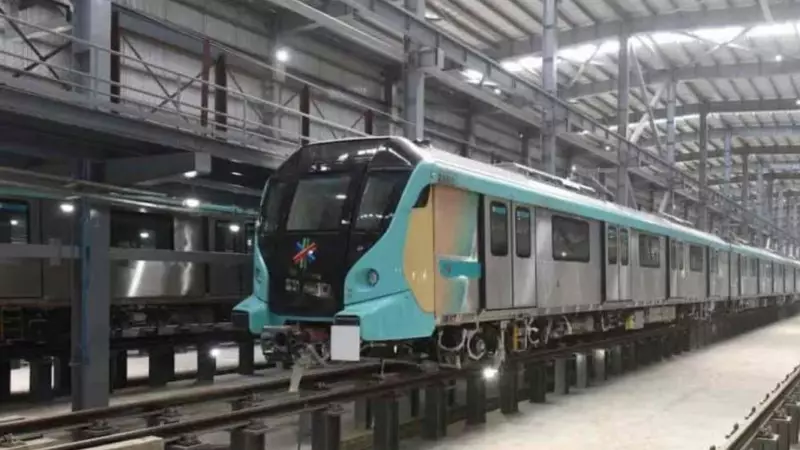
The opening of the final underground stretch of Mumbai's Metro Line 3 has triggered a remarkable surge in its popularity, with passenger numbers more than doubling within months. The Aqua Line, which now fully connects Colaba to SEEPZ via Bandra-Kurla Complex (BKC), has witnessed an unprecedented jump in daily commuters following the commencement of services between Worli and Cuffe Parade.
A Quantum Leap in Passenger Numbers
The statistics reveal a dramatic transformation. Before the full corridor became operational on October 9, the line recorded an average weekday ridership of 75,052. The passenger count for the entire month of September stood at 19.7 lakh. However, the numbers skyrocketed post the final phase launch. October saw 38.63 lakh passengers, which climbed to 44.58 lakh in November and reached 46.56 lakh in December.
The average weekday ridership followed this upward trajectory, jumping to 1.23 lakh in October, increasing to 1.32 lakh in November, and touching 1.48 lakh in December. The highest single-day ridership was recorded on October 16, when a staggering 1.82 lakh passengers traveled on the Aqua Line.

Enhanced Services and Key Stations Driving Growth
To accommodate the rising demand, the Mumbai Metro Rail Corporation Limited (MMRCL) increased services from January 5. Weekday trips were raised from 265 to 292. This crucial intervention has reduced train frequency during peak hours from over six minutes to nearly three minutes, significantly improving commuter convenience. Saturday services were also boosted from 209 to 236 trips.
The ridership data highlights the importance of interchange stations. Marol Naka station recorded the highest footfall between October and December, with 16.45 lakh entries and exits, owing to its connectivity with Metro Line 1 and its role as a key interchange for Line 7 commuters. Chhatrapati Shivaji Maharaj Terminus (CSMT) followed with 10.28 lakh commuters.
The commercial hub of Bandra-Kurla Complex (BKC) station emerged as the third most popular, recording 7.3 lakh commuters, underscoring its significance for business travel. Siddhivinayak station in Prabhadevi and Santacruz station both saw nearly 6.66 lakh users each during this period.
Focus on Last-Mile Connectivity
A spokesperson from MMRCL indicated that the focus for the coming months is to further encourage ridership by tackling the last-mile connectivity challenge. "This is being done through our partnership with Cityflo buses at five stations: BKC, Worli, Aarey JVLR, and CSMT, beginning at Rs 9," the spokesperson said. During peak times, the frequency of these feeder buses is every 10 minutes, with plans to scale up operations based on demand.
The successful doubling of ridership on Metro 3 within a short span validates the project's role in decongesting Mumbai's roads and railways. It marks a significant shift in the city's commuting patterns, offering a fast, reliable, and comfortable alternative for lakhs of Mumbaikars daily.