

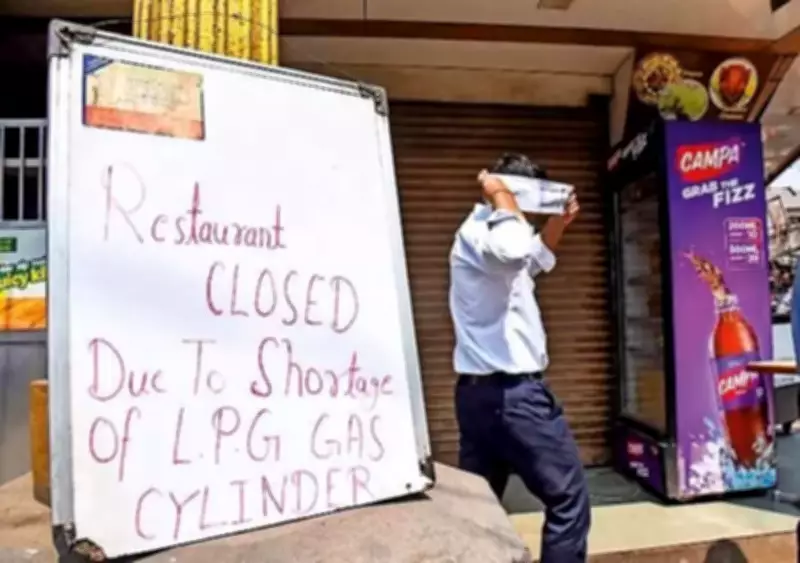
Mumbai Restaurant Crisis Deepens as 60% Face Closure Over LPG Shortage
The situation for restaurant owners in Mumbai is becoming increasingly dire, with approximately 60% of establishments poised to shut down until their daily commercial LPG supply is fully restored. This severe disruption has forced many to curtail operations drastically, while others are exploring alternative cooking methods to stay afloat.
Menu Curtailments and Operational Challenges
Restaurants that remain open are grappling with significantly reduced menus, leaving a majority of items unavailable to customers. Sandeep Sharma of Pancham Puriwala in Borabazar, located opposite the CST terminus, reported that his hotel has already scaled down its menu by 70% and adjusted operating hours. He mentioned plans to acquire an induction stove to continue serving on a limited basis.
Similarly, Krishna Purohit of ShreeThaker Bhojanalay in Kalbadevi stated that the establishment has ceased offering dishes like halwa, daal baati, undhiyu, and puris due to their high gas consumption. Purohit emphasized, "Our situation mirrors that of every other restaurant in the city."

Innovative Adaptations Amidst Supply Shortages
In response to the crisis, some restaurateurs are resorting to creative measures. Kaustubh Tambe of the popular Aaram Vadapav at CST carried 50 kg of potatoes home on Wednesday night to boil them and plans to process another 100 kg for Friday morning. He explained, "Today, we could not serve upavas misal, pulav, upma, poha, or khichadi, but we aim to offer all items tomorrow using an induction stove in the absence of cylinders. We are focusing on maintaining fried items such as batata vada, sabudana vada, bhaji, and thalipeeth without disruption. We are trying everything to keep the show going."
Conversely, Nissar Sardar of Sardaar Pav Bhaaji in Tardeo noted that his hotel has faced no issues so far, thanks to existing coal supplies and coal-based chulhas.
Industry-Wide Impact and Political Concerns
Vijay Shetty, president of the Indian Hotel and Restaurant Association (AHAR), which represents over 15,000 restaurant owners across the Mumbai Metropolitan Region, highlighted that many members, including himself, have struggled to secure coal and kerosene stocks for their chulhas during this crisis. He added, "A large number of Mumbaikars who rely on restaurant food due to busy schedules are being deprived of their breakfasts and dinners."
In the legislative assembly, Congress legislature party leader Vijay Wadettiwar raised alarms about the broader implications. He alleged that domestic cylinder prices have surged by Rs 60 since the crisis began, with refill times extending from 15 to 25 days. Wadettiwar estimated that about 30% of hotels in cities like Mumbai and Nagpur have already closed due to supply disruptions. He warned of black-marketing risks, citing a Rs 18-lakh cylinder truck theft, and demanded that the government clarify stock levels and restore supply promptly.
Broader Context and Expert Insight
This crisis underscores the vulnerability of Mumbai's hospitality sector to supply chain interruptions. The reliance on commercial LPG for daily operations has left restaurants scrambling for solutions, with induction stoves and traditional fuels like coal emerging as temporary fixes. However, these alternatives are not universally accessible, exacerbating inequalities within the industry.
The situation calls for urgent governmental intervention to stabilize supply chains and prevent further economic fallout. As restaurant owners navigate these challenges, the resilience of Mumbai's food culture hangs in the balance, affecting both businesses and consumers alike.






