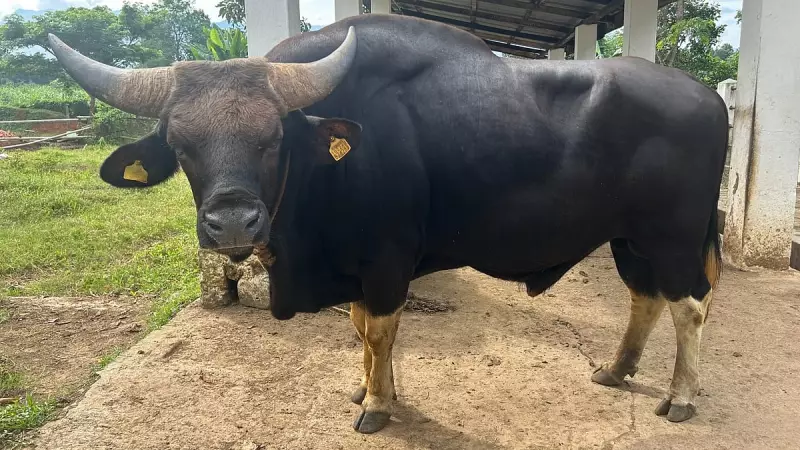
In a landmark achievement for Indian livestock conservation and tribal heritage, a distinct population of the semi-domesticated bovine known as the mithun from Nagaland has been officially recognised as the world's first distinct breed of its kind. Named the 'Nagami', this breed's registration marks a pivotal step in scientific breeding and preservation efforts for this culturally vital animal of the Northeast.
Official Recognition and Scientific Validation
The historic recognition was granted by the Indian Council of Agricultural Research's National Bureau of Animal Genetic Resources (ICAR-NBAGR) in Karnal, Haryana. The official registration certificate was presented to the Government of Nagaland on July 10, 2024. This formal acknowledgment is based on rigorous scientific evaluation of the Nagami's unique genetic characteristics and physical traits that distinguish it from other bovine species.
This process elevates the Nagami mithun from a traditionally reared animal to a scientifically documented genetic resource. The initiative for this recognition was spearheaded by the Nagaland Mithun Producers Cooperative Society (NMPCS) Ltd, in collaboration with the National Research Centre on Mithun (NRCM) located in Medziphema, Nagaland. The Nagami breed is primarily found and reared in the Dimapur and Chumoukedima districts of the state.

Significance for Conservation and Tribal Economy
The mithun, often referred to as the 'cattle of the mountains,' holds profound socio-economic and cultural significance for tribal communities across Nagaland, Arunachal Pradesh, Manipur, and Mizoram. It is central to rituals, festivals, marriage ceremonies, and as a symbol of wealth and status. However, its population has faced challenges due to unplanned breeding and a lack of structured conservation programs.
The registration of the Nagami breed is set to transform this scenario. Dr. Abhijit Mitra, Director of ICAR-NRC on Mithun, emphasised that this recognition will pave the way for systematic conservation and breeding programs. It enables the development of a structured pedigree, ensuring the preservation of the breed's superior genetic traits. This scientific approach is expected to enhance the productivity and sustainability of mithun rearing, directly benefiting the livelihoods of tribal farmers.
A Boost for Sustainable Livelihoods and Research
The move is not just a conservation win but also an economic one. With a recognised breed standard, farmers can focus on selective breeding to improve meat quality, disease resistance, and overall health of their herds. This can lead to better market value and open up opportunities for niche products. The mithun is prized for its lean, nutritious meat, and its recognition can boost the brand value of associated products from the region.
Furthermore, the status empowers researchers and policymakers to channel funds and resources specifically for the Nagami breed's development. It facilitates deeper genetic studies, health management protocols, and the formulation of tailored welfare schemes. This milestone aligns with broader national goals of preserving indigenous livestock diversity and promoting sustainable agricultural practices in ecologically sensitive regions like the Northeast.
The recognition of the Nagami mithun breed stands as a testament to the successful collaboration between tribal cooperatives, state government, and national agricultural research institutions. It sets a precedent for the documentation and preservation of other indigenous animal genetic resources in India, ensuring that traditional knowledge and biodiversity are protected for future generations while building a resilient rural economy.