Nagpur Metro Celebrates 12 Years of Infrastructure Development
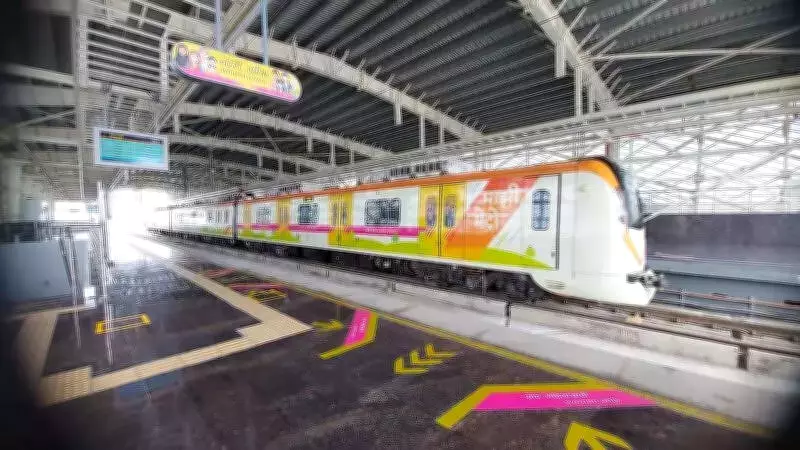
Nagpur: The Maharashtra Metro Rail Corporation Limited (MahaMetro) is set to commemorate the 12th foundation day of the Nagpur Metro project this Wednesday, marking over a decade since construction commenced on the city's mass rapid transit system. From achieving significant engineering milestones to securing green certifications, the project has established itself as a prominent symbol of modern urban infrastructure. However, as it progresses into its next growth phase, critical issues surrounding ridership numbers, last-mile connectivity solutions, and long-term commercial viability continue to dominate public and administrative discussions.
Reflections on a Transformative Journey
In an exclusive conversation with TOI on the eve of the foundation day, MahaMetro Managing Director Shravan Hardikar reflected on the project's evolution. "It has been a remarkable journey of transformation," Hardikar stated. "The Metro has emerged as a powerful growth driver and a defining symbol of modern Nagpur's aspirations. From pioneering the double-decker viaduct to maintaining timely execution standards, it represents a major technological achievement for our city."
Expansion Plans and Future Vision
Phase I of the Nagpur Metro network is now fully operational, while Phase II construction is actively advancing across multiple corridors. These include routes toward Kanhan, Butibori MIDC, Hingna, and Transport Nagar, with approximately 50% of pier work already completed. Looking forward, MahaMetro is laying the groundwork for an ambitious Phase III proposal that would add 55 kilometers of new corridors. This expansion would bring the total planned network length to nearly 129 kilometers, positioning Nagpur among Indian tier-II cities with the most extensive Metro networks.

The proposed Phase III expansion includes several innovative elements:
- An Inner Ring Road corridor development
- Extensions toward Koradi and New Nagpur areas
- Nagpur's first underground metro stretches
- Introduction of driverless train operations
Both underground sections and driverless technology would represent significant technological firsts for Nagpur's transportation landscape.
Ridership Challenges and Projections
As the network expands, ridership performance remains a primary concern for stakeholders. The detailed project report (DPR) for Phase I, prepared back in 2013, projected daily ridership exceeding 400,000 commuters by 2026. However, current average daily footfall stands at approximately 100,000 to 120,000 passengers, significantly below initial projections.
MahaMetro MD Hardikar openly acknowledged that ridership enhancement remains a central challenge. "Ridership will naturally improve as the entire network develops and matures," he explained. "Metro systems typically require time to stabilize and reach their full potential. As new corridors become operational and surrounding urban development follows, we anticipate demand will gradually improve." Hardikar drew parallels with established systems like Delhi Metro, where ridership took several years to stabilize and reach projected levels.
Connectivity and Integration Hurdles
Beyond ridership figures, incomplete first and last-mile connectivity continues to present daily challenges for both Metro authorities and commuters. Phase I currently provides approximately 3,200 parking spaces for two-wheelers and four-wheelers combined—a modest number serving over 100,000 daily commuters. Limited feeder bus services further compel many riders to rely on auto-rickshaws and cabs, often at substantially higher costs. Inadequate pedestrian and cycling infrastructure has also hindered seamless multimodal integration, affecting overall convenience and accessibility for potential users.
Hardikar emphasized that strengthening bus integration would be critical for system success. "Bus networks form the backbone of comprehensive public transport systems," he noted. "We require robust first and last-mile connectivity solutions. With cooperation from Nagpur Municipal Corporation (NMC), improving integration with our bus systems and building adequate public infrastructure remains our top priority."

Feeder Services and Commercial Utilization
MahaMetro plans to introduce around 300 buses specifically to support feeder connectivity, with the first batch expected to launch later this year. "Residents living within 500 meters of Metro stations are more likely to use the system regularly," Hardikar observed. "However, Nagpur currently lacks the congestion levels that would force complete dependence on Metro services. One can still travel across the city in about thirty minutes using various modes. As urban density increases with city growth, we anticipate ridership will rise correspondingly."
Commercial utilization represents another area under scrutiny. While station-level retail spaces were developed to boost non-fare revenue streams, nearly 50% of shops and commercial complexes remain underutilized or vacant. "Our primary focus remains on increasing ridership numbers," Hardikar clarified. "As footfall improves organically, commercial occupancy rates will naturally increase alongside passenger growth."
Looking Toward the Future
As Nagpur Metro enters its 12th operational year, the physical infrastructure footprint is visibly expanding across the cityscape. Yet, the crucial test will be translating this expansion into sustained ridership growth and seamless urban mobility integration. The system's evolution into the true backbone of Nagpur's transportation network will ultimately depend on addressing these interconnected challenges while continuing to expand service coverage and technological capabilities.