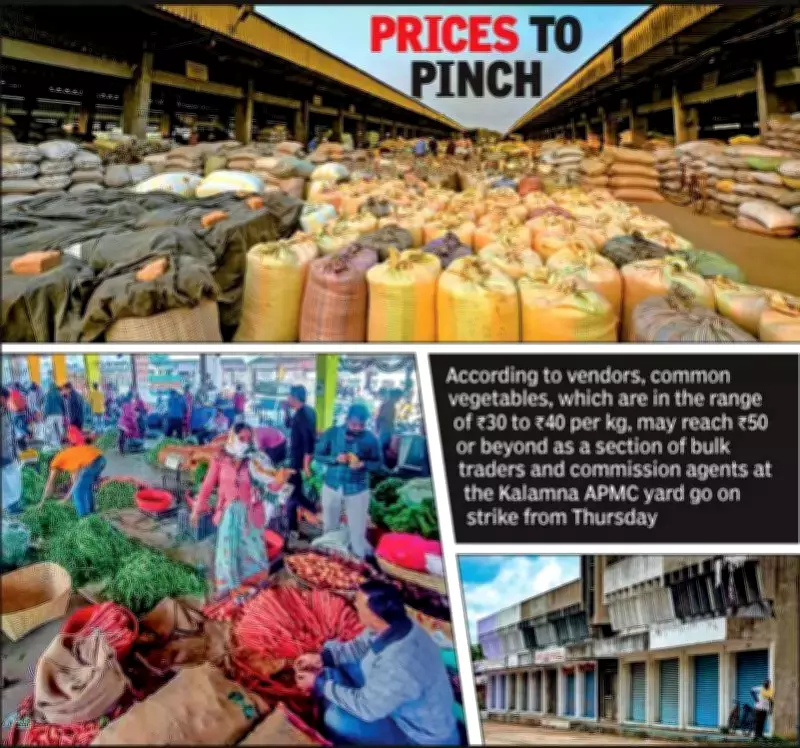
Nagpur Vegetable Strike Threatens Market Supply, Prices May Escalate
The agricultural produce market in Nagpur is facing potential disruption as a section of bulk traders and commission agents at the Kalamna Agricultural Produce Market Committee (APMC) yard has called for a strike starting Thursday. This industrial action, driven by internal disputes over shed allocations, could severely impact the supply chain of vegetables in the region, leading to a noticeable increase in retail prices.
Immediate Impact on Vegetable Prices
Local vendors and neighborhood sellers have already expressed concerns about the impending price surge. Common vegetables, which typically range between Rs 30 to Rs 40 per kilogram, are anticipated to reach Rs 50 or even higher due to the reduced supply. For instance, staple items like tomatoes and peas, currently priced around Rs 30 per kg, are expected to climb to at least Rs 40 per kg. More expensive produce such as drumsticks, already commanding Rs 120 per kg, might skyrocket to Rs 200 per kg, making them less accessible to average consumers.
Wholesale Market Trends Before the Strike
Interestingly, wholesale rates had already begun to rise prior to the strike announcement. Tomatoes have increased from Rs 8 to Rs 12 per kg, while cauliflower prices have doubled to approximately Rs 30 per kg. Drumsticks, the costliest item in the market, are now wholesaling at Rs 90 per kg. A significant number of other vegetables have also become more expensive by at least Rs 20 per kg, indicating underlying market pressures that the strike could exacerbate.

Conflicting Claims from Trader Factions
The strike is organized by the Jai Kisan Vyapari Sangh, led by Avdesh Shukla, who alleges partiality in the allocation of market sheds favoring members of the Yuva Adatiya Union, which primarily consists of commission agents. Shukla asserts that the majority of traders support the strike, aiming to highlight these grievances. In contrast, Nandkishore Gaur of the Yuva Adatiya Union claims that only a minority of traders are participating in the strike and that vegetable supplies will remain unaffected, with business continuing as usual for most.
Government and APMC Response
In response to the escalating situation, the APMC management, including Dinesh Chandel, the secretary appointed from the state's Department of Cooperatives, has assured the public that efforts are underway to minimize market disruption. Police deployment has been arranged to prevent any obstruction of vegetable arrivals by striking traders, ensuring that non-striking factions can conduct their business peacefully. Chandel emphasized that the issue of shed allocations is currently sub-judice, and the APMC is adhering to legal protocols while striving to maintain normal operations.
Additionally, a government source highlighted an alternative supply route, noting that local farmers can directly bring vegetables to consumers, potentially mitigating some of the strike's adverse effects. This measure could help stabilize prices and ensure availability, though its effectiveness remains to be seen as the strike unfolds.
As Nagpur braces for potential vegetable shortages and price hikes, the situation at the Kalamna APMC yard underscores the delicate balance of agricultural markets and the broader implications of trader disputes on everyday consumers. The coming days will be critical in determining whether the strike leads to significant disruptions or if mitigation efforts succeed in preserving market stability.