

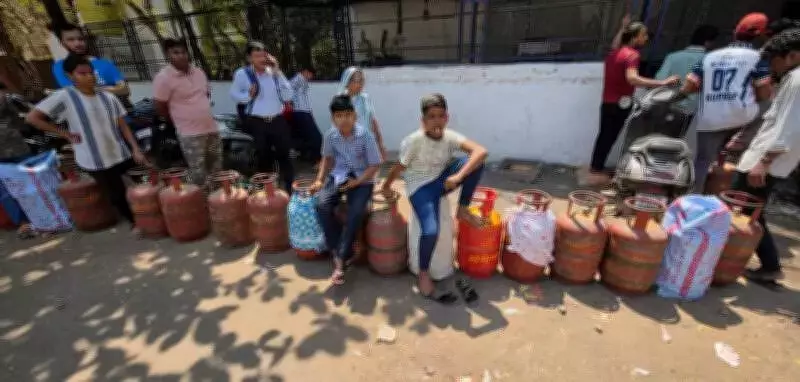
Nashik PNG Consumers Defy Government Order, Retain LPG Cylinders
In a significant development affecting household energy consumption patterns, more than 30,000 consumers in Nashik city who have obtained Piped Natural Gas (PNG) connections continue to maintain their domestic LPG cylinder connections with various oil marketing companies. This practice persists despite a recent notification from the Union Ministry of Petroleum and Natural Gas explicitly prohibiting such dual connections.
Government Mandate Versus Consumer Behavior
The Union Ministry issued a clear directive on Saturday stating that any individual possessing a functional PNG connection is strictly prohibited from retaining a domestic LPG connection or procuring refills from government oil companies or authorized distributors. According to the official order, such consumers must immediately surrender their LPG connections and will not be permitted to obtain new LPG connections in the future.
"We now have over 30,000 consumers whose connections are live, meaning they are getting gas through the piped network system," revealed a senior official from Maharashtra Natural Gas Limited (MNGL), the company responsible for providing piped gas to consumers in the region. "During our process, we take the deposit for connections from consumers after our basic infrastructure is provided to respective buildings, including installation of service regulators. Thereafter, connections are provided and monthly bills are generated."

Consumer Concerns and Practical Considerations
Interestingly, the MNGL official confirmed that the company had not specifically instructed consumers to surrender their LPG cylinders, creating a regulatory gap that many households have exploited. One MNGL consumer explained their rationale for maintaining dual connections: "I have two cylinder connections. I had no idea about the regulation requiring surrender of connections. Given the current situation, I will retain one cylinder as backup because who knows when the MNGL system might develop issues and leave consumers to fend for themselves."
This sentiment reflects broader consumer anxiety about reliability and continuity of piped gas services, prompting many to maintain LPG cylinders as insurance against potential service disruptions.
Implementation Challenges for Oil Marketing Companies
A senior official from one of the oil marketing companies (OMCs) detailed the implementation challenges: "We have 141 distributors in Nashik district and over 6 lakh consumers in Nashik city out of more than 10 lakh in the entire district. Based on the new orders, we will now collate information from MNGL and block refills for consumers with PNG connections. Henceforth, they will not be allowed refills anymore. Their deposits with the company will be returned once they surrender their connections."
The official emphasized that OMCs have received clear instructions not to issue any refills to consumers who already have PNG connections, marking a significant shift in enforcement policy.
Regulatory Framework and Compliance Expectations
The government notification establishes several key provisions:
- Complete prohibition on maintaining both PNG and domestic LPG connections simultaneously
- Mandatory immediate surrender of LPG connections by PNG users
- Ban on future LPG connections for existing PNG consumers
- Explicit instructions to oil marketing companies to deny refills to non-compliant consumers
This regulatory move aims to streamline household energy distribution, reduce administrative duplication, and potentially enhance safety by eliminating redundant gas connections within single households. However, the gap between policy announcement and ground-level implementation remains evident in Nashik, where thousands of consumers continue operating dual systems despite the clear prohibition.
The situation highlights the complex interplay between government regulation, corporate implementation, and consumer behavior in India's evolving energy landscape, particularly as piped natural gas networks expand across urban centers while traditional LPG systems remain deeply embedded in household routines.






