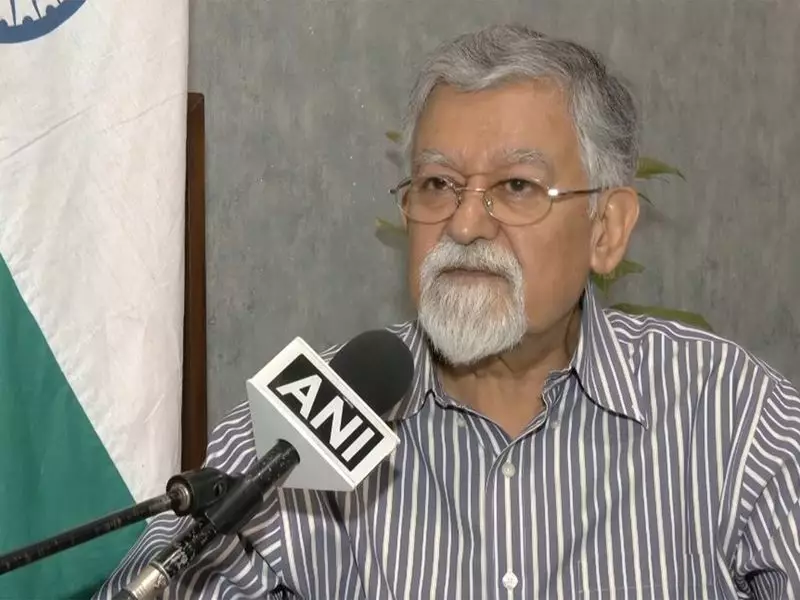
In a significant assessment of India's industrial landscape, Dr. Arvind Virmani, a prominent member of the government's premier policy think tank NITI Aayog, has pinpointed three persistent structural challenges that continue to hinder the growth and competitiveness of the country's manufacturing sector. These critical hurdles are land acquisition, high power pricing, and a significant shortage of skilled labor.
The Core Challenges Outlined by Virmani
Speaking at a recent event, Dr. Virmani provided a detailed breakdown of the obstacles. On the issue of land, he emphasized that the process of acquiring land for industrial purposes remains cumbersome and time-consuming. This creates a major bottleneck for new factories and expansion plans, delaying projects and increasing costs for businesses looking to set up or scale operations in India.
Regarding power, Virmani highlighted that industrial electricity tariffs in India are comparatively high. This directly impacts production costs, making Indian manufactured goods less competitive in the global market. Reliable and affordable power is a fundamental requirement for any robust manufacturing ecosystem, and its current cost structure is a disadvantage.

The third critical challenge he identified is the acute mismatch between the skills possessed by the workforce and the needs of modern industry. Despite a large young population, the lack of adequately trained workers in specific technical and vocational areas constrains productivity and innovation within the manufacturing sector.
Context and Policy Implications
Dr. Virmani's observations come at a crucial time when the Indian government is actively pushing initiatives like the Production Linked Incentive (PLI) schemes to boost domestic manufacturing and position India as a global hub. While these schemes have shown promise, Virmani's comments underscore that underlying structural reforms are equally vital for long-term, sustainable success.
His analysis suggests that for flagship programs like 'Make in India' and 'Atmanirbhar Bharat' (Self-Reliant India) to achieve their full potential, concerted efforts are needed to address these foundational issues. Simplifying land acquisition laws, ensuring rational and competitive power pricing for industries, and massively scaling up targeted skill development programs are imperative steps.
The Road Ahead for Indian Manufacturing
The identification of these challenges by a key NITI Aayog member serves as a clear directive for policymakers. It moves the conversation beyond broad incentives to the specific, ground-level problems that entrepreneurs and corporations face daily. Tackling these issues would not only attract more foreign direct investment into manufacturing but also empower small and medium enterprises, which are the backbone of the industrial economy.
Effectively resolving the triad of land, power, and skill constraints could unlock tremendous growth potential. It would enhance India's cost competitiveness, improve ease of doing business, and create a more fertile environment for job creation and technological advancement in the manufacturing sector. The path to becoming a global manufacturing powerhouse, as Dr. Virmani implies, requires fixing these fundamental pipes alongside launching new policy schemes.