

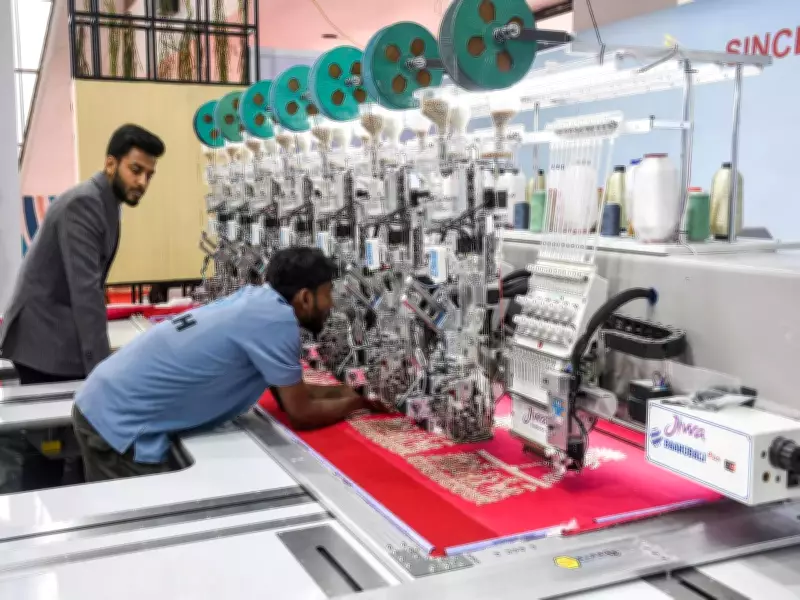
India's Manufacturing Sector Poised for Transformational Growth with Ambitious National Mission
The National Mission on Manufacturing (NMM) has unveiled a comprehensive roadmap to fundamentally reshape India's industrial landscape, setting ambitious targets to double the manufacturing sector's contribution to the nation's GDP. According to the latest Economic Survey, the mission aims to elevate this contribution from 12.9 per cent in 2023 to a robust 25 per cent by the year 2035.
Strategic Blueprint for Industrial Acceleration
Announced as a cornerstone initiative in the Union Budget for 2025-26, the NMM represents the foundational policy blueprint designed to accelerate India's industrial growth and enhance its global competitiveness over the coming decade. The mission's objectives are multifaceted, extending beyond GDP enhancement to include the generation of an impressive 143 million jobs and a significant boost in merchandise exports, targeting USD 1.2 trillion through deeper integration into global value chains (GVCs).
Two-Pronged Approach and Sectoral Focus
The NMM adopts a strategic two-pronged approach, dedicating major focus to sector-specific interventions across 20-30 prioritised industrial clusters. This involves a meticulous process of identifying these clusters based on critical parameters such as demand potential, employment generation capacity, and the presence of natural endowments.

Sectors are classified into three distinct archetypes to ensure targeted development:
- Scale Archetype: Including sectors like automotive and pharmaceuticals, targeted for rapid expansion and market dominance.
- Fix and Transform Archetype: Encompassing electronics and capital goods, focused on structural reforms and efficiency improvements.
- Seed Archetype: Covering strategic areas such as semiconductors and electric vehicles, aimed at fostering innovation-led growth and future readiness.
Addressing Cross-Cutting Challenges
Beyond sector-specific strategies, the mission is expected to address vital, cross-cutting challenges essential for bolstering competitiveness. Key activities include:
- Enhancing the Ease of Doing Business to create a more favorable regulatory environment.
- Strengthening plug-and-play infrastructure to reduce setup times and costs for industries.
- Improving workforce productivity through targeted skilling initiatives and capacity building.
- Empowering Micro, Small, and Medium Enterprises (MSMEs) to integrate into larger supply chains.
- Prioritising technology adoption and innovation across industrial processes.
- Providing provisions for industrial housing to support a growing workforce.
The NMM is thus positioned to act as the central facilitator, aligning efforts across the central government, state administrations, and industrial clusters to ensure unified direction and convergence of resources.
Expert Insights on Manufacturing Evolution
Commenting on the country's manufacturing trajectory, Rumki Majumdar, Economist at Deloitte India, highlighted a significant shift in the sector's composition. She noted that India is progressively moving from low-value shipments to higher-value products in electronics, engineering goods, complex pharmaceuticals, and auto components, indicating that manufacturing is climbing the value chain.
"The survey is clear - India's next leap is from import substitution to strategic resilience and ultimately strategic indispensability. That means upping our game in critical sectors, such as semiconductors, batteries and renewable energy, so that trade frictions, export controls or carbon border taxes don't derail growth," Majumdar elaborated.
She further emphasized that the real foundations of self-reliance in a volatile global environment are built on scale, advanced manufacturing capabilities, and a structurally lower cost of capital, rather than protectionist measures. This perspective underscores the mission's alignment with sustainable and competitive industrial growth.

The National Mission on Manufacturing, with its detailed strategic framework and ambitious targets, sets the stage for a decade of transformative industrial development, aiming to position India as a global manufacturing powerhouse by 2035.





