

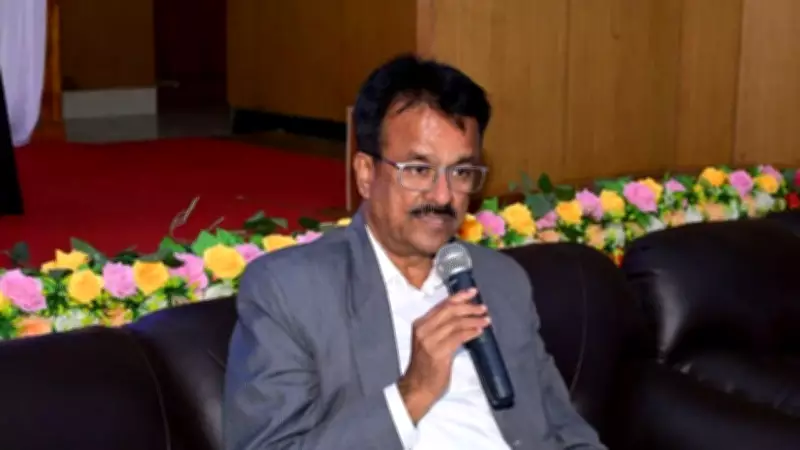
NTPC's Ambitious Green Hydrogen Hub Project Advances into Active Execution Phase
In a significant development for India's clean energy transition, the massive Rs 1.85 lakh crore Green Hydrogen Hub project at Pudimadaka in Anakapalle district is now moving into an active execution phase. According to NTPC-Simhadri unit head Ayaskanta Jena, several critical work packages are nearing finalization, marking substantial progress for this landmark initiative.
Project Details and Initial Implementation Strategy
The project, which had its foundation stone laid by Prime Minister Narendra Modi in 2025 through NTPC Green Energy Limited (NGEL), remains firmly on schedule to establish India's first integrated Green Hydrogen Hub. In the initial implementation phase, carbon dioxide will be transported via tankers for conversion into valuable products including ethanol and sustainable aviation fuel.
This comprehensive green hub facility has been strategically designed to leverage an impressive 20 GW of renewable energy capacity. The ambitious production targets include 1,500 tonnes per day (TPD) of green hydrogen alongside 7,500 TPD of derivatives such as green methanol and sustainable aviation fuel (SAF). Beyond its environmental benefits, the project is projected to generate substantial economic impact by creating over 57,000 employment opportunities within the region.

Simhadri Plant's Dual Focus: Reliable Power Generation and Environmental Stewardship
While advancing its green energy initiatives, NTPC Simhadri – India's first coastal-based thermal power station – continues to demonstrate strong operational performance. The 2,000 MW facility, complemented by its 25 MW floating solar project, remains a crucial power supplier to multiple southern states including Andhra Pradesh, Telangana, Tamil Nadu, Karnataka, and Kerala.
According to officials, the station's steady generation has played an indispensable role in ensuring grid stability amid escalating electricity demand across the region. Ayaskanta Jena emphasized that the plant has maintained an impressive plant load factor (PLF), supported by multiple factors:
- Efficient operational practices and robust maintenance systems
- Consistent coal supply from Talcher in Odisha
- Strong operational discipline and resource management
Of the total power generated, distribution allocations show 34.2 percent directed to Andhra Pradesh and 39.6 percent to Telangana, highlighting the facility's regional importance.
Sustainability Initiatives and Environmental Compliance
The Simhadri plant is simultaneously strengthening its environmental compliance measures while maintaining operational excellence. Significant investments are being made in Flue Gas Desulphurisation (FGD) systems to substantially reduce sulphur dioxide emissions in alignment with increasingly stringent environmental regulations.
Water conservation represents another critical sustainability focus, with the facility successfully reducing freshwater dependence through innovative measures. Over 85 percent of water requirements are now met through seawater utilization, supported by advanced recycling systems and efficient water management practices.
Comprehensive Green Initiatives Beyond Energy Production
The plant's environmental commitment extends beyond energy generation to broader ecological restoration. Under the 'Green Visakha' initiative, extensive afforestation efforts have resulted in the planting of lakhs of saplings across Visakhapatnam and Anakapalle districts. Additionally, the entire plant premises have been officially declared plastic-free zones.
Ayaskanta Jena reaffirmed the station's commitment to adopting global best practices, expanding its renewable energy portfolio, and progressing toward achieving net-zero emissions. This balanced approach – maintaining reliable power generation while accelerating sustainability initiatives – positions NTPC Simhadri as a model for India's energy transition.
The Green Hydrogen Hub project, combined with Simhadri's operational excellence and environmental initiatives, represents a comprehensive strategy that not only promotes clean energy adoption but also establishes a robust manufacturing ecosystem in Andhra Pradesh while generating significant employment opportunities throughout the region.






