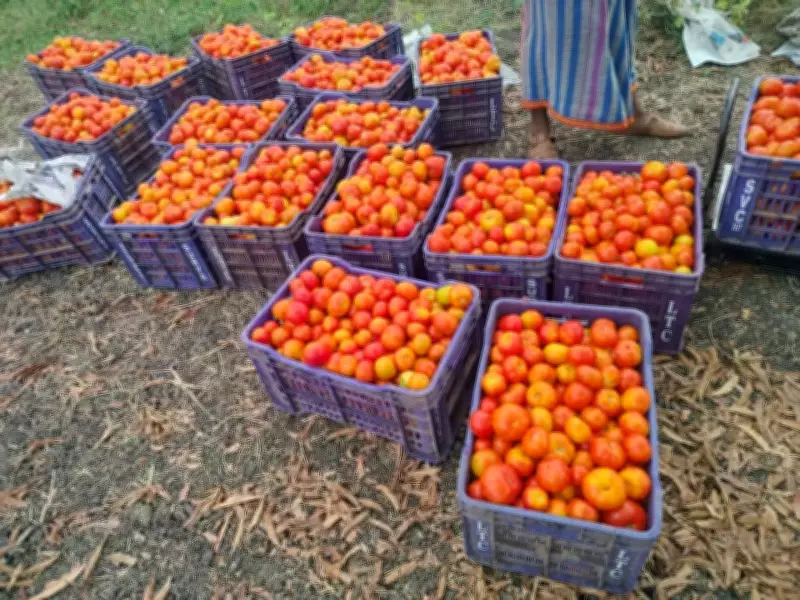
ORMAS Intervention Rescues Ganjam Tomato Farmers from Distress Sale Crisis
Tomato growers in Odisha's Ganjam district, who were facing devastating financial losses due to a catastrophic market price crash, have finally found relief. The Odisha Rural Development and Marketing Society (ORMAS) has successfully facilitated crucial market linkages for their crop, effectively preventing widespread distress sales that threatened to ruin the agricultural community.
Market Collapse and Farmer Desperation
Following an exceptionally bountiful harvest season combined with the complete absence of proper market connections, tomato prices plummeted to an unprecedented low of just Rs 2 to Rs 3 per kilogram at the field level. This starkly contrasted with the Rs 8 to Rs 10 per kg rates observed in vegetable markets, depending on quality variations. The situation became so dire that numerous farmers across several areas completely halted harvesting operations, as they couldn't even recover their basic harvesting costs.
"We have asked ORMAS to facilitate a market linkage of the tomato to avoid the distress sale," stated Ganjam Collector V. Keerthi Vasan, highlighting the administration's proactive approach to addressing this agricultural emergency.

Strategic Partnership and Procurement Initiative
ORMAS responded swiftly by establishing a strategic partnership with a Cuttack-based company to directly procure tomatoes from the struggling farmers. According to Raj Gopal Dash, Deputy Chief Executive Officer of ORMAS, this intervention has already resulted in the procurement of approximately 150 quintals over the last two days through the Farmer Producer Organization (FPO) promoted by ORMAS.
The procurement mechanism operates with the company paying Rs 9 per kilogram, while farmers receive Rs 6 per kilogram. The remaining amount covers essential expenses including transportation, loading and unloading operations, and other logistical expenditures. "We have planned to procure around 100 metric tonnes of the tomato from farmers across the district," Dash revealed, outlining the scale of this rescue operation.
Historical Context and Systemic Challenges
The current crisis represents a dramatic reversal from earlier expectations. Farmers across the district had initially cultivated tomatoes with optimistic profit projections when prices ranged between Rs 50 to Rs 60 per kilogram during September and October. "The price of tomato crashed following the bumper harvest in March," explained Bhairab Nayak, a former agriculture officer, pinpointing the seasonal oversupply as the primary catalyst.
This pattern of market collapse isn't isolated. Niranjan Mohanty, a farmer from Baiganabadi, confirmed that "This happens during February and March every year," indicating a recurring systemic failure. Multiple farmers throughout the district reported being compelled to sell their produce at distress rates due to critical infrastructure deficiencies, particularly the lack of cold storage facilities and processing capabilities.
Broader Impact and Future Implications
The ORMAS initiative has delivered tangible benefits beyond immediate financial relief. "The initiative has not only ensured better income for farmers but also helped in minimising wastage of products," emphasized Dash, underscoring the dual advantages of economic stabilization and resource conservation.
This market linkage intervention represents a crucial model for addressing perennial agricultural market failures, demonstrating how coordinated institutional action can protect vulnerable farming communities from the devastating consequences of price volatility and inadequate market access.