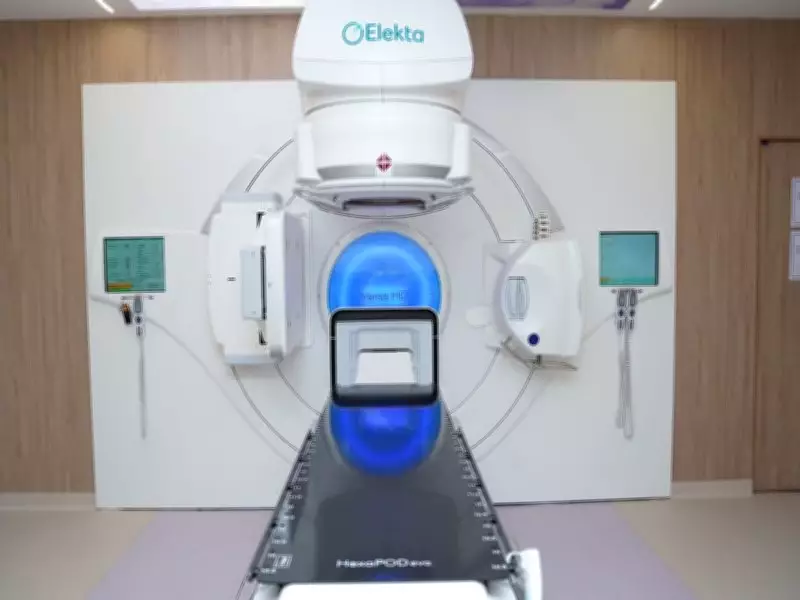
In one of oncology's most anatomically complex regions, the difference between an accurate treatment plan and an imprecise one can be measured in millimetres and profoundly affects the patient. At KD Cancer Centre, PET-CT imaging is foundational to planning and delivering precision radiotherapy for head and neck cancers.
Why Head and Neck Cancers Demand Precision
Head and neck cancers present some of the most demanding challenges in radiation oncology. The region is extraordinarily complex, with a dense landscape of critical structures including the spinal cord, brainstem, salivary glands, optic pathways, jawbone, and major vessels, all in proximity to the tumour. Very high doses of radiation, commonly up to 70 Gy, are delivered to lesions that sit close to radiosensitive vital structures such as the brainstem or optic chiasm, making radiotherapy margins exceptionally tight. In this environment, the quality of imaging used to define the target is a clinical imperative.
What Is PET-CT and Why Does It Matter?
PET-CT (Positron Emission Tomography-Computed Tomography) is a radiographic technique used to diagnose, stage, and survey hypermetabolic tissue, primarily cancer. PET assesses pathophysiology—how tissue behaves—while CT assesses anatomy—how structures are shaped and positioned. Together, they provide a uniquely powerful picture that neither modality can offer alone. At KD Cancer Centre, the clinical team can visualise not just where a tumour is, but how active it is, identifying areas of heightened metabolic activity that might be missed on standard anatomical imaging.

Clinical Evidence for PET-CT in Head and Neck Cancer
18F-FDG PET-CT plays a well-defined role in managing head and neck squamous cell carcinoma across multiple clinical settings, from pre-treatment staging and radiotherapy planning to treatment-response assessment and post-therapy follow-up. At KD Cancer Centre, PET-CT informs the entire patient journey:
- Staging and Disease Extent: Clinical applications include diagnosis of distant metastases, identification of synchronous second primaries, and detection of carcinoma of unknown primary, ensuring the full extent of disease is understood before treatment decisions.
- Radiotherapy Target Definition: 18F-FDG PET-CT accurately and precisely defines gross tumour volume (GTV) boundaries during radiotherapy planning, especially when combined with CT, decreasing inter- and intra-observer variability and increasing conformity to real tumour boundaries.
- Response Assessment and Follow-Up: PET-CT has demonstrated a sensitivity of 95.8% and specificity of 96.7% in assessing the irradiated neck in head and neck cancers, establishing it as an effective diagnostic tool in the post-treatment setting.
This enables the team at KD Cancer Centre to accurately evaluate treatment response, monitor patient progress, and make informed decisions regarding further care.
Integrated Approach: From Imaging to Planning
At KD Cancer Centre, PET-CT does not exist in isolation; it feeds directly into the precision radiotherapy planning process. Once imaging is complete, the data is integrated into the advanced treatment-planning workflow, where metabolic and anatomical information from PET-CT informs precise delineation of target volumes. This means that when radiation physicists and oncologists construct a treatment plan—whether for IMRT, VMAT, SBRT, or stereotactic techniques—they work from the most accurate possible picture of the tumour and its relationship to surrounding structures.
The role of PET-CT in managing head and neck cancers continues to expand, influencing both treatment planning and response assessment. PET-defined biological target volumes are increasingly incorporated into dose-escalation strategies, while quantitative PET-CT parameters are gaining recognition as predictive biomarkers for treatment response. Together, these advances support more precise patient stratification and personalised therapeutic decision-making.

Protecting Quality of Life
In head and neck radiotherapy, preserving quality of life is as important as eradicating disease. The salivary glands, swallowing structures, vocal cords, and facial nerves are all at risk from poorly targeted radiation. The KD Cancer Centre team uses PET-CT technology to enhance the accuracy of tumour delineation. By precisely targeting the tumour and sparing nearby healthy structures, this approach significantly reduces unnecessary radiation exposure and the likelihood of long-term complications, including dry mouth, difficulty swallowing, and hearing loss. This is precision medicine in its truest sense: not just targeting the cancer more accurately, but actively protecting the patient's future well-being.
Multidisciplinary Commitment at KD Cancer Centre
Head and neck cancer management at KD Cancer Centre is inherently multidisciplinary. Patients with head and neck squamous cell carcinoma are seen across various clinical settings, requiring a multidisciplinary approach to therapeutic decisions and clinical care. The team brings together radiation oncologists, nuclear medicine physicians, diagnostic radiologists, radiation physicists, and specialist nurses, all working in concert around the individual patient. PET-CT sits at the heart of this collaboration, providing a shared, high-fidelity visual language that informs decisions across every clinical discipline.
KD Cancer Centre's Promise
At KD Cancer Centre, the investment in PET-CT technology and the expertise to interpret and apply it reflects a single, unwavering commitment: to give every patient with head and neck cancer the most accurate, most individualised, and most effective treatment plan that modern oncology can deliver. Because in a region this complex, precision is not a luxury—it is the standard.