Pharmaceutical Industry in Nagpur Grapples with Soaring Raw Material Costs Amid Global Conflict
The escalating tensions between the United States and Iran, marked by military actions including strikes near the Strait of Hormuz and retaliatory attacks, have triggered a sharp rise in crude oil prices. This geopolitical turmoil is now casting a long shadow over the pharmaceutical industry in Nagpur, a key hub for drug manufacturing in India. The increased costs of petroleum-based solvents and packaging materials are driving up production expenses for a wide range of medications, from common fever drugs like paracetamol to complex antibiotic formulations.
Surge in Prices of Essential Raw Materials
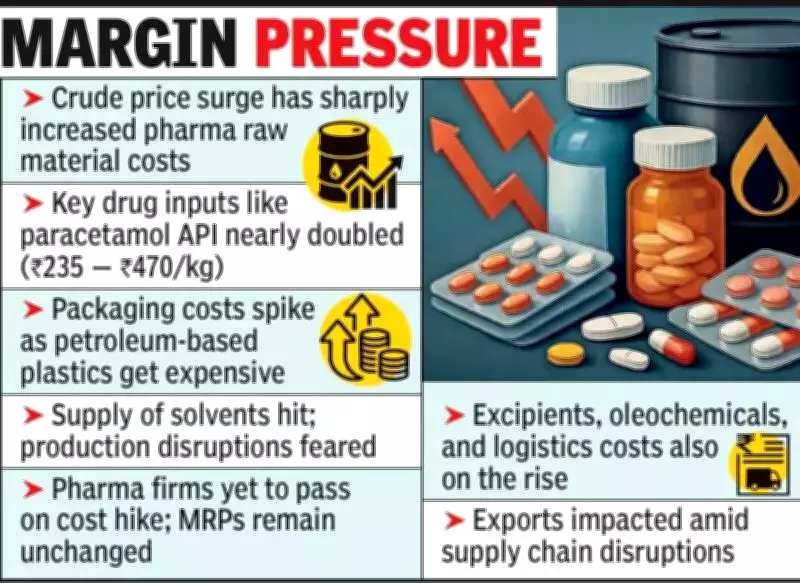
Industry sources report that petroleum-derived solvents, which are crucial for producing various pharmaceutical products, have become significantly more expensive. Additionally, the prices of plastic packaging materials, also reliant on petroleum, have nearly doubled in recent times. This cost inflation is putting immense pressure on manufacturers, with concerns that it could eventually impact drug availability if not addressed.
A senior official from a major pharmaceutical company highlighted the severity of the situation, noting that there is a real risk of production disruptions due to potential shortages of certain petroleum-based solvents. Nagpur, home to numerous units supplying active pharmaceutical ingredients (APIs) and excipients to large drug firms, is at the epicenter of this crisis. Despite the rising costs, most drugs are still being sold at their old maximum retail prices (MRPs), as companies have yet to pass on the increased expenses to consumers.

Specific Cost Increases Across Drug Categories
Sudobh Deulgaonkar of Snehal Pharma in Butibori provided detailed insights into the price hikes. He stated that raw material costs have escalated across the board, with the price for paracetamol raw material jumping from Rs 235 per kg to Rs 470 per kg. Similarly, the raw material for omeprazole, a common acidity remedy, now costs Rs 650 per kg compared to around Rs 300 previously. For erythromycin, an antibiotic, the raw material price has nearly doubled to approximately Rs 15,000 per kg. Even the production cost of Vitamin D drugs has seen a notable increase.
Impact on Excipients and Broader Supply Chain
While APIs form the core of medications, excipients play a supportive role in drug formulation. Raveleen Singh Khurana of Nikita Pharma explained that the crisis is also affecting excipient prices. For instance, chloroform rates have risen by 50%, and oleo chemicals, primarily sourced from Malaysia and based on palm oil, have become substantially more expensive. Khurana added that disrupted logistics due to the conflict have hampered the company's export activities, further compounding the challenges.
A senior official from a listed pharmaceutical company warned that the availability of ammonia, a critical input for the industry, could be affected by the ongoing crisis. This potential shortage adds another layer of uncertainty to an already strained supply chain.
In summary, the US-Iran war is not just a distant geopolitical event but a direct driver of economic strain in Nagpur's pharmaceutical sector. With raw material costs soaring and production under threat, the industry faces a critical period that may necessitate adjustments in pricing and sourcing strategies to maintain drug supply and affordability.