Virtual Inauguration Marks New Milestone in India-Japan Cooperation
Prime Minister Narendra Modi and Japanese Prime Minister Sanae Takaichi virtually inaugurated Maruti Suzuki India's Rs 35,000 crore vehicle manufacturing facility at IMT Kharkhoda in Haryana on Thursday. The event took place during the India-Japan Joint Economic Forum, held as part of Takaichi's first official visit to India from July 1 to 3, which also included the 16th India-Japan Annual Summit.
Plant Capacity and Employment Impact
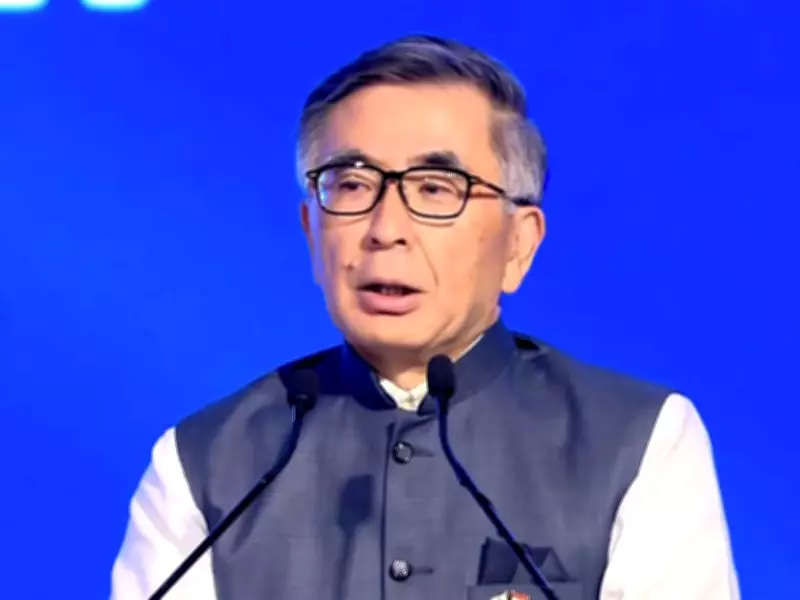
Toshihiro Suzuki, Representative Director & President of Suzuki Motor Corporation, addressed the forum, stating, "It is a great honour for us as you inaugurate our most advanced car manufacturing factory at Kharkhoda, Haryana. From current capacity of half a million unit, the plant will be further scaled to one million unit, making it one of the largest car plants of the world." He emphasised that the facility is a testament to the success of the India-Japan partnership and the "Make in India" initiative.
Spread across 800 acres with an integrated supplier park, the Kharkhoda facility will have an annual production capacity of 10 lakh vehicles at full scale and is expected to create more than 21,000 direct jobs. This includes employment generated through the supplier park, making it a significant contributor to local economic development.

Strategic Importance for Maruti Suzuki
The Kharkhoda plant is Maruti Suzuki's fourth vehicle manufacturing facility in India, after Gurugram, Manesar, and Gujarat. The foundation stone was laid virtually by Prime Minister Modi in August 2022, and commercial production commenced on February 25, 2025. The company stated that the plant is a key milestone toward achieving a target of 40 lakh units of annual production capacity, further strengthening the "Make in India, Make for the World" initiative.
Advanced Manufacturing and Sustainability Features
The facility has been designed with a strong focus on advanced manufacturing and sustainability. It features Industry 5.0-enabled manufacturing based on the principles of the "Suzuki Smart Factory" and will operate using 100 per cent renewable electricity. Key sustainability measures include a Zero Liquid Discharge manufacturing system, 100 per cent water recycling, AI-powered human-aware collaborative robots (cobots), a biogas plant planned for commissioning during FY2026-27, an in-house solar power plant with capacity up to 70 MW at full scale, and an in-plant railway siding to support green logistics.
Strengthening Bilateral Ties
The inauguration coincided with the India-Japan Economic Forum, where both countries sought to deepen cooperation across manufacturing, semiconductors, artificial intelligence, clean energy, and mobility. Toshihiro Suzuki highlighted the favourable policy environment under Prime Minister Modi's leadership, saying, "With favourable policy environment under Prime Minister Modi's leadership, Suzuki is accelerating investments, employment, export, and technologies towards Viksit Bharat journey." The project underscores the robust economic partnership between India and Japan, with Suzuki Motor Corporation's Indian subsidiary playing a pivotal role in the automotive sector.