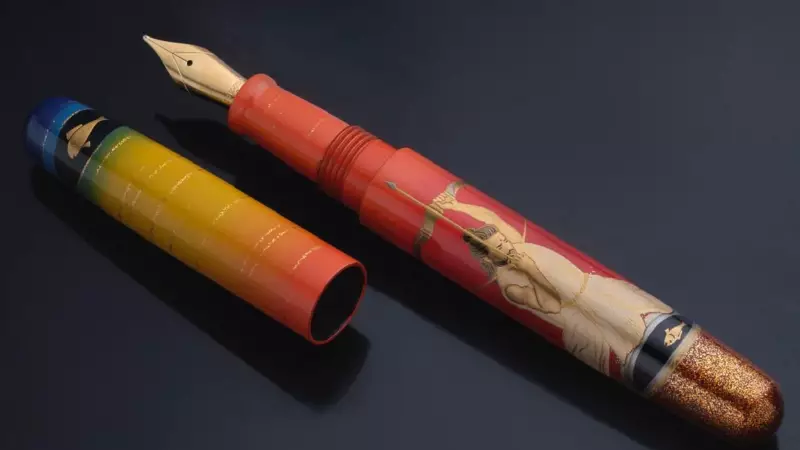
Retired Engineer Masters Ancient Japanese Art to Build Global Pen Business
A retired production engineer from Pune has achieved something remarkable. Vivek Kulkarni, aged 58, taught himself an ancient Japanese lacquering technique called Urushi. He now runs a successful fountain pen business that attracts customers from around the world.
From Retirement to Artistic Discovery
After years of hectic travel and work in IT, Kulkarni sought a productive activity for his retirement years. He remembered his childhood love for fountain pens. This memory sparked an idea. He decided to start making fountain pens to stay busy.
His engineering background proved invaluable. Understanding 3D drawings, dimensions, and designs came naturally to him. But Kulkarni wanted more than ordinary pens. He sought a unique selling point that would distinguish his work.

The Challenge of Learning Urushi Art
Urushi is an ancient Japanese lacquering technique spanning over a thousand years. The lacquer comes from the sap of Japan's native trees. In Japan, it remains a revered art form. In India, Kulkarni discovered he would be the only person practicing it.
He faced significant challenges. There was no master to teach him. No guidebooks existed in English. The supply chain depended entirely on materials from Japan. His family expressed understandable skepticism about the venture.
"There was some hesitation," Kulkarni shares. "They were doubtful about sales and earnings since fountain pen usage was declining."
Six Years of Self-Taught Mastery
Kulkarni began his Urushi journey in 2014-15 with no prior experience. What followed was a six-year education conducted through trial, error, and reverse engineering. He studied photographs of Danitrio pens, a popular Japanese brand, attempting to decipher techniques from images alone.
He hired an artist and together they learned by doing, failing, and adjusting minute details. All available books on Urushi were in Japanese. The price of this self-taught education included tons of wasted materials and countless hours monitoring environmental conditions.
Building Urushi Studio India
By 2021, Kulkarni realized he could compete with other pen manufacturers in India. He had something truly unique to offer. His business, Urushi Studio India, gained momentum.
His pens feature intricate Urushi artwork. They undercut Japanese competitors by 25 to 30 percent while maintaining superior quality. When he began posting photographs on Facebook and Instagram, orders arrived from across continents.
"We received a great response from Europe, America, and Asian countries," Kulkarni notes. Lawyers, doctors, engineers, and pen collectors form the majority of his customer base.
Commercial Success and Future Plans
Kulkarni has completed approximately 400 to 500 pens to date. He is now set to build a complete pen house. He is currently developing his own patented ink called Niji, named after the Japanese word for 'rainbow'. These ink bottles are designed to look like pen nibs.
Beyond commercial success, Kulkarni highlights a concerning issue. Urushi art faces extinction not just in India but also in its Japanese homeland.
"Young people in Japan aren't as interested in learning it," he explains. "Most artists there are older."
Preserving a Dying Art Form
This realization has motivated Kulkarni to establish an institute in India. It will be devoted to teaching Urushi artwork, making it the first of its kind in the country.
He explains the potential impact. "If local artists used this lacquer for their art, it would increase the longevity and value of their work. For example, a Warli art piece that sells for Rs 5,000 could sell for Rs 50,000 if done with Urushi."
The art would survive not just in Japan but would find new expression through Indian artistic traditions. This institution represents cultural preservation at its finest.
A Legacy of Knowledge Sharing
"My efficiency will decrease with age," Kulkarni says honestly. "If more people learn it, the art will be sustained. I want to save others the struggle I went through to learn this on my own. I want this knowledge to be easily available. It's not a commercial venture for me, it's about giving back to society."

Vivek Kulkarni's journey demonstrates how individual passion can preserve ancient traditions. His Urushi Studio India bridges Japanese heritage with Indian craftsmanship. It creates beautiful writing instruments while ensuring a thousand-year-old art form continues for future generations.