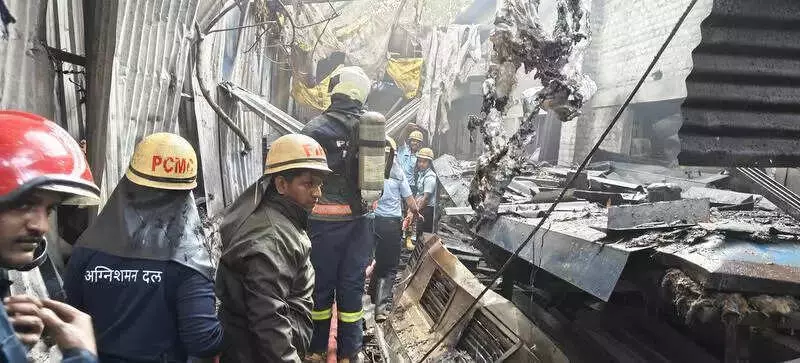
A tragic fire at a powder-coating factory in Pune's Bhosari MIDC area on Saturday has laid bare severe shortcomings in fire safety measures across industrial units within the Maharashtra Industrial Development Corporation (MIDC) limits in Pimpri Chinchwad. The blaze resulted in the death of one worker and left five others injured, prompting urgent concerns from civic authorities.
Missing Safety Systems and Inspection Lapses
Officials from the Pimpri Chinchwad Municipal Corporation (PCMC) revealed that when fire brigade teams rushed to the scene, they found crucial fire safety systems absent at the factory. A senior PCMC official pointed out a systemic failure, stating, "There seems to be no regular inspection for compliance." This is despite MIDC being responsible for issuing fire No-Objection Certificates (NoCs) and enforcing safety norms within its jurisdiction.
Compounding the problem is the absence of a dedicated fire station under MIDC in the region. This forces the PCMC fire services to handle all emergencies, even though they lack the authority to conduct compliance checks on MIDC premises. Sanjay Kutwad, executive engineer of MIDC, clarified that MIDC does not have a fire station in Pimpri Chinchwad as it does not collect service tax from industries there, unlike in areas like Ranjangaon or Chakan. He stated the area's maintenance was handed over to PCMC years ago.

Decades-Long Demand for a Fire Station
Industry associations have been vocal about this critical infrastructure gap for over twenty years. Sandeep Belsare, president of the Pimpri Chinchwad Small Scale Industries Association, confirmed there are more than 5,000 industrial units in the area. "We have been demanding a dedicated fire station for more than two decades. Several meetings were also held with state industries ministers, but there has been no development," Belsare said.
There is, however, a glimmer of progress. Belsare noted that MIDC has allocated a plot in Bhosari MIDC's F2 block for a fire station, and PCMC has initiated the tendering process. Earlier this year, PCMC began work on this advanced facility. However, officials caution that while it will improve emergency response, it does not address the root cause of lax preventive measures and inspections.
Illegal Units and Flouted Norms Heighten Risk
The problem is exacerbated by numerous unregistered and unauthorized units operating from rented premises or temporary tin sheds. Abhay Bhor, president of the Forum of Small Scale Industries Association, emphasized that issuing fire NoCs is insufficient. "Authorities must identify illegal units and check whether they follow safety norms. Awareness activities are also missing," he said.
Bhor highlighted frequent small fires caused by the illegal burning of waste material. He also raised concerns about LPG safety, revealing that the association has urged suppliers to provide direct pipelines to industries. Shortages sometimes force units to illegally use domestic cylinders, significantly increasing fire risks.
On the question of audits, Bharat Kapse, divisional fire officer of MIDC, said industrial units must conduct a fire safety audit every six months and submit a report. He admitted, however, that there are "no ground inspections," relying solely on submitted reports to confirm compliance.
Deputy municipal commissioner Venkatesh Durvas issued a stern reminder, stating that industries handling high-risk materials like LPG must strictly adhere to protocols. "Regular checks, maintenance and adequate training are basic responsibilities of every industry. Saturday's incident in Bhosari is a sharp reminder that safety lapses can have serious consequences," Durvas concluded.