

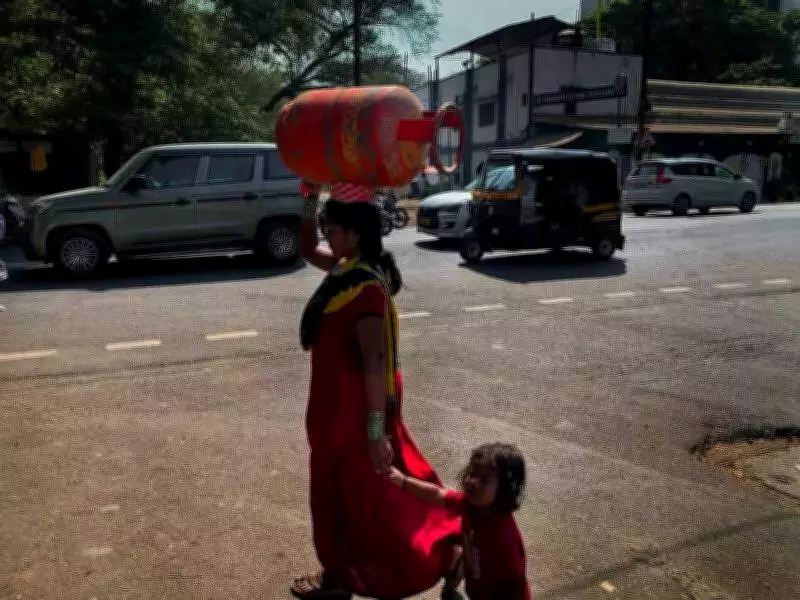
Pune's Culinary Scene Faces Crisis as LPG Shortage Forces Drastic Measures
A severe and ongoing liquefied petroleum gas (LPG) shortage has brought Pune's vibrant restaurant industry to the brink of collapse, with many establishments forced to slash operating hours, cut menus, experiment with makeshift cooking methods, and even close kitchens entirely. Industry representatives report that the crisis has intensified dramatically over the past few days, leading to widespread operational disruptions.
Restaurants Ration Gas and Reduce Operations
Ganesh Shetty, president of the Pune Restaurant and Hoteliers Association (PRAHA), revealed to TOI that numerous restaurants are no longer able to function throughout the day and have started rationing their remaining cylinders. "Several restaurants were opening only for a few hours and not the entire day. Dosa items have completely disappeared from many places, while in others, they were being served only for limited morning or evening hours. We have been cutting down dishes that consume more gas and surviving on a restricted menu," he explained.
According to Shetty, kitchens that previously used one cylinder per day are now stretching the same supply for two to three days. "Restaurants have been carefully rationing gas. Some have shifted bulk cooking and staff meals to coal or wood fires just to conserve LPG. Slow cooked dishes and items that need constant heat were the hardest to manage because you cannot repeatedly heat equipment like a dosa tawa from scratch every time an order comes in," he added.

Skyrocketing Costs and Black Market Emergence
The shortage has compelled some restaurants to seek costly alternatives to keep their kitchens operational. Shetty noted, "In some cases, cylinders were being sold in the black market for 6,000 to 7,000 each. Many small restaurants cannot afford such cost, but were forced to consider." Concurrently, the LPG crisis has driven up the price of commercial induction stoves. "On March 5, a commercial induction cost around 6,000 to 6,500. Yesterday, the same unit was being quoted at 42,000 with a six day waiting period. Even then it has not been a permanent solution because frying items was difficult on induction," he stated.
Alarming Scale of the Crisis
Saili Jahagirdar, head of the National Restaurants Association of India (NRAI), Pune chapter, emphasized that the situation has reached an alarming stage. "Everyone in the industry was scrambling. Until yesterday, restaurants were somehow managing. Today, many have exhausted their stock," she said. Jahagirdar estimated that more than 15% of restaurants in the city have temporarily shut operations. "Some places have tried to adapt by using inductions or other alternatives, but that was only a partial solution. There has not been any clarity on how long this situation would continue," she lamented.
In response, Jahagirdar held a meeting with MNGL officials to seek solutions. "MNGL officials have stepped up and would fastrack piped gas connection for restaurants that were in the vicinity of existing pipelines," she reported, offering a glimmer of hope for some establishments.
Impact on Customers and Delivery Services
The disruption is also significantly affecting customers who rely on food delivery services. Rohit Kulkarni, an IT professional from Hinjewadi, observed that choices available on delivery apps have noticeably shrunk. "Many restaurants have started appearing closed on the apps. The ones that were open have smaller menus and warn customers that orders may take longer than usual," he said, highlighting the broader consumer impact.
Hope for Relief on the Horizon
Shetty expressed cautious optimism, noting that the industry is hoping for relief within the next 10 to 15 days. This follows an announcement by Minister of Petroleum and Natural Gas Hardeep Singh Puri in Parliament, stating that oil marketing companies would allocate around 20% of average commercial LPG demand to ensure fair distribution. "The announcement has given us some hope, but on the ground we were still waiting for the supply to stabilise," Shetty concluded, underscoring the urgent need for immediate action to revive Pune's struggling food sector.






