

Punjab's Bicycle Industry at a Critical Juncture: Global Leader Faces Domestic Hurdles
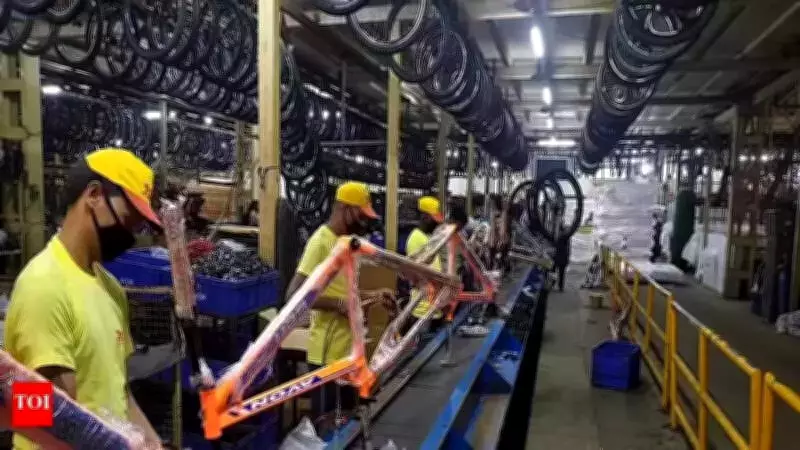
The Progressive Punjab Investors' Summit has unveiled a striking paradox within the state's industrial landscape. While Punjab is responsible for manufacturing approximately 90% of India's bicycles, which are exported to elite markets in Europe and the United States, the domestic cycling sector finds itself at a pivotal crossroads. This revelation underscores a deep-seated irony: the region that fuels global bicycle supply grapples with significant challenges at home, including social stigmas and safety concerns that impede daily mobility.
Legacy and Scale of Punjab's Bicycle Dominance
Punjab boasts an immense industrial foundation, with over 400 micro, small, and medium enterprises (MSMEs) producing components and more than 100 medium and large-scale manufacturers. This robust ecosystem is the cornerstone of India's status as the world's largest bicycle-producing nation. Onkar Singh Pahwa, chairman and managing director of Avon Cycles, highlighted the state's self-reliance, noting, "More than 90% of the bicycles and over 97% of bicycle components in the country are manufactured in Punjab. Only a few parts, such as bicycle locks, are produced in Aligarh. Even tyre-tubes are made locally within the state."
Domestic Challenges: Social Taboos and Safety Risks
Despite this global prowess, the summit emphasized that cycling in India battles a "social taboo" and severe safety risks on chaotic roads. Rakhi Gupta Bhandari, Punjab's principal secretary of food processing, pointed out the vulnerability of cyclists and called for a mindset shift: "The cyclist should be the king of the road." She advocated for promoting bicycles as "premium and fashionable" choices to alter the domestic narrative and enhance road safety.

Innovative Solutions: E-Mobility and Swiss-Inspired Tandem Bikes
To reinvent the industry, leaders proposed a strategic pivot towards high-tech e-mobility and innovative designs inspired by Swiss models. Bhandari suggested manufacturing tandem bikes, including triplets, quads, and five-person quints, to foster a new cycling culture in Punjab. "People ride tandem bikes—triplet, quad or quint," she noted, emphasizing their potential to transform the cycling experience and promote communal and recreational use.
Evolution Towards Premium and Electric-Assisted Products
The industry is already diversifying to meet modern consumer demands. Onkar Pahwa explained, "In today's market, customers don't just buy a bicycle; they seek safety, durability, comfort, and increasingly electric-assisted performance." He revealed that companies are expanding into electric mobility products like e-bikes and e-scooters, as well as fitness equipment such as home gyms, indicating a shift from a one-dimensional market to a multifaceted one.
Historical Roots and Future Roadmap
Sanjeev Pahwa, managing director of Ralson (India) Limited, traced the industry's origins to post-Independence India, when families migrating from Pakistan established Ludhiana as an industrial hub. The early 1950s saw the production of iconic "black bicycles" and local manufacturing of tyres and tubes. Today, the sector stands at a crossroads, with fewer people using bicycles for daily mobility. Pahwa stressed the need for reinvention: "We need to go premium, invest in R&D, and use more advanced materials. High-end e-bikes and e-scooters are crucial, though there is import dependency for electric components."
Conclusion: A Call for Transformation
The summit's session, titled ‘Bicycles and e-Bikes – parts to platform', underscored that Punjab's bicycle industry must evolve to address domestic challenges while leveraging its global strengths. By embracing e-mobility, premium products, and innovative designs like tandem bikes, the sector aims to overcome social barriers and safety issues, paving the way for a sustainable and prosperous future in cycling.






