

Punjab's Female MSME Employment Sees Sharp Decline, Haryana Bucks Trend
Female employment in Punjab's micro, small, and medium enterprises (MSMEs) has experienced a significant drop, with data from the Centre-monitored Udyam Registration (UR) portal revealing a decline of over 50% for the 2025-26 fiscal year. By the end of February 2026, female employment stood at 3.53 lakh, compared to 8.40 lakh in the 2024-25 fiscal year, though one month of data until March 31 remains unaccounted for.
Neighbouring States Show Contrasting Trends
In stark contrast, neighbouring Haryana registered an 18.27% increase in female MSME employment, rising from 4.16 lakh in 2024-25 to 4.92 lakh by February 28, 2026. Jammu and Kashmir also saw a marginal rise from 1.44 lakh to 1.51 lakh during the same period. However, other neighbours mirrored Punjab's downward trend, with Himachal Pradesh reporting 63,015 female employees (down from 71,095) and Chandigarh recording 12,072 (down from 14,909).
National Context and Historical Data
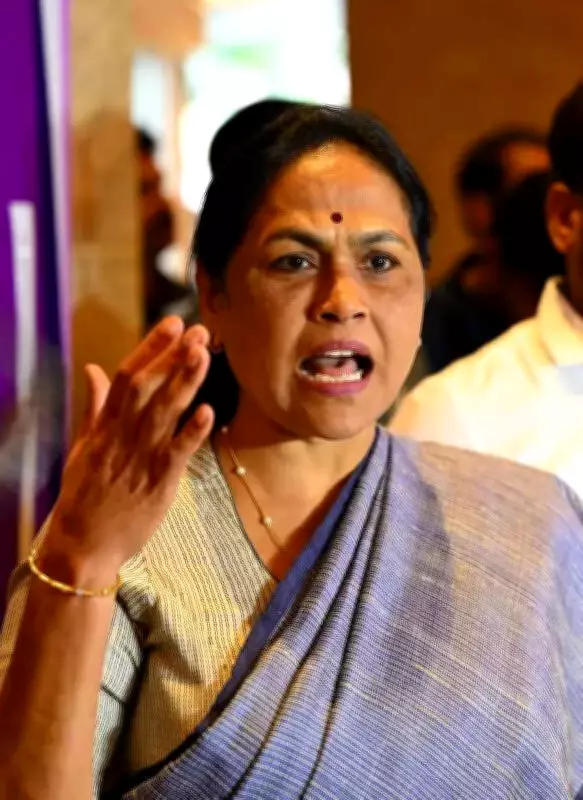
According to a reply in Lok Sabha by Minister of State for MSMEs Shobha Karandlaje to a question by MP Kalipada Saren Kherwal, the national average for female employment in MSMEs grew from 2.04 crore in 2024-25 to 2.13 crore as of February 28, 2026. Historically, Punjab had seen a continuous increase in female MSME employment between 2020-21 and 2024-25, rising from 1.43 lakh to 8.4 lakh, similar to the national upward trend where female employment grew from 59.67 lakh to 2.03 crore in the same period.

Decline in Women-Owned MSMEs
The data further revealed a dip in women-owned MSMEs in Punjab. In 2024-25, the state had 5.76 lakh total MSMEs, of which 2.18 lakh (37%) were women-owned. By February 28 of the current fiscal, total registrations stood at 4.13 lakh, with women-owned units falling to 1.36 lakh (33%). Nationally, the trend was similar, with total MSME registrations on the UR portal and Udyam Assist Platform (UAP) at 2.06 crore in 2024-25 (87.42 lakh women-owned) and 1.63 crore as of February 2026 (59.02 lakh women-owned).
Expert Insights on the Decline
Ashpreet Sahni, a member of the CII Punjab State Council, attributed the current fiscal's decline to logistics and safety factors. "New industry is coming up on the outskirts as focal points are choked. Standalone industries are often perceived as unsafe for women, and the prevailing crime scenario, like snatching, is a major deterrent," Sahni told TOI. He noted that the 2024-25 spike was due to a post-Covid labour shortage where women were hired for traditionally male-intensive roles, suggesting saturation was attained that year.
On the decline in entrepreneurs, Sahni pointed to credit hurdles. "Banks are hesitant to advance loans to women without collateral, and the government lacks an aggressive approach to address this," he said. Upkar Singh Ahuja, president of the Chamber of Industrial & Commercial Undertakings (CICU), suggested structural fixes like women's hostels near industrial hubs and dedicated bus services from villages.
Possible Data Issues and Grassroots Perspectives
A senior Punjab government official, speaking anonymously, suggested the numbers might be skewed by technical glitches, as the UR portal was down for about a month and a half, delaying data uploads. However, a district-level industry official noted that registrations are based on self-declaration and are not strictly endorsed by the department. A Ludhiana-based industrialist shared a personal example, where women-led firms decreased due to ownership changes, highlighting that declines aren't always visible at the grassroots level.






