

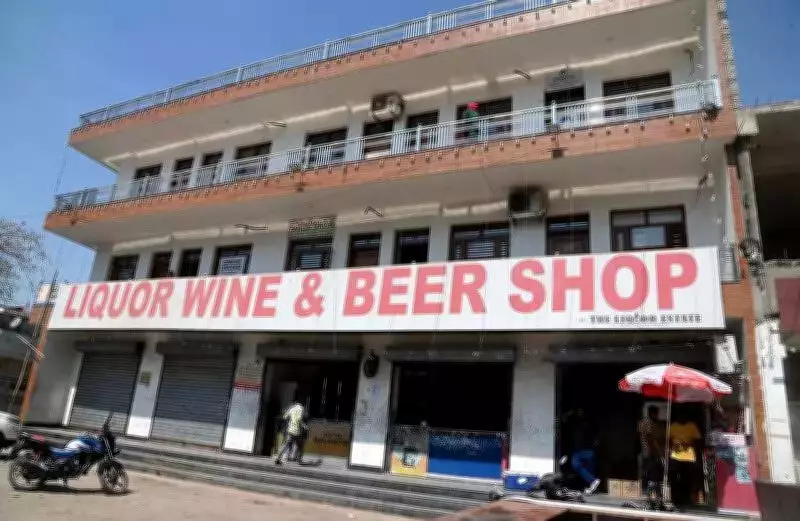
Punjab Liquor License Renewal Sees Significant Drop as Contractors Express Caution
In a development that has raised eyebrows across Punjab's liquor trade sector, nearly 30% of existing liquor trade groups have opted not to renew their licenses for the current year. This cautious response from a substantial section of contractors comes as a notable departure from historical trends where license renewal was typically preferred whenever available.
Official Data Reveals District-Wide Variations in Renewal Rates
According to official statistics, out of 207 groups operating across the state, only 147 have renewed their licenses, leaving 60 groups pending. This translates to an overall renewal rate of approximately 71%, significantly lower than previous years. The response has varied dramatically across different districts, with several regions reporting particularly concerning renewal figures.
Nawanshahr recorded the poorest response with just 1 out of 4 groups renewing their license, resulting in a mere 25% renewal rate. Similarly, Fazilka and Ferozepur witnessed weak participation, each recording only 33% renewal. In Fazilka, 4 out of 6 groups remain pending, while in Ferozepur, 2 out of 3 groups have yet to renew.

Multiple Districts Report Below-Average Renewal Figures
Other districts experiencing relatively poor response include Moga and Pathankot, where the renewal rate stands at 40%, and Kapurthala, which recorded 43% renewal with 4 out of 7 groups yet to renew. Hoshiarpur, despite having a relatively large number of groups, maintained a modest renewal rate of 46%, with 7 of 13 groups still pending renewal.
Mohali saw a moderate response with 7 renewals out of 13 groups, translating to a 54% renewal rate. Among larger markets, Bathinda recorded a 60% renewal rate with 4 out of 10 groups pending, while Ropar registered 67% renewal.
Complete Renewal in Some Districts Contrasts with Overall Trend
Despite the overall cautious trend, several districts reported complete license renewal. Barnala, Faridkot, Fatehgarh Sahib, Gurdaspur, Mansa, Patiala, and Tarn Taran all witnessed 100% renewal rates, with every existing group opting to continue their licenses.
Major commercial districts showed relatively better participation, with Ludhiana reporting 73% renewal, Jalandhar at 76%, and Amritsar recording 75% renewal. Sangrur demonstrated a particularly strong response with an impressive 91% renewal rate.
Officials and Traders Offer Contrasting Perspectives
Punjab Excise Commissioner Jitendra Jorwal stated that approximately 72% of groups opted for renewal, which he described as reflecting strong appreciation for the new policy. He added that the remaining groups would be allocated through a fresh tender process, suggesting the government views the current renewal rate as satisfactory.
However, traders and industry representatives paint a different picture, describing the non-renewal by such a large number of contractors as historically significant. They attribute this growing caution among liquor contractors primarily to financial concerns stemming from the current excise policy.
Open Quota IMFL Policy Cited as Primary Concern
Industry representatives assert that the single most important reason for non-renewal during 2025–26 has been the heavy financial losses faced by contractors. They specifically point to the policy of open quota for Indian Made Foreign Liquor (IMFL) as the primary culprit.
According to trade sources, the open quota system has led to excess supply in the market, triggering intense price competition among retail contractors and shrinking profit margins. This situation has placed many license holders under significant financial stress, making license renewal economically unviable for approximately 30% of trade groups.
Retail traders suggest that the oversupply situation largely benefits factories and distillery owners, while retail contractors bear the brunt of aggressive market competition and falling margins. For the excise regime to remain viable and sustainable, industry representatives believe the government may need to regulate the allotment of IMFL under the open quota more stringently.

The current trend reflects a significant shift in Punjab's liquor trade landscape, with financial viability emerging as a critical concern for contractors who have traditionally preferred license renewal. As the government prepares to allocate pending licenses through fresh tenders, the industry awaits potential policy adjustments that might address the financial challenges highlighted by this year's renewal data.





